Your digging level
Description
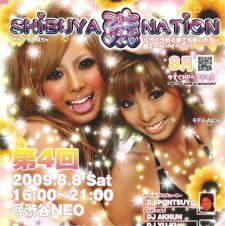
Buchiage trance is a Japanese club-oriented trance style that emerged in the 2000s, especially around Shibuya nightlife and youth fashion culture.
It is commonly associated with the gyaru scene and was marketed toward that audience, blending trance production with the bright, high-energy, singalong-friendly qualities of Eurobeat.
Compared with more atmospheric or progressive forms of trance, buchiage trance is more immediate, upbeat, flashy, and party-centered. Its sound typically emphasizes energetic four-on-the-floor rhythms, uplifting synth hooks, dramatic builds, catchy melodic lines, and a distinctly Japanese dance-pop club sensibility.
History
Buchiage trance developed in Japan during the 2000s, with strong roots in the Shibuya club scene. The term "buchiage" in Japanese club slang conveys the idea of getting the crowd intensely hyped up or lifted in energy, which matches the genre's purpose as peak-time party music.
The style emerged when Japanese dance culture was absorbing several European club currents at once. Trance was already internationally popular, while Eurobeat had long been deeply embedded in Japanese youth, para-para, and club-adjacent pop culture. Buchiage trance fused these influences into a more localized, fashion-linked party sound.
A key part of the genre's identity was its association with gyaru culture. In the 2000s, Shibuya was a central hub for youth fashion, nightlife, and trend-making, and dance music that could match the flashy, extroverted, celebratory energy of that environment had strong appeal.
Rather than pursuing the more expansive, psychedelic, or progressive dimensions of global trance, buchiage trance often leaned toward accessibility, hook-heavy arrangements, and immediate dancefloor impact. This made it especially suitable for commercial club play, compilation culture, and crossover with Japanese dance-pop trends.
Musically, the genre drew from uplifting trance's supersaw-driven euphoria and breakdown-build-drop structure, but it also absorbed Eurobeat's brisk melodic momentum, bright chord language, and energetic rhythmic drive. The result was a style that felt more extroverted and pop-facing than many Western trance substyles.
Buchiage trance often sat near adjacent Japanese club sounds such as J-Euro, commercial club trance, and certain strands of pop-oriented electronic dance music. It was part of a broader ecosystem in which imported European forms were reformulated for Japanese audiences and subcultures.
Although buchiage trance is not as internationally codified as major global trance subgenres, it remains a useful term for a specifically Japanese, Shibuya-linked, 2000s trance style shaped by gyaru culture and Eurobeat influence.
Its legacy can be heard in later Japanese club-pop hybrids, high-energy fashion-scene dance music, and localized reinterpretations of trance aesthetics that favor bright hooks, immediacy, and crowd-hyping intensity over introspective atmosphere.
Write the track as a high-energy, crowd-lifting club anthem rather than a deep or meditative trance piece.
Aim for a bright, flashy, extroverted sound with immediate melodic payoff. The music should feel celebratory, stylish, and ready for a busy commercial dancefloor.
Use a steady four-on-the-floor kick pattern.
A tempo around 138-150 BPM works well, depending on whether you want the track to lean more toward trance or toward Eurobeat-influenced energy.
Add driving offbeat bass movement, open hi-hats, energetic snare fills, and risers that clearly push the track toward each section change.
Use major-key or uplift-leaning minor-key chord progressions with strong emotional lift.
Favor bright supersaw leads, octave melodies, anthem-like hook writing, and memorable top lines that can be grasped quickly.
Eurobeat influence can appear through brisk melodic contour, catchy chord motion, and a more pop-forward sense of momentum.
A typical structure can include:
• intro for DJ mixing • driving groove section • breakdown with pads and melodic hook • build-up with snare rolls and risers • euphoric drop with full lead stack • secondary breakdown or variation • final climax and outroKeep transitions obvious and exciting. This style benefits from strong peaks rather than subtle development.
Use layered supersaws, bright plucks, uplifting pads, punchy kicks, sidechained bass, and polished FX.
The mix should feel glossy and energetic. Prioritize a powerful lead, clear kick-bass relationship, and a sense of forward motion.
Do not let the atmosphere become too dark, minimal, or abstract. Even when emotional, the sound should stay accessible and high-impact.
If using vocals, keep them catchy, emotional, and club-friendly.
Short English phrases, Japanese pop-style hooks, and romantic or party-oriented themes fit well. The vocal should support the hype factor rather than dominate the arrangement with complex storytelling.
As a DJ style, buchiage trance should work as a peak-energy selection.
Tracks should mix cleanly in clubs, with strong intros and outros, and should deliver large, unmistakable moments that raise crowd excitement quickly.



%2C%20Cover%20art.webp)