Your digging level
Description
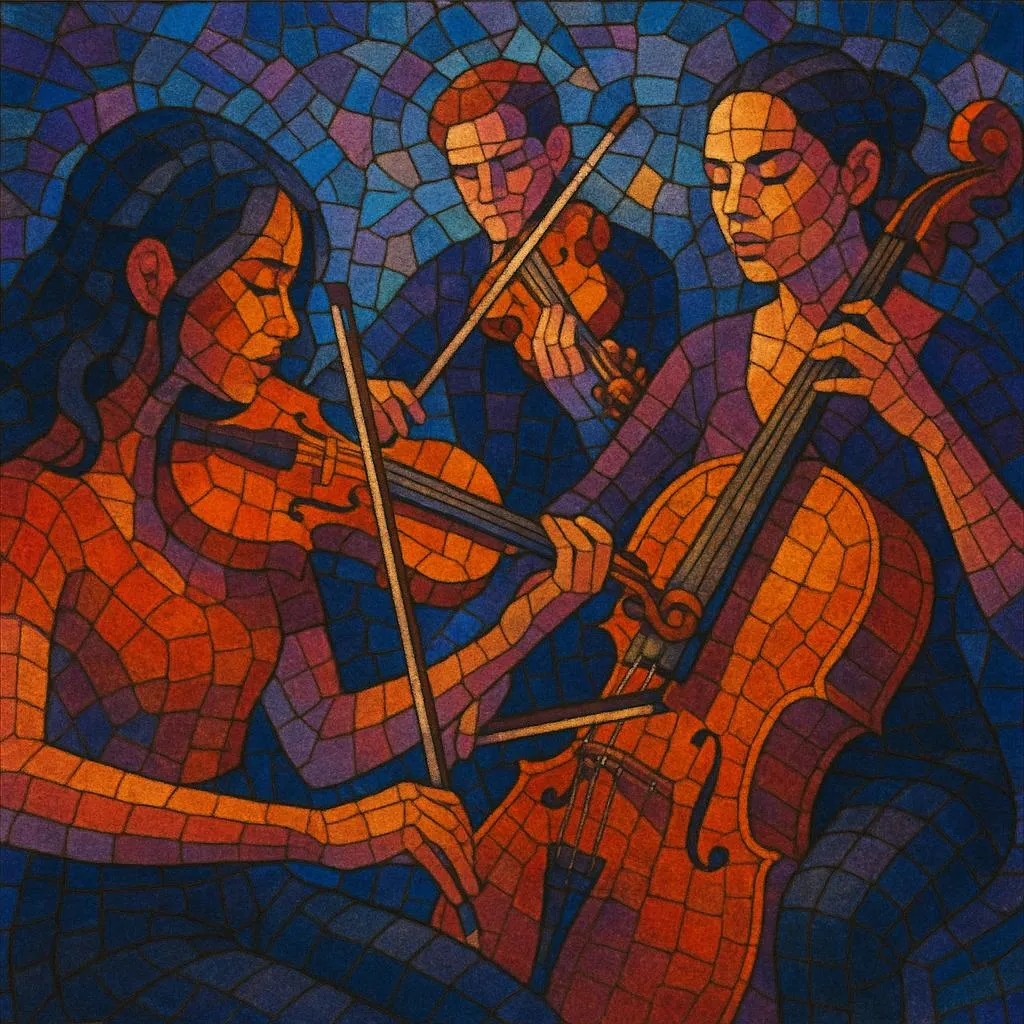
Bow pop is a pop-oriented style centered on bowed string instruments—especially violin, viola, and cello—used as the primary lead and rhythm voices instead of guitars or synths.
Acts typically appear as electric or amplified string quartets/ensembles or as solo violin/cello front-liners supported by modern pop production: drum programming, side‑chained pads, and bass drops. The result merges the immediacy of pop hooks with the timbral richness of orchestral strings, moving easily from cinematic swells and legato melodies to percussive stabs, chops, and ostinato riffs.
Repertoire includes both original songs and string-led reimaginings of mainstream pop, rock, EDM, and R&B hits. A polished, cinematic sheen, catchy toplines carried by violin/cello, and rhythmically tight string arrangements are hallmarks of the sound.
History
The roots of bow pop lie in late-20th‑century classical crossover and chamber/baroque‑pop experiments that brought strings to the front of popular music. As amplification and effects for violins and cellos improved, string players began stepping into the role traditionally held by guitars and synths, shaping an accessible, hook-driven approach.
In the early 2000s, electric string ensembles and violin/cello soloists started packaging pop-friendly material with star‑style presentation—radio‑length songs, strong visual branding, and modern rhythm sections. String quartets reinterpreting radio hits proliferated, while original bow‑led singles cemented the idea that a violin or cello could carry a pop hook as convincingly as a voice or guitar.
Online platforms accelerated the format: string-led covers of chart songs reached massive audiences, and collaborations between string players, EDM producers, and pop vocalists normalized the sound on stages and streaming playlists. Today, bow pop comfortably spans lush, cinematic ballads and dance‑floor tempos, with touring ensembles and content creators sustaining a global ecosystem of string‑forward pop.

Top albums