Your digging level
Description
Bothy ballads are narrative songs traditionally sung by farm labourers in the northeast of Scotland, especially in Aberdeenshire, Banffshire, Moray, and Angus.
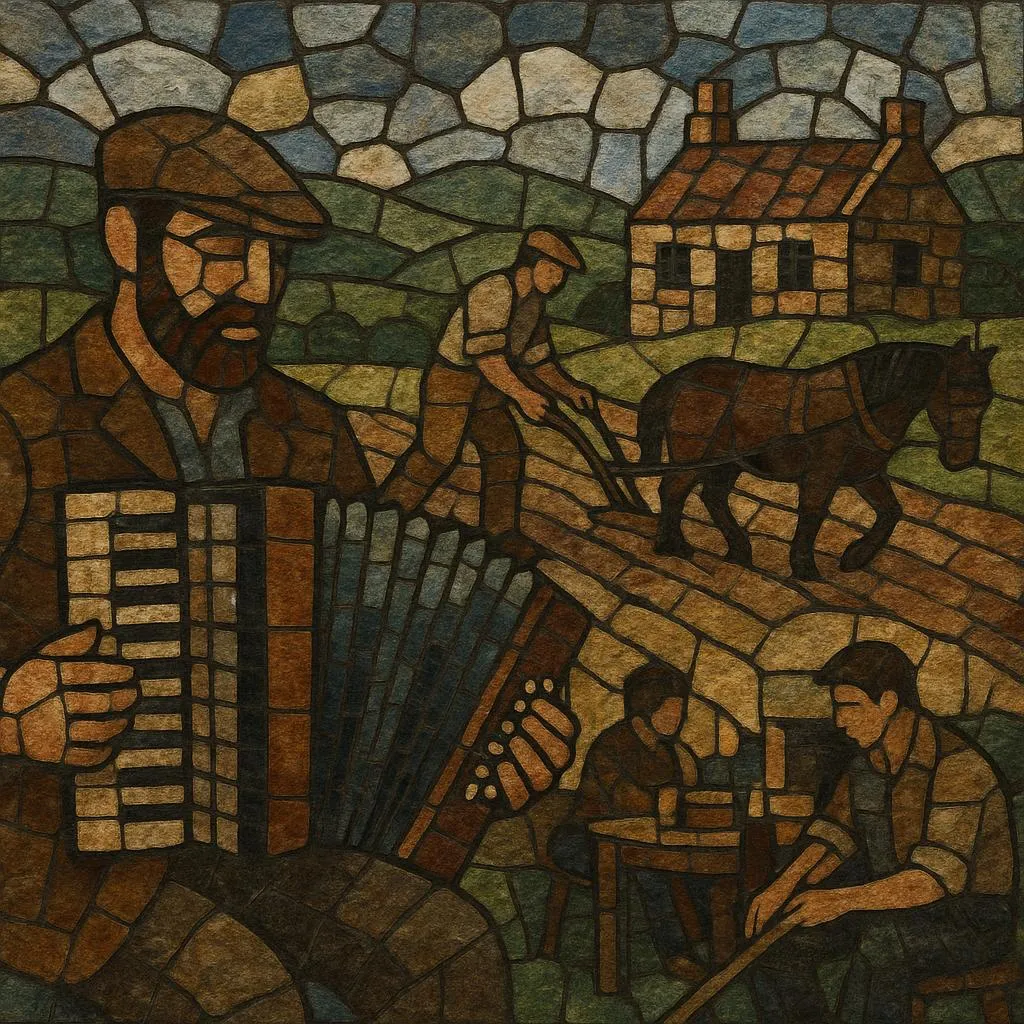
Performed in the bothy (the rough farm outbuilding where unmarried male workers slept), these songs recount the routines, hardships, humour, pride, and social life of seasonal and hired farm work—ploughing, threshing, harvesting, feeing markets, and Saturday-night revels. They are typically strophic, strongly melodic, and most often delivered unaccompanied in the local Doric Scots dialect, though fiddle, melodeon, or small pipes may occasionally double or decorate the tune.
Stylistically, bothy ballads sit at the crossroads of Scottish traditional balladry and occupational/work song. They range from lyrical and nostalgic to boisterous and satirical, with refrains designed for chorus joining at informal gatherings and “Bothy Nichts” (bothy nights).
History
Bothy ballads crystallised in the 1800s alongside the northeast Scottish agricultural hiring system. Young, unmarried labourers were boarded together in farm bothies, building a strong communal culture. Singing served as leisure, bonding, and a vehicle for occupational identity. The songs portrayed feeing markets, long hours, strict grieves (overseers), ploughing and reaping skills, horse lore, and weekend festivities—often with wry humour and sharp social observation.
For decades the repertoire was transmitted orally at kitchen ceilidhs and bothy gatherings. Early systematic collecting in the northeast—most notably the Greig–Duncan Folk Song Collection (late 19th–early 20th century)—preserved many variants and texts, revealing the breadth of the tradition and its deep roots in local dialect and place.
Field collectors and folklorists in the mid‑20th century recorded veteran farm singers, bringing bothy ballads to wider attention during the British folk revival. Radio, festivals, and folk clubs helped carry the style beyond the farm bothy, while community-based “Bothy Nichts” and competitions in Aberdeenshire sustained living performance contexts.
Today, bothy ballads remain a hallmark of northeast Scottish song culture. Singers continue to perform them unaccompanied (or sparsely accompanied), with attention to narrative clarity, dialect authenticity, and audience participation. Competitions and local sessions keep the idiom vibrant, while revival and touring artists have introduced bothy repertoire into broader Scottish folk, folk-rock, and indie-folk settings.