Your digging level
Description
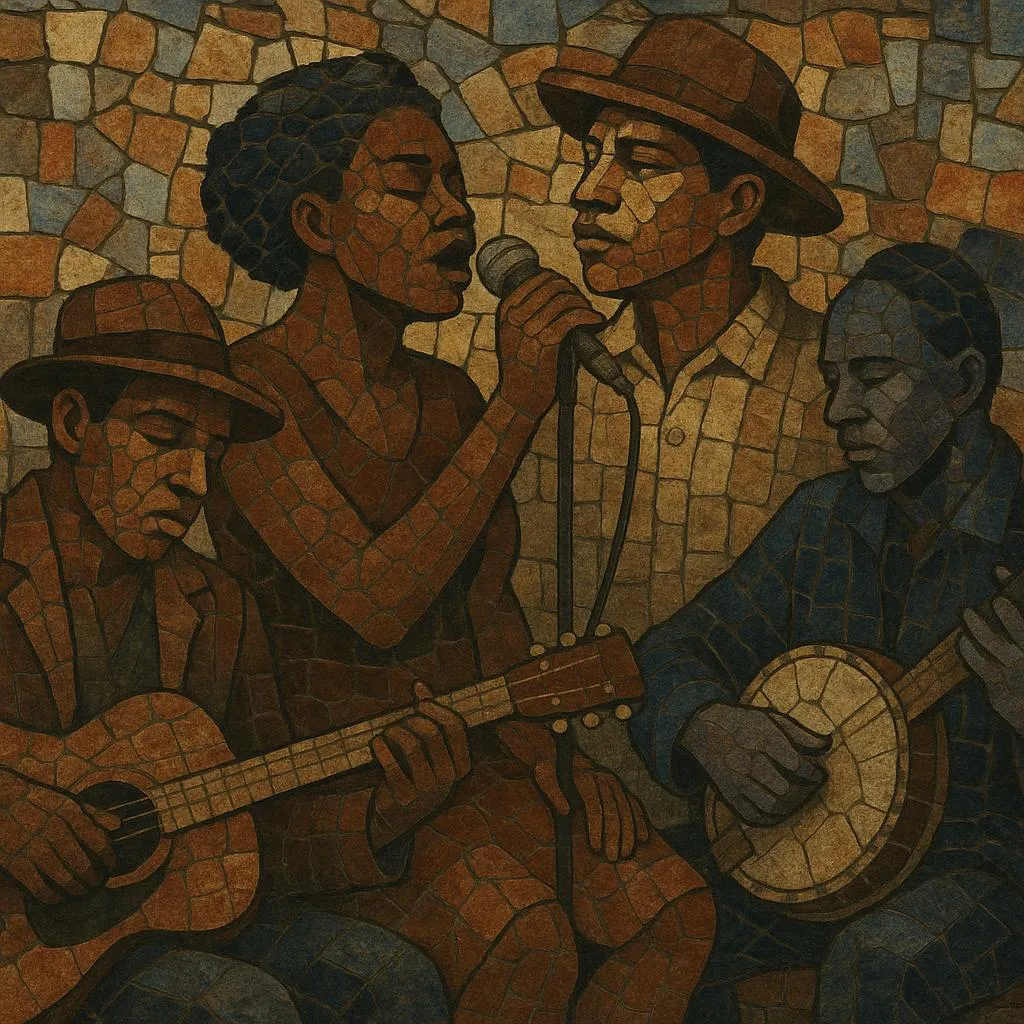
Black Americana is a contemporary umbrella genre that centers Black artists within the traditions of Americana (roots-based U.S. music such as folk, country, blues, gospel, and soul).
It often blends acoustic storytelling and roots instrumentation with Black musical lineages, highlighting themes of migration, labor, faith, resilience, love, and social justice.
Rather than a single fixed sound, it is a scene and framing that reconnects “Americana” to its multiracial roots while pushing the style forward with modern production, R&B/soul phrasing, and genre-crossing songwriting.


History
American roots music has always included Black creators: blues, spirituals, gospel, early country string-band traditions, and rhythm & blues all shaped what later became branded as “Americana.”
As commercial country and folk industries consolidated, Black artists were often excluded from country/roots marketing categories even when their music fit. This created a long-running visibility gap between Black roots practice and mainstream “Americana” gatekeeping.
In the 2010s, Black artists increasingly used (and were described by) terms like “Black Americana” to assert place within roots music while refusing restrictive genre labeling. The rise of streaming discovery, independent labels, and cross-genre festival circuits helped this cohere as a recognizable tag.
The 2020s brought greater media coverage, award conversations, and curated showcases highlighting Black roots artists. The sound continues to diversify, ranging from traditional acoustic folk/country to psychedelic soul-leaning Americana and modern roots-rock hybrids.
Use roots-forward instruments such as acoustic guitar, resonator guitar, banjo, fiddle, upright bass, pedal steel, Hammond organ, and hand percussion.
Add gospel- and soul-derived vocal textures (call-and-response backing vocals, choir-like harmonies) when the arrangement calls for uplift or communal feeling.
Write in common Americana meters (4/4, 6/8) but feel free to borrow rhythmic pocket from soul and R&B (behind-the-beat phrasing, strong backbeat, or swung subdivisions).
For more traditional tracks, use train beats, shuffles, or two-step-adjacent grooves; for modern tracks, blend a roots drum kit with subtle hip-hop/R&B percussion layers.
Start from folk/country harmonic grammar (I–IV–V, vi, ii) and blues vocabulary (dominant 7ths, pentatonic/blue notes).
Bring in soul and gospel color by using richer cadences (secondary dominants, ii–V motion, suspended chords resolving into warm triads) and extended harmony sparingly.
Prioritize narrative songwriting: concrete details, places, jobs, family histories, and emotional specificity.
Common thematic lanes include belonging, lineage, migration, spirituality, love, community care, and social critique; the key is to speak from lived perspective rather than treating “Americana” as an aesthetic costume.
Lead vocals often mix country storytelling clarity with soul dynamics: controlled grit, melisma used as emphasis (not constant), and phrasing that can lean conversational or church-like depending on the song.
For traditional-leaning songs, favor natural room sound and minimal editing.
For modern Black Americana, keep the roots instrumentation audible but allow contemporary polish (tight low end, layered harmonies, tasteful saturation) and occasional genre-crossing textures (ambient pads, subtle programmed drums).