


Your digging level
For this genre
0/8
🏆
Sign in, then listen to this genre to level up
Description
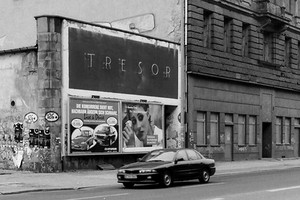
Berlin techno is a scene of clubs, DJs, producers and labels rather than a single musical style. It took shape in Berlin around underground parties in the late 1980s and early 1990s, with close connections to Detroit techno and spaces such as Tresor and Der Bunker.
Its music belongs to techno but encompasses several approaches: the scene has included minimal and dub techno as well as harder, industrial and melodic varieties. What distinguishes it is less a fixed sound than a shared history of venues, parties and exchanges between artists.
History
Formation and the Detroit connection
The scene developed in the late 1980s and early 1990s, as celebrations around German reunification coincided with the arrival of Detroit techno in Berlin. Promoters organized free underground parties in abandoned buildings in East Berlin. Clubs including Tresor, Der Bunker and Planet became important to the city's techno culture.
Tresor hosted Detroit artists including Jeff Mills, Juan Atkins and Robert Hood and released their music through its label. Its 1993 compilation Tresor Compilation Vol. 2: Berlin-Detroit, A Techno Alliance marked the connection between the two cities. At Der Bunker, DJs pushed techno toward greater speed and intensity; this development later led to hardcore electronic dance music.
New clubs and subscenes
As minimal techno gained prominence, artists including Ellen Allien, Marcel Dettmann and Ben Klock emerged. Allien founded BPitch Control in 1999, helping launch artists including Paul Kalkbrenner. Watergate opened in 2002, followed by Berghain in 2004.
The scene continued to accommodate different techno approaches and artists, including Kobosil, Klangkuenstler and Stella Bossi. In 2024, Berlin techno was added to Germany's National Register of Intangible Cultural Heritage.
Choose an approach
Think of the scene as a setting for several kinds of techno, not as a recipe for one fixed sound. You could work toward the sparer possibilities associated with minimal techno, explore dub techno's spaciousness, or take inspiration from the harder and more intense music played at Der Bunker.
Build a club track
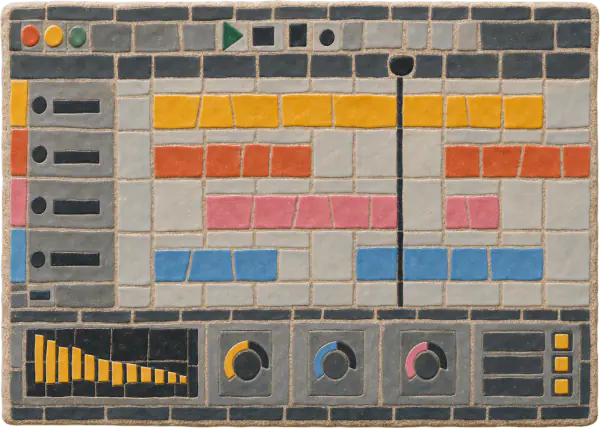
A common approach in techno is to start with a steady four-on-the-floor kick and a repeating bass or synth pattern. Add percussion and gradually introduce, remove or alter layers so the groove develops over time. For a minimal approach, try making small changes to a few elements; for a dub-influenced approach, you could use delay and reverb to create space around them.
Arrange for a DJ set
Leave sections in which the rhythm is clear enough to mix with another track. Test how the arrangement builds and releases energy on a dance floor, rather than treating every part as a separate verse or chorus.

Users’ favorites
Tracks
Share your favorite track to see the other users’ ones
Artists
Share your favorite artist to see the other users’ ones
Albums
Share your favorite album to see the other users’ ones





Upcoming concerts
in this genre
Influenced by

Has influenced

