Your digging level
Description
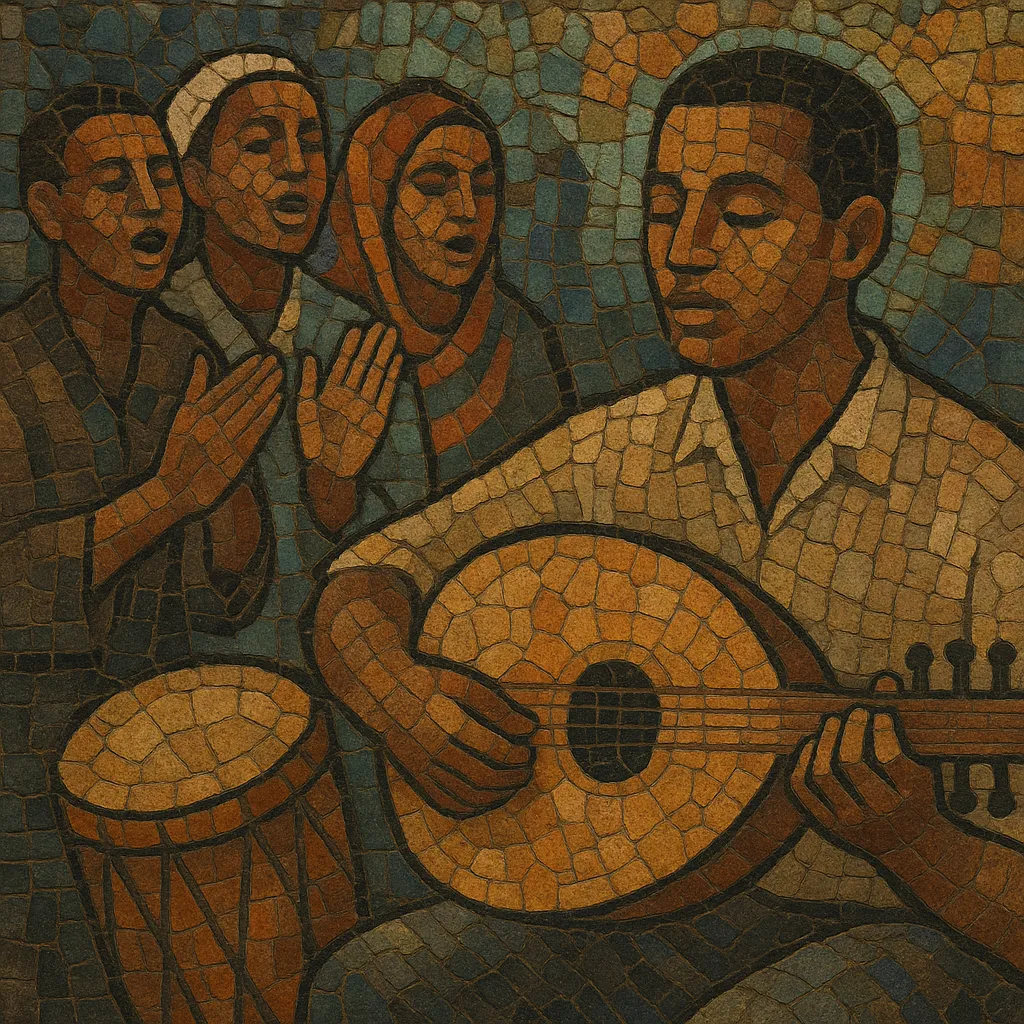
Belwo (often spelled Balwo) is a mid-20th-century Somali song form built from very short, catchy couplets about love, longing, and everyday life. It is typically delivered over a simple, danceable groove with handclaps and light percussion, led by a soloist and answered by a chorus.
Emerging in northern Somalia in the 1940s, belwo condensed older Somali poetic practices into compact, memorable refrains, and was soon accompanied by the kaban (oud) and small ensembles. Its tuneful brevity and romantic focus made it a popular bridge between traditional verse and the later, more developed heello/modern Somali song styles.
History
Belwo arose in the 1940s in northern Somalia (then British Somaliland), where urbanizing communities were adapting rich Somali oral-poetic traditions to new, compact musical forms suitable for street performance and social dance. Abdi “Sinimo” is widely credited with crystallizing the style as brief, refrain-based love songs whose very name (balwo, “affliction”) hints at the sweet troubles of romance.
Initially carried by handclaps, frame drums, and communal call-and-response, belwo quickly migrated from informal gatherings to cafes, wedding halls, and radio. The introduction of the kaban (oud) and small ensembles reflected both local taste and contact with Arabic musical practice via the Red Sea trade. By the late 1940s and 1950s, composers and bandleaders—most notably Abdullahi Qarshe—expanded the short belwo refrain into more developed song forms (heello), while retaining its melodic directness and romantic themes.
Belwo’s concise structure, danceable pulse, and plain-spoken romanticism became the seedbed for modern Somali urban music. It directly informed heello and the mid-century qaraami repertoire, shaped the programming of troupes such as Waaberi, and left a lasting imprint on Somali popular songcraft. Even where later genres grew more orchestrated or theatrical, the belwo aesthetic—short lyrical hooks, call-and-response, and lilting accompaniment—remained foundational.