Your digging level
Description
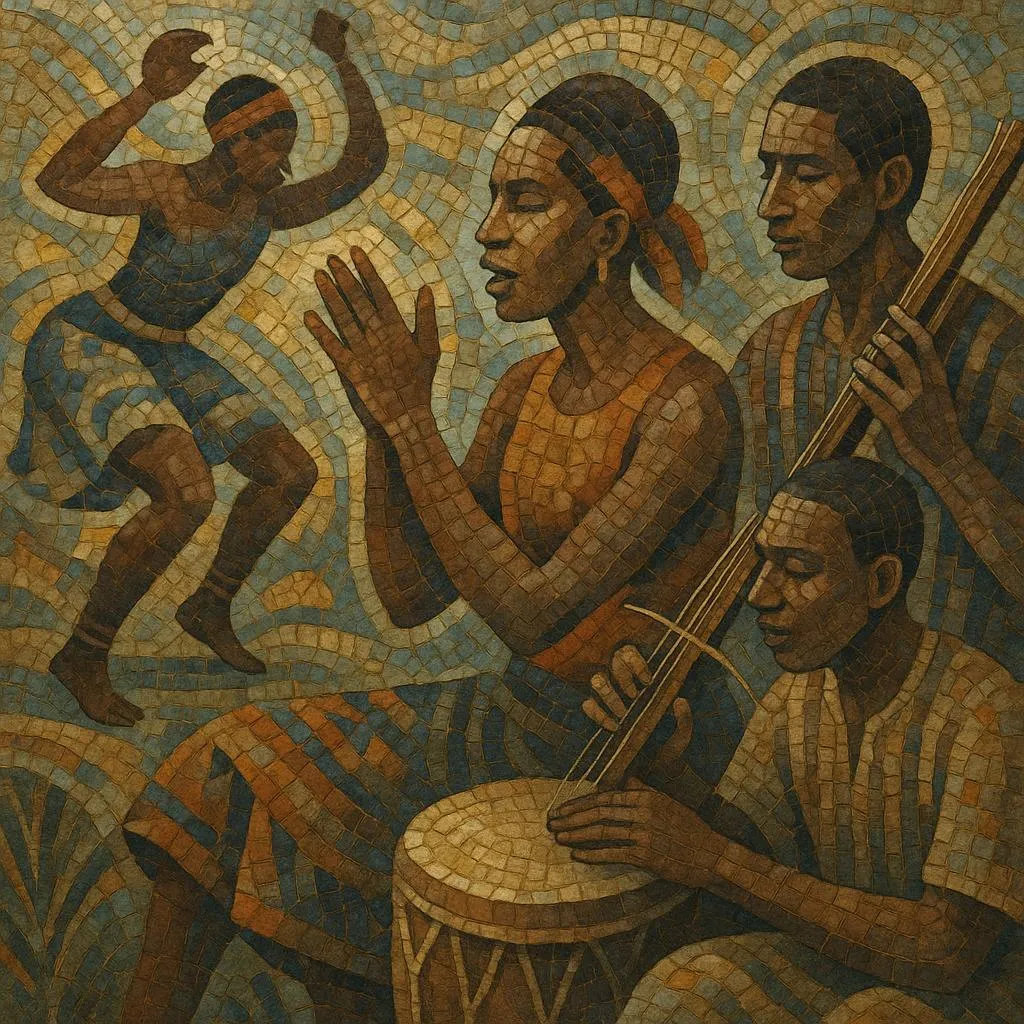
Batswana traditional is the umbrella term for the indigenous music and dance practices of the Tswana (Batswana) people of Botswana. It centers on communal singing, call-and-response structures, handclapping, foot-stamping, and percussion accents, often paired with distinctive dance suites such as setapa, phathisi, and borankana.
Songs are typically performed in Setswana and convey oral histories, praise poetry (leboko), proverbs, and social commentary. Instrumentation ranges from body percussion and ankle rattles made from seed pods or hooves to local instruments such as the segaba (one-string bowed lute/fiddle), segankuru (musical bow), setinkane (thumb piano), whistles (phala), and frame or kettle drums (moropa). Harmonies favor parallel thirds and fourths, with rhythmic feels that alternate between duple and compound meters (often 12/8) to drive dance.
History
Batswana traditional music predates colonization and is rooted in the cultural life of Tswana chiefdoms (e.g., Bangwaketse, Bakwena, Bangwato, Batawana). Music animated cattle-post life, weddings (patlo), initiation rites (bogwera and bojale), rainmaking, and communal celebrations. Performances blended singing with dance suites—setapa, phathisi, and borankana—each with characteristic steps, costuming, and percussive accents from footwork and ankle rattles.
From the late 1800s into the 20th century, Christian missions introduced hymnody and tonic-sol-fa pedagogy, reshaping village choirs and creating a strong parallel track of Setswana-language choral practice. Many traditional groups adopted multipart harmonies and choral organization while retaining indigenous forms of lead-and-chorus interaction and dance.
Post-independence nation-building and cultural policy supported festivals (e.g., President’s Day Competitions, Son of the Soil) and school/community ensembles that sustained traditional performance on stage. Field recordings, radio, and later local studios enabled traditional troupes to circulate beyond their regions. In the 1990s–2000s, a broader pan–Southern African market for roots-inflected popular music further elevated Botswana’s traditional styles while intersecting with contemporary forms. This climate helped seed hybrid idioms and informed the linguistic identity of later styles such as motswako, where Setswana poetic delivery and traditional cadences appear alongside modern beats.
Prioritize voice, handclaps, and footwork. Add:
•Segaba (one-string bowed lute) for melodic lines and drones.
•Segankuru (musical bow) or setinkane (thumb piano) for ostinatos.
•Phala (whistles/horns) for cues and flourishes.
•Orchestrate dance-specific timbres (e.g., ankle rattles) to lock with the chorus rhythm.