

Your digging level
Description
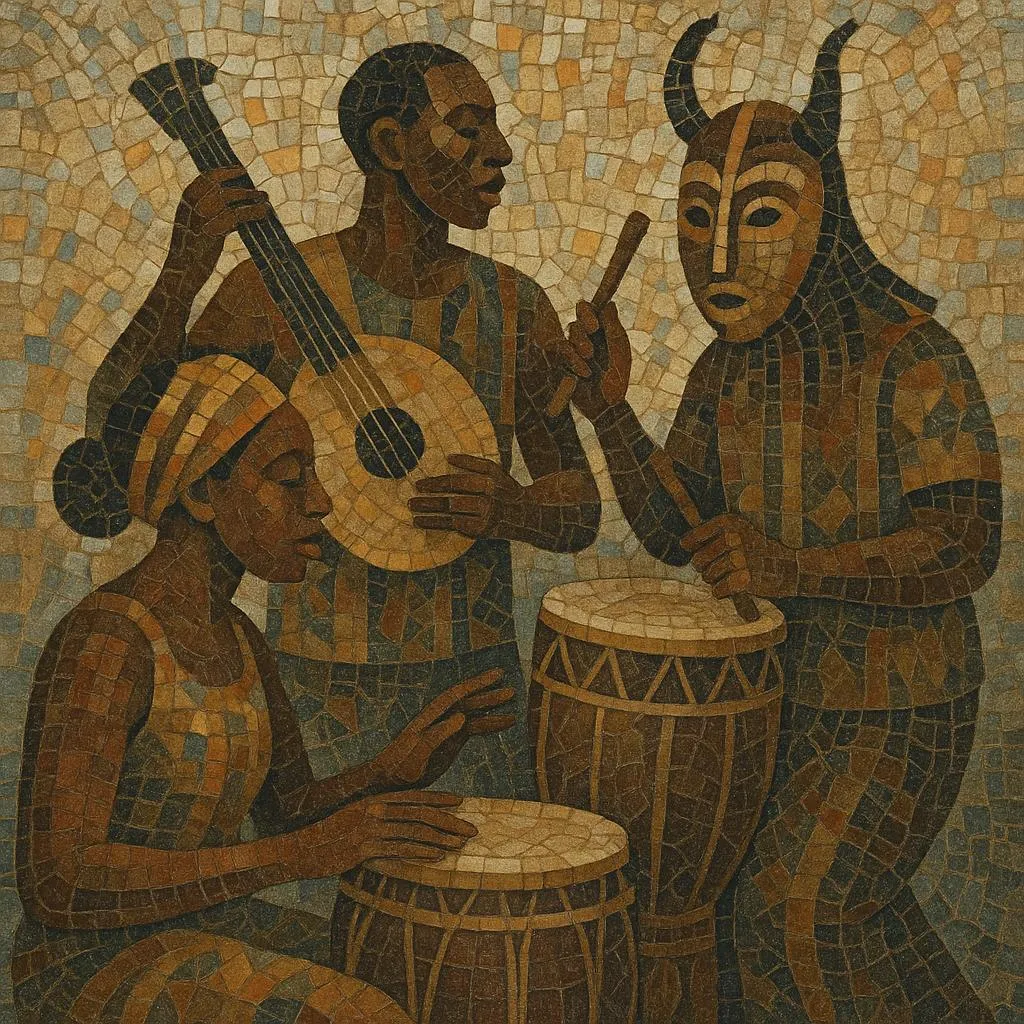
Baoulé music is the traditional music of the Baoulé (Baule) people of central Côte d’Ivoire (Ivory Coast), an Akan-speaking group whose courtly and village arts are famous across West Africa. It is largely vocal and percussion-driven, performed for masquerade (especially the iconic Goli), funerals (Kpli), initiation, praise-singing, and community celebration.
Ensembles typically combine interlocking drums, double-iron bells, rattles (notably the ahoko), handclaps, and sometimes slit-log royal drums (attoungblan), with responsorial singing and dance. Melodic instruments such as the Akan harp-lute (seprewa), flutes, and occasional horns may color the texture. Rhythms are polyrhythmic (often 12/8 with 3:2 cross‑rhythm) and songs favor pentatonic/hexatonic scales, compact phrases, and proverb-rich, tonal-language texts delivered by a leader with a choral response.
As both court and community music, Baoulé repertories encode history, moral philosophy, and social bonds, while their high-energy dance music underpins some of the most spectacular masquerade performances in the region.
History
The Baoulé trace their origins to Akan migrations from present‑day Ghana in the 17th–18th centuries. Their music developed in royal courts and village settings, accompanying governance, mediation, harvests, and life‑cycle rites. Court ensembles maintained attoungblan (royal slit‑log drums) and heraldic rhythms, while village musicians cultivated repertories for funerals (Kpli), women’s dances with ahoko rattles, and the famous Goli masquerade.
By the 19th century, Baoulé ensembles were codifying interlocking drum parts, bell time‑lines, and responsorial singing into stable forms. The ahoko (female‑led rattle ensemble), the seprewa (Akan harp‑lute), and whistle/flute calls complemented drums and handclaps. The Goli cycle, with male/female mask pairs and escalating tempo profiles, became a hallmark of Baoulé identity, while proverbial lyrics, praise, and satirical commentary reinforced communal ethics.
Colonial and post‑colonial eras brought field recordings (e.g., French radio/label projects) and the professionalization of national ballet troupes. From the 1960s onward, Baoulé repertories were staged by Côte d’Ivoire’s national ensembles and local troupes, standardizing pedagogies and exporting the style to festivals and conservatories. Urban popular styles in Abidjan borrowed Baoulé grooves and chorus structures.
Today, Baoulé music remains vital in village life while also informing Ivorian popular music. Rhythmic blueprints, bell patterns, and call‑and‑response voicings seep into zoblazo, coupé‑décalé arrangements, and contemporary worship/praise, sustaining a feedback loop between tradition and modernity.

