Your digging level

For this genre
0/8
🏆
Sign in, then listen to this genre to level up

Description

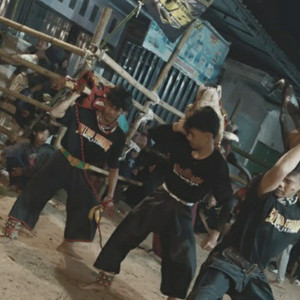
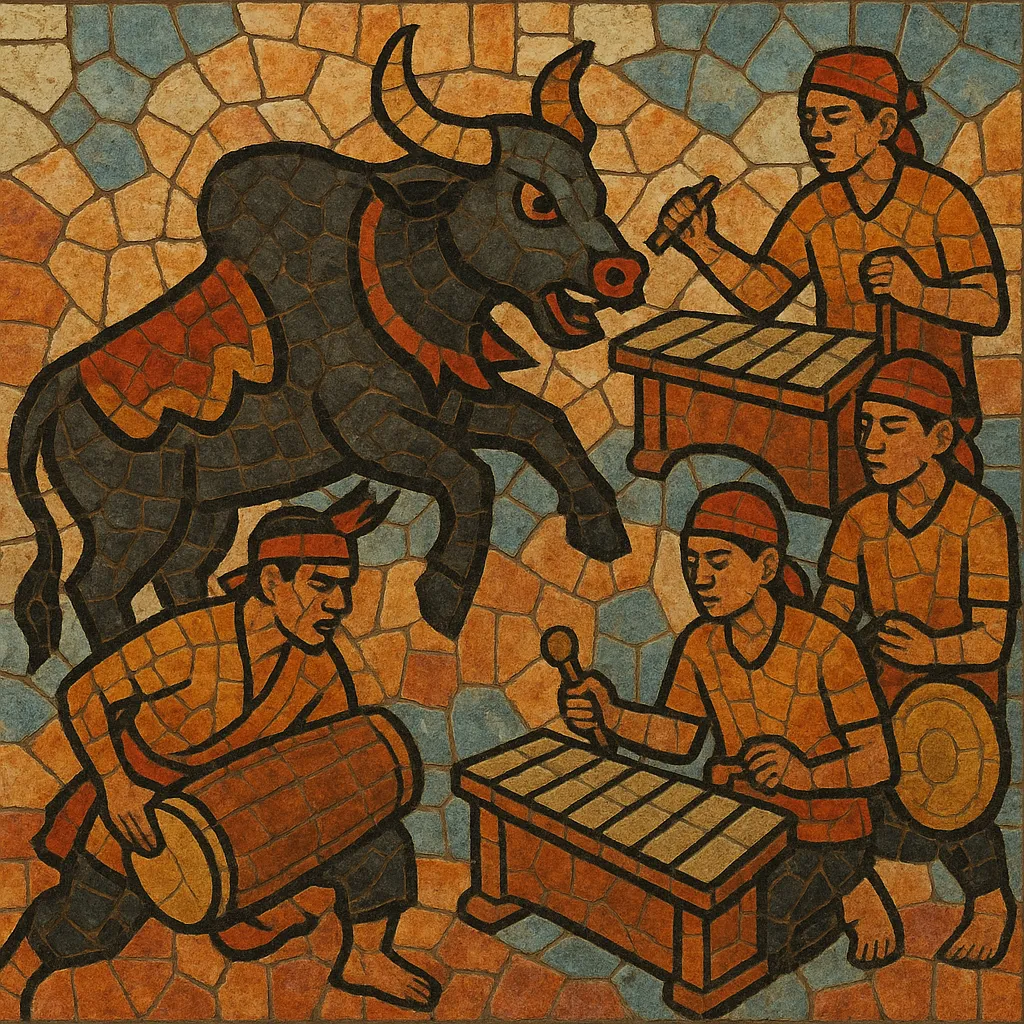
Bantengan is a traditional performance genre from East Java that revolves around a large, bull-shaped effigy (banteng) operated by two performers. It blends martial display, trance ritual, and small-ensemble gamelan percussion into a dramatic street or courtyard spectacle.

The music features driving kendang (drum) patterns, gongs, and metallophones that outline gamelan colotomic cycles, often in slendro and pelog tuning systems. The performance typically depicts the strength and ferocity of the bull, alternating between stately procession, agile mock combat, and climactic, fast-paced dance.

Beyond entertainment, Bantengan serves social and ritual functions—marking village celebrations, commemorations, and community gatherings—where a spiritual caretaker (pawang) oversees trance segments and protective rites.


Sources: Spotify, Wikipedia, Discogs, Rate Your Music, MusicBrainz, and other online sources

History

Origins

Bantengan took shape in the early 20th century in the Malang–Batu region of East Java, Indonesia. Local communities adapted existing Javanese processional and trance-dance traditions to a bull effigy, creating a spectacle that symbolized strength, protection, and communal identity.

Development and Practice

Over time, Bantengan incorporated small-ensemble gamelan percussion—kendang, gong, kempul, kenong, and saron—alongside shouts, whistles, and conch or horn calls to heighten drama. A pawang guides the trance elements, applying ritual protections and cueing musical intensifications. Scenes move from processional entries to mock battles, martial-arts flourishes, and rapid, virtuosic passages.

Cultural Role

Bantengan persists as a community-based art performed at village festivals, civic parades, and cultural showcases. While not centered on commercial recording artists, it thrives through local troupes (paguyuban) that transmit repertoire, costume-making, and performance etiquette intergenerationally. In recent decades, cultural groups and municipalities have supported showcases that help preserve the form, while performers balance tradition with staged adaptations for modern audiences.

How to make a track in this genre

Ensemble and Timbre
•   Use a compact gamelan-derived setup: kendang (lead drum), gong ageng or large gong (downbeat marker), kempul/kenong (punctuation), and saron/peking (metallophone ostinati). •   Add auxiliary colors such as bende (small gong), whistles, conch or horn calls, and loud crowd responses to amplify drama.
Rhythm and Form
•   Build around colotomic cycles (e.g., 8, 16, or 32-beat cycles) with clear gong punctuation. •   Alternate between processional tempos (moderate, steady) and action cues (accelerated, driving) to mirror the bull’s calm vs. ferocity. •   Employ kendang lead signals to cue section changes, mock-combat passages, and trance entries/exits.
Melody and Tuning
•   Compose short, repetitive melodic cells in slendro or pelog modes; use saron/peking to outline patterns that lock with the drum. •   Emphasize unison riffs and interlocking figures rather than harmonic progressions, keeping the texture percussive and modal.
Choreography and Staging
•   Coordinate music tightly with the bull effigy’s movements: slow, heavy steps for regal entries; quick, syncopated bursts for feints, charges, and mock fights. •   Leave space for call-and-response shouts, crowd interaction, and pawang cues during trance segments.
Ritual and Safety
•   If incorporating trance, designate a pawang to manage protective rites, start/stop cues, and safety; keep music responsive to their signals. •   Balance authenticity with modern staging by maintaining core rhythmic cycles and instrument roles while adapting duration and dynamics to venue needs.

Top albums

Top tracks

Locked
Share your favorite track to unlock other users’ top tracks
Influenced by
Has influenced
No genres found
Challenges
Digger Battle
Let's see who can find the best track in this genre
© 2026 Melodigging
Melodding was created as a tribute to Every Noise at Once, which inspired us to help curious minds keep digging into music's ever-evolving genres.
Buy me a coffee for Melodigging