Your digging level
Description
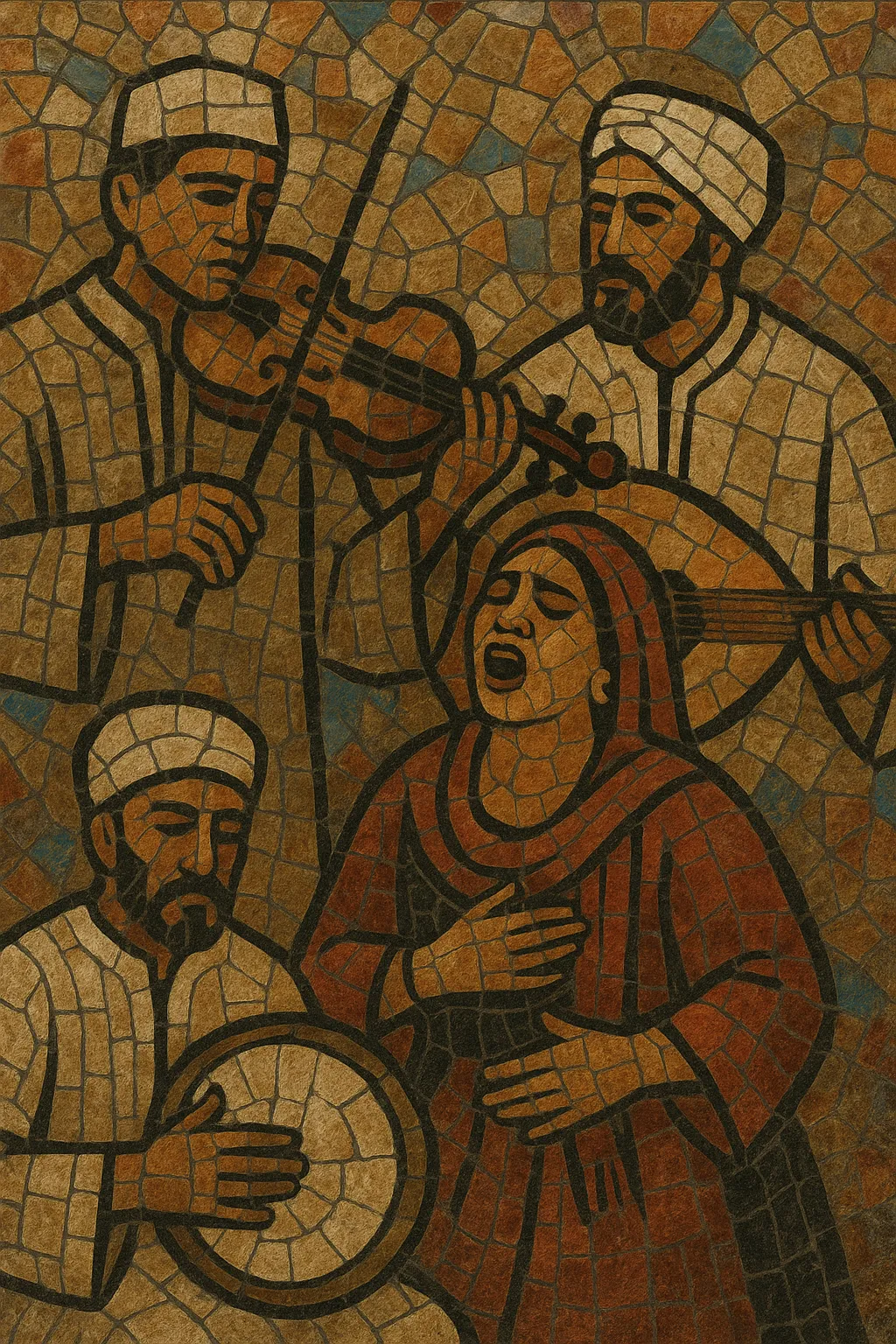
Aita is a rural Moroccan Bedouin style of Arabic folk music centered on powerful, piercing vocal lines sung in Moroccan Arabic (Darija) by women known as shikhat, typically accompanied by small male ensembles.
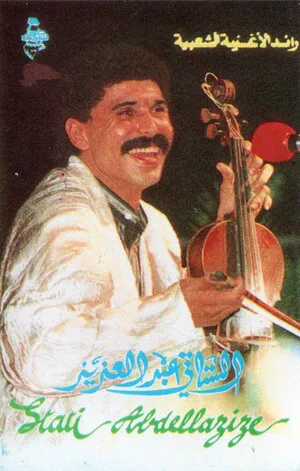
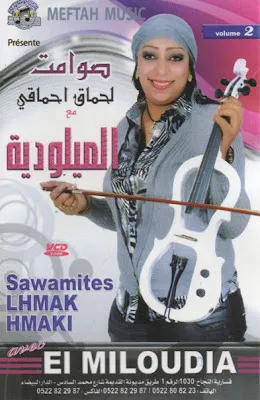
The core sound blends scratchy, expressive bowed violin (kamanja) with rollicking frame-drums (bendir), clay goblet or small handheld drums (taʿrija), and festival bass drum (tbel). Texts use locally rooted, orally transmitted poetry (zajal/malḥun-like couplets) that alternate between praise, satire, love laments, and tribal memory. The music is celebrated at weddings and rural festivities, especially around Safi and the Chaouia–Doukkala–Abda plains, and today it is showcased at the Aita Festival in Safi.
Stylistically, Aita features call-and-response between a lead shikha and her chorus, melismatic lines, robust ululations, and heterophonic ensemble textures, usually set to buoyant 6/8 or driving 2/4 grooves that invite dancing.
History
Aita emerged in the 19th century across Morocco’s Atlantic plains (Chaouia, Doukkala, Abda) as a Bedouin-rooted village performance practice. Shikhat—highly skilled female vocalist-dancers—became the genre’s emblem, projecting a commanding vocal style that carried across outdoor gatherings, weddings, and harvest celebrations. Their repertory drew on local oral poetry (zajal-like stanzas) to recount love, humor, moral commentary, and tribal histories.
By the late 1800s and early 1900s, ensembles standardized around kamanja (violin played upright on the knee), bendir, taʿrija, and tbel. Aita’s structure often alternates solo declamation by the lead shikha with choral refrains, set to cyclical rhythmic patterns in 6/8 or 2/4. Vocal technique emphasizes melisma, ornamented turns, and piercing projection, with collective ululation heightening climactic moments.
In the mid-20th century, radio, early recordings, and urban cabarets around Casablanca and Safi helped carry Aita beyond its rural base. Certain subregional flavors—commonly associated with Chaouia–Doukkala–Abda—fed directly into the development of Moroccan chaâbi aesthetics, where the violin-and-bendir timbre, poetic couplets, and dance-forward grooves found a mass audience.
Since the 2000s, folkloric troupes, heritage initiatives, and star interpreters have kept Aita vibrant on national stages and at the Safi Aita Festival. While gender politics around the shikhat’s public role have long been debated, contemporary audiences increasingly valorize Aita as a cornerstone of Moroccan musical identity.