Your digging level
Description
Afro‑Peruvian music (música afroperuana, música negra) is a coastal Peruvian tradition forged by enslaved Africans and their descendants under Spanish colonial rule. It fuses West African rhythmic sensibilities and call‑and‑response singing with Iberian/Criollo harmony, guitar accompaniment, and poetic forms, while also absorbing elements of Indigenous Andean culture and daily life.
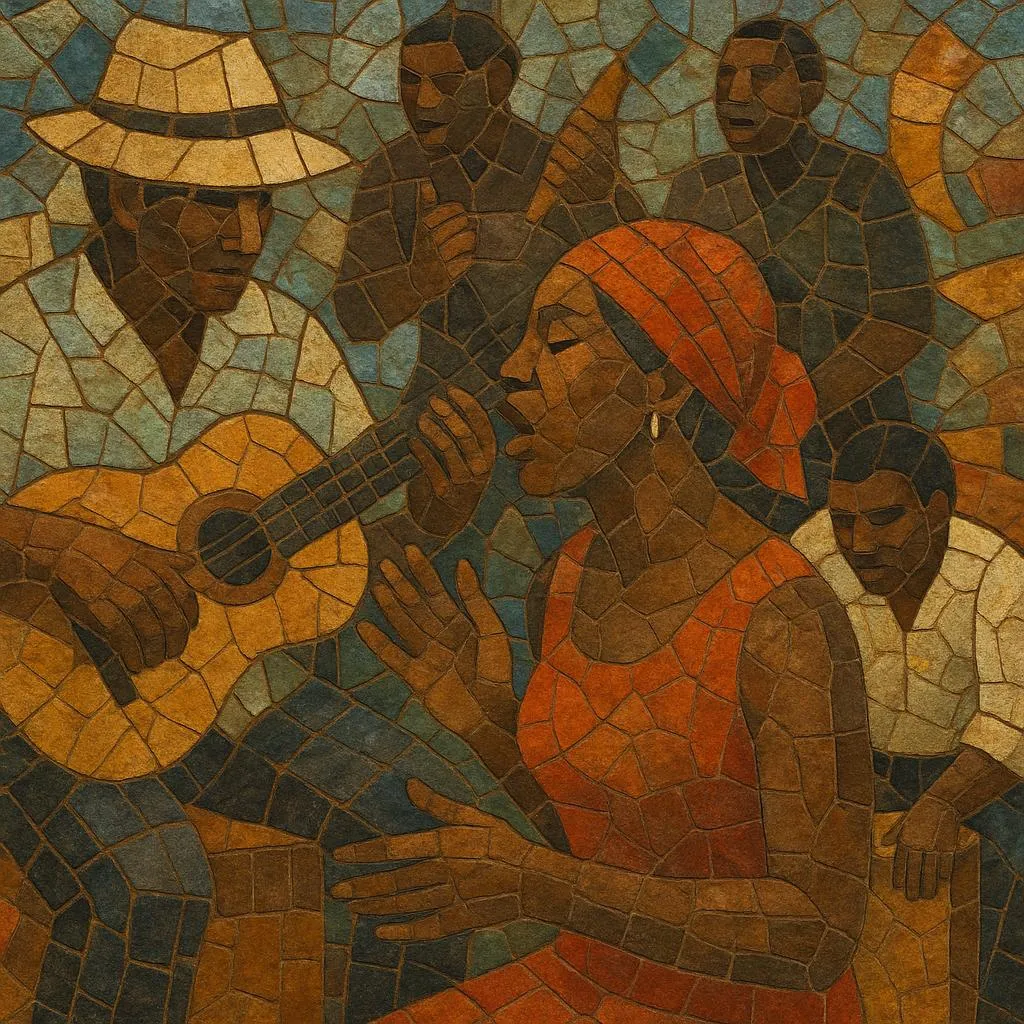
The best‑known dance‑song forms include festejo (festive and virtuosic), landó (slow, hypnotic 12/8), panalivio (spiritual laments), alcatraz, and zamacueca‑rooted styles. Signature instruments are the cajón (box drum), cajita (slotted charity box), quijada de burro (donkey jawbone), handclaps, and zapateo (percussive footwork), alongside the Spanish guitar and bass. The result is music that is at once joyful and reflective—celebrating Black Peruvian identity, community, and resilience.
History
Afro‑Peruvian music emerged along Peru’s central and southern coast (notably Lima and Chincha) from the 1600s onward, as people of West African origin adapted their musical memories to new realities under Spanish rule. African call‑and‑response, polyrhythm, and dance were interwoven with Iberian guitars, Catholic festivities, and urban Criollo verse forms. Indigenous Andean work rhythms and community practices also left their imprint through everyday cultural exchange and intermarriage.
Enslaved and later free Black communities developed song‑dance genres for celebration, ritual, and satire. Early expressions included the ancestors of today’s festejo and landó, zapateo (percussive footwork), and the use of resourceful percussion—cajón, cajita, and quijada—when drums were restricted.
Across the 1800s Afro‑Peruvian performance thrived informally in barrios and haciendas. Some traits connected to broader Criollo forms like zamacueca (a forerunner to marinera) and the coastal waltz tradition, even as explicitly Black genres were marginalized in elite spaces. Oral transmission kept rhythms, verses (including décima poetry), and dances alive.
From the late 1950s to 1970s, a cultural renaissance led by Nicomedes Santa Cruz and Victoria Santa Cruz documented, staged, and revitalized Afro‑Peruvian arts through research, poetry, theater, and dance companies. Ensembles such as Perú Negro (founded 1969 by Ronaldo Campos) professionalized performance and trained generations of artists. Recording artists and broadcasters brought festejo, landó, and panalivio into national consciousness.
From the 1990s onward, figures like Susana Baca and Eva Ayllón carried Afro‑Peruvian music to international audiences, winning awards and collaborating across Latin, jazz, and world‑music circuits. The cajón, popularized globally after Paco de Lucía adopted it into flamenco in the late 1970s, became a hallmark of contemporary Latin and Iberian percussion. Today, traditional ensembles and innovators (e.g., Novalima) maintain a living dialogue between heritage and modern production while community troupes continue to teach dance, drumming, and poetry in coastal Peru.