Genres
Artists
Albums
Make Music
Sign in
Sign in
Artists
Finnish Tango
Artists
Finnish Tango
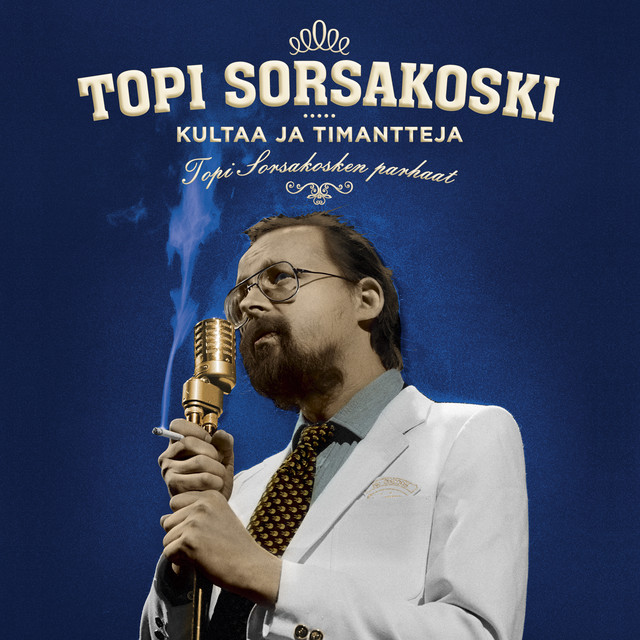
Topi Sorsakoski
2011
·
3 albums
Listen
2
/5
Genres
Finnish Pop
Finnish pop (often called Suomipop) is mainstream popular music created by Finnish artists, typically sung in Finnish and tailored to local sensibilities and radio formats. It blends international pop songcraft—catchy hooks, verse–pre‑chorus–chorus structures, and polished production—with the melodicism and direct emotional delivery inherited from iskelmä (Finnish schlager). Since the 1980s, synthesizers and drum machines have been common, while the 1990s–2000s brought dance‑pop and eurodance colors; the 2010s–2020s era embraces contemporary electropop, R&B inflections, and streaming‑friendly arrangements. Lyrically, Finnish pop often focuses on love, everyday life, and bittersweet introspection, balancing upbeat, anthemic choruses with a distinctly Nordic, sometimes melancholic tone.
Discover
Listen
Finnish Rock
Finnish rock (often called “suomirock”) is a broad umbrella for rock music made in Finland, notable for its melodic guitar work, singable choruses, and a lyrical bent that mixes everyday realism, irony, and Nordic melancholy. It grew out of 1960s beat, rock and roll, and rautalanka (a local, twangy instrumental rock), then absorbed punk and new wave energy in the late 1970s, and hard rock and glam sheen in the 1980s. Many of its flagship acts chose to sing in Finnish, establishing a distinctive identity separate from Anglo-American rock. Across decades, the sound ranges from high-octane boogie and rockabilly inflections (Hurriganes) to glam-infused hard rock (Hanoi Rocks), anthemic mainstream rock (Eppu Normaali, Popeda), and more alternative or art-minded currents (Sielun Veljet, CMX).
Discover
Listen
Rautalanka
Rautalanka is a Finnish style of clean, melodic instrumental guitar music that emerged in the early 1960s. The name literally means “iron wire,” a nod to the guitar strings and the bright, wire‑like tone. The sound is characterized by a singing lead guitar playing memorable, often minor‑key melodies with tape echo and spring reverb, supported by rhythm guitar, bass, and drums. It draws heavily on The Shadows–style instrumental rock and adapts Finnish folk, tango, and schlager melodies into twangy, danceable arrangements. Compared with surf, rautalanka is typically less aggressive and more melancholic, emphasizing lyrical phrasing, neat counter‑melodies, and a polished, sentimental atmosphere.
Discover
Listen
Iskelmä
Iskelmä is the Finnish counterpart to continental European schlager: a melody-forward, lyrically clear style of popular song designed for easy listening and social dancing. It blends local dance idioms such as Finnish tango, humppa, and waltz with international traditional pop and chanson, resulting in polished, hook-rich songs with sentimental or romantic themes. Across decades, iskelmä has served as a broad umbrella for Finnish mainstream pop singing, spanning orchestral arrangements, guitar-led ensembles, and, later, synth-enhanced productions—while retaining its emphasis on singable melodies and accessible emotions.
Discover
Listen
Pop
Pop is a broad, hook-driven style of popular music designed for wide appeal. It emphasizes memorable melodies, concise song structures, polished vocals, and production intended for radio, charts, and mass media. While pop continually absorbs elements from other styles, its core remains singable choruses, accessible harmonies, and rhythmic clarity. Typical forms include verse–pre-chorus–chorus, frequent use of bridges and middle-eights, and ear-catching intros and outros. Pop is not defined by a single instrumentation. It flexibly incorporates acoustic and electric instruments, drum machines, synthesizers, and increasingly digital production techniques, always in service of the song and the hook.
Discover
Listen
Schlager
Schlager is a European popular music style characterized by catchy melodies, simple verse–chorus forms, and emotionally direct lyrics that foreground love, sentimentality, everyday life, and feel‑good escapism. It is typically sung in German, but also thrives in Swedish, Dutch, and other European languages, and favors bright, polished production, sing‑along choruses, and frequent key changes (notably a climactic final‑chorus modulation). Rhythmically steady, mid‑tempo 4/4 grooves support memorable hooks, while arrangements draw on orchestral colors (strings, brass), light pop rhythm sections, and, in later decades, disco, synth‑pop, and dance‑pop textures. Stylistically, Schlager sits between traditional pop and mainstream light entertainment, bridging pre‑rock European song traditions with modern pop presentation.
Discover
Listen
Finnish Tango
Finnish tango is a distinctly Nordic interpretation of tango that favors minor keys, measured tempos, and a restrained, melancholic delivery. Rather than the flamboyance of Argentine tango, it emphasizes stoic vocal performances, lyrical sentiment, and a cool, almost nocturnal atmosphere. Arrangements typically spotlight accordion (often taking the role of the bandoneon), violin, piano, and guitar, supported by upright bass and subtle percussion. The songs often dwell on themes of longing, nature, darkness, and distance—mirroring the Finnish concept of "kaiho" (yearning). It thrives in Finland’s dance pavilion tradition (lavatanssit) and remains culturally central through events like the Seinäjoki Tangomarkkinat.
Discover
Listen
Tango
Tango is a song-and-dance music from the Río de la Plata region, crystallizing in Buenos Aires (Argentina) and Montevideo (Uruguay) in the late 19th century. It is characterized by a melancholic, dramatic tone; richly expressive melodies; and a distinctive rhythmic feel rooted in the habanera and milonga. Core ensembles feature bandoneón, violin(s), piano, double bass, and sometimes guitar, forming the famed orquesta típica. Across the 1920s–1950s it became a worldwide craze, moving from rough immigrant bars to grand salons and radio, developing highly sophisticated arranging and performance practices. Lyrics often employ lunfardo (Buenos Aires slang) and dwell on urban nostalgia, love, betrayal, and the neighborhood (el barrio). Note on terminology: in flamenco, “tangos” is a distinct palo (song form) with a lively 4/4 compás, often in A Phrygian, closely related in feeling to rumba flamenca. Although it shares the name and a spirited character, flamenco tangos is a different tradition from the Río de la Plata tango described above.
Discover
Listen
Show all 8 genres
Albums
2011
2
/5
Tummansininen sävel
Topi Sorsakoski
Finnish Tango
Iltarusko
Topi Sorsakoski
Finnish Tango
Hurmio
Topi Sorsakoski
Finnish Tango
Similar artists
2
/5
Reijo Taipale
Finnish Tango
Finnish Pop
Finnish Rock
2
/5
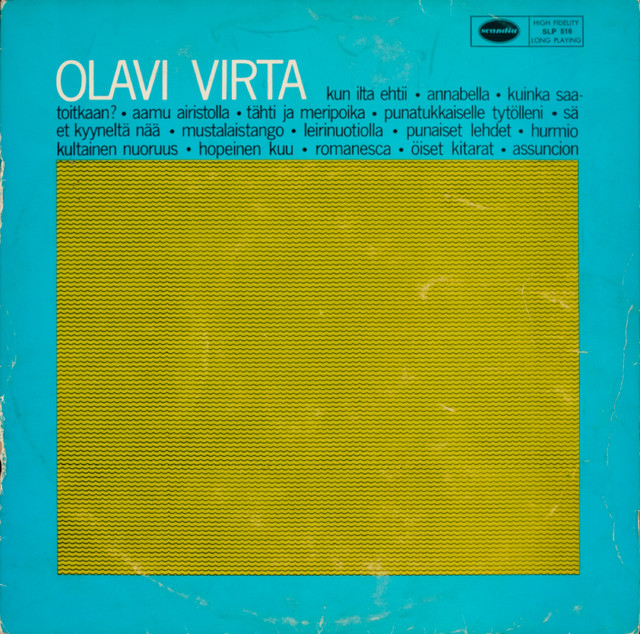
Olavi Virta
Finnish Tango
Finnish Pop
Finnish Rock
1
/5
Pedro's Heavy Gentlemen
Finnish Pop
Finnish Rock
Finnish Tango
1
/5
Martti Innanen
Finnish Pop
Finnish Rock
Iskelmä
2
/5
Marko Maunuksela
Finnish Tango
Finnish Pop
Iskelmä
2
/5
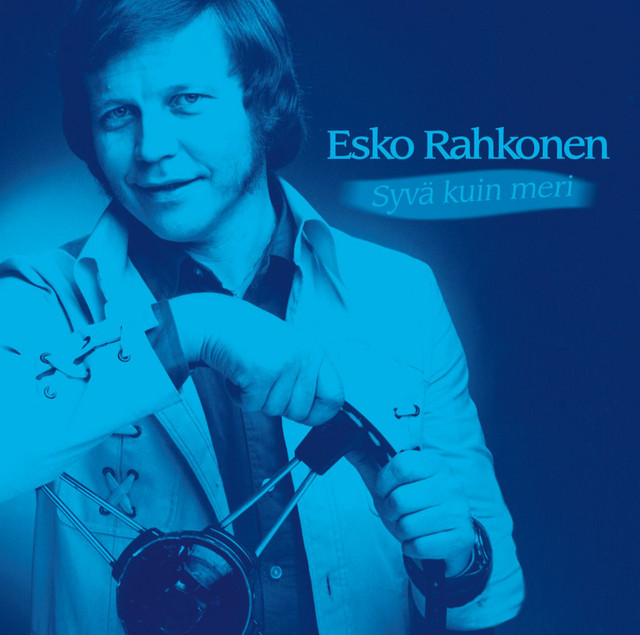
Esko Rahkonen
Finnish Tango
Finnish Pop
Iskelmä
1
/5
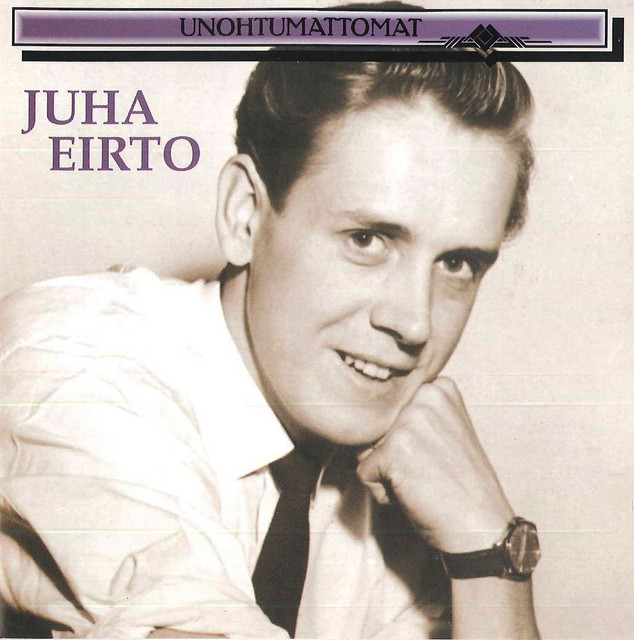
Juha Eirto
Finnish Tango
Finnish Pop
Iskelmä
1
/5
Taisto Ahlgren
Finnish Tango
Finnish Pop
Iskelmä
2
/5
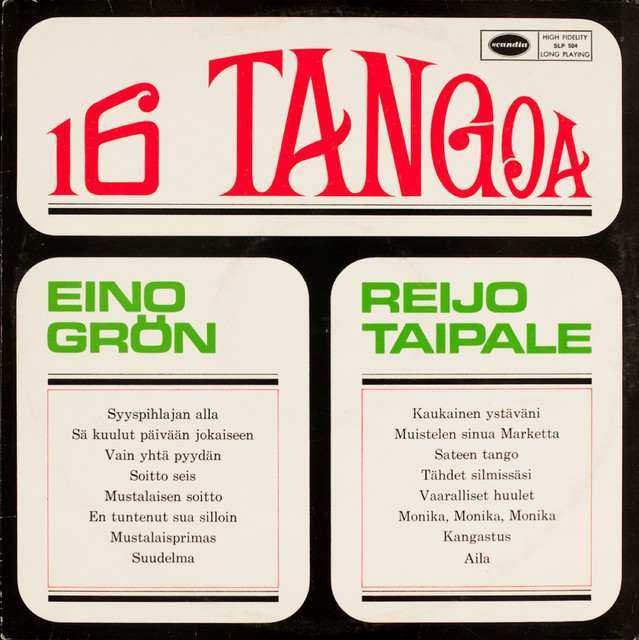
Eino Grön
Finnish Pop
Finnish Tango
Iskelmä
2
/5
Sauli Lehtonen
Finnish Pop
Finnish Rock
Iskelmä
Download our mobile app
Get the Melodigging app and start digging for new genres on the go
Download on the App Store
Get it on Google Play
© 2026 Melodigging
Give feedback
Legal
Melodding was created as a tribute to
Every Noise at Once
, which inspired us to help curious minds keep digging into music's ever-evolving genres.