Genres
Artists
Albums
Make Music
Sign in
Sign in
Artists
Math Rock
Artists
Math Rock
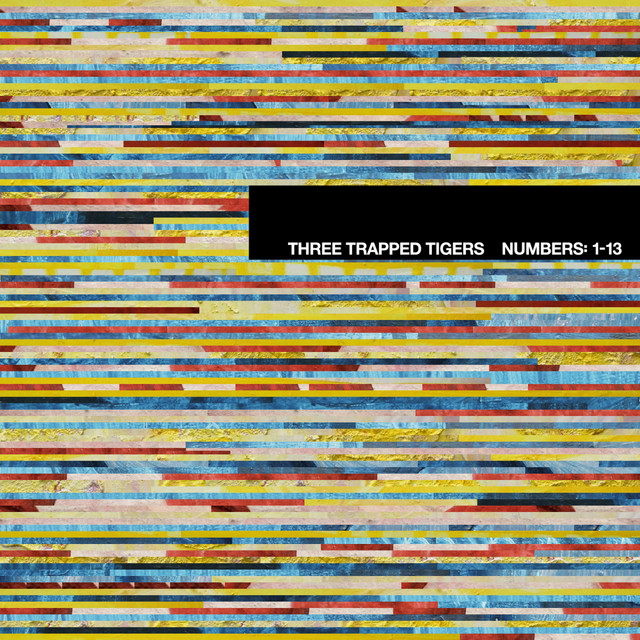
Three Trapped Tigers
2012
·
1 album
Listen
2
/5
Genres
Post-Rock
Post-rock is a style that uses traditional rock instrumentation—guitars, bass, drums, and often piano or strings—to create expansive textures, evolving soundscapes, and dynamic arcs rather than conventional verse–chorus songs. It emphasizes timbre, atmosphere, and gradual development: clean or lightly overdriven guitars drenched in delay and reverb, cyclical ostinatos, layered crescendos, and pronounced quiet–loud dynamics. Vocals, if present, are often sparse, wordless, or treated as another textural layer. The genre draws heavily from ambient, minimalism, krautrock, progressive and space rock, shoegaze, noise rock, and experimental practices, yielding music that can feel cinematic, contemplative, and emotionally cathartic.
Discover
Listen
Instrumental Math Rock
Instrumental math rock is a branch of math rock that foregrounds intricate rhythms, interlocking guitar lines, and dynamic, stop–start structures while dispensing with lead vocals. Rather than using lyrics to carry form and emotion, it relies on motif development, timbral contrast, and rhythmic tension-release to tell its story. Typical hallmarks include odd meters (5/4, 7/8, 11/8), metric modulation, polyrhythms, and tightly synchronized ensemble figures. Guitars often employ clean or lightly overdriven tones, wide-interval arpeggios, tapping, and harmonics, while bass lines act as independent countermelodies. Drumming is crisp, busy, and highly orchestrated, frequently displacing accents to create a "mathematical" feel. The overall sound ranges from bright and buoyant to angular and aggressive, but it is always precision-driven and ensemble-focused.
Discover
Listen
Math Rock
Math rock is a subgenre of indie and experimental rock defined by complex, irregular rhythms, sudden dynamic shifts, and angular, interlocking guitar lines. It frequently employs odd and mixed meters (such as 5/4, 7/8, 11/8), polyrhythms, start–stop figures, and intricate syncopation. Guitars often favor clean or lightly overdriven tones, tapping, and harmonically adventurous voicings over traditional power-chord riffing. Vocals, if present, are usually sparse, textural, or rhythmically coordinated with the ensemble rather than the primary focal point. Aesthetically, math rock draws from the precision and structural ambition of progressive rock, the urgency of post-hardcore, and the textural curiosity of indie and noise rock, resulting in music that feels both cerebral and visceral.
Discover
Listen
Noise Rock
Noise rock is a subgenre of rock that deliberately embraces distortion, feedback, dissonance, and abrasive textures as primary musical materials rather than mere effects. It prioritizes timbre, volume, and sonic density over conventional melody and harmony, often using nonstandard tunings, prepared or detuned guitars, and extended techniques to generate harsh overtones and sheets of sound. Rhythm sections tend to be driving and repetitive, anchoring the chaos with motorik pulses, lurching grooves, or pummeling, minimal patterns. Vocals range from spoken and murmured to shouted and cathartic, with lyrics that skew cryptic, confrontational, or surreal. Aesthetically, noise rock traces a line from punk’s anti-virtuosity and DIY ethos through no wave’s iconoclasm and the avant-garde’s interest in sound-as-sound, yielding music that can be physically intense, psychologically unsettling, and artistically exploratory.
Discover
Listen
Experimental
Experimental music is an umbrella term for practices that prioritize exploration, process, and discovery over adherence to established genre norms. It embraces new sound sources, nonstandard tuning systems, indeterminacy and chance operations, graphic and open-form scores, extended techniques, and technology-led sound design (tape, electronics, computers, and live processing). Rather than a single style, it is a methodology and ethos: testing hypotheses about sound, structure, and performance, often blurring boundaries between composition, improvisation, sound art, and performance art. Listeners can expect unfamiliar timbres, unusual forms, and an emphasis on how music is made as much as the resulting sound.
Discover
Listen
Albums
2012
Numbers: 1-13
Three Trapped Tigers
Instrumental Math Rock
Similar artists
2
/5
Tera Melos
Math Rock
Math Pop
Experimental
2
/5
Hella
Math Rock
Mathcore
Noise Rock
2
/5
Don Caballero
Math Rock
Rock
Post-Rock
1
/5
Town Portal
Math Rock
Post-Rock
Instrumental Math Rock
3
/5
Parannoul
Korean Shoegaze
Shoegaze
Emo
3
/5
Unwound
Post-Hardcore
Noise Rock
Emocore
3
/5
Slint
Math Rock
Post-Hardcore
Post-Rock
2
/5
Polvo
Math Rock
Noise Rock
Post-Hardcore
2
/5
Faraquet
Math Rock
Noise Rock
Post-Hardcore
2
/5
JUNE OF 44
Post-Rock
Math Rock
Post-Hardcore
Download our mobile app
Get the Melodigging app and start digging for new genres on the go
Download on the App Store
Get it on Google Play
© 2026 Melodigging
Give feedback
Legal
Melodding was created as a tribute to
Every Noise at Once
, which inspired us to help curious minds keep digging into music's ever-evolving genres.