Genres
Artists
Albums
Make Music
Sign in
Sign in
Artists
Arabic Hip Hop
Artists
Arabic Hip Hop
Moro
2 albums
Listen
3
/5
Genres
Moroccan Pop
Moroccan pop is contemporary, radio‑friendly music from Morocco that blends North African rhythms and modes with global pop craft. It draws on chaabi street grooves, gnawa bass patterns, and Andalusian ornamentation while embracing glossy production, catchy toplines, and dance‑floor energy. Sung primarily in Moroccan Arabic (Darija), it often weaves in French, Standard Arabic, Amazigh (Tamazight), and occasional English phrases. The sound palette ranges from darbuka, bendir, and qraqeb to modern drum machines, synths, and Auto‑Tune, yielding sleek hooks that sit comfortably between Arab pop, French pop, R&B, hip hop, EDM, and, more recently, reggaeton and Afro‑leaning rhythms.
Discover
Listen
Jumpstyle
Jumpstyle is a hard dance genre built for high-energy club play and its namesake dance, characterized by a punchy four-on-the-floor beat at around 140–150 BPM, offbeat bass pulses, and simple, catchy synth riffs. It sits sonically between older European hard house and the less distorted edge of early hardstyle, favoring reverse-bass kicks, gated supersaw leads, and stripped-down, percussive arrangements that highlight the rhythm of the jumpstyle steps. While melodies are typically straightforward and anthemic, the production emphasizes tight, sidechained low-end, crisp claps on 2 and 4, and short vocal shouts or hooks designed for crowd participation.
Discover
Listen
Arabic Hip Hop
Arabic hip hop is the Arabic-language expression of global hip hop culture, emerging from the Arab world and its diaspora. It fuses rap flows and beat-making with Arabic dialects, poetic forms, and regional rhythmic/melodic vocabulary, creating a distinctive voice that reflects local realities and identities. Musically, it spans classic boom-bap to modern trap and drill aesthetics, often sampling or emulating oud, qanun, nay, and percussion such as darbuka and riq. Producers frequently weave maqam-based motifs (e.g., Hijaz, Bayati, Kurd) and popular rhythms (maqsoum, saidi, dabke) into 4/4 hip hop frameworks. Lyrically, artists alternate between colloquial dialects and fusha (Modern Standard Arabic), address social and political issues, and code-switch with French or English in North African and Levantine contexts.
Discover
Listen
Moroccan Rap
Moroccan rap is a hip hop movement from Morocco that blends American rap foundations with North African rhythms, melodies, and street vernaculars. It is primarily performed in Darija (Moroccan Arabic), often mixed with French, Modern Standard Arabic, and Tamazight, creating a distinct linguistic and cultural voice. Musically, the style draws on trap and boom-bap production while sampling or referencing local sources such as gnawa grooves, chaabi claps, and raï-adjacent melodic turns. Lyrically it ranges from sharp social critique and political commentary to autobiographical storytelling, swaggering bravado, and urban poetry reflecting the realities of Moroccan cities and the diaspora.
Discover
Listen
Nu Style Gabber
Nu style gabber (often written as "newstyle gabber") is a late-1990s evolution of Dutch gabber/mainstream hardcore that slowed the frantic 180–200 BPM pace to roughly 150–165 BPM. The extra space in the groove foregrounds a heavy, overdriven kick with a long, compressed tail, sharp off‑beat hi‑hats, and simple, memorable minor‑key riffs. Producers frequently incorporate chopped vocal stabs, MC shouts, and film or news samples to build tension and atmosphere. Sonically it sits between classic 90s gabber and the first wave of hardstyle: it keeps the aggression and distortion of hardcore while adopting a more rolling, dance‑floor‑friendly swing and clearer breakdown/build‑up structures. This “bridge” character is why nu style gabber is widely cited as a direct precursor to early hardstyle, jumpstyle, and later nu‑style hardstyle.
Discover
Listen
Raï
Raï is a popular music genre from the port city of Oran (Wahran), Algeria, whose name comes from the colloquial Arabic word for "opinion" or "point of view." It began as a raw, vernacular form of urban song led by cheikhas (female singer-performers) accompanied by gasba flute and guellal drum, addressing everyday life, love, alcohol, social hypocrisy, and desire with unusual frankness. Across the 1970s and 1980s, raï electrified: acoustic ensembles and Bedoui/chaabi-rooted melodies merged with electric guitar, synthesizers, drum machines, and global dance grooves (funk, disco, reggae, and pop). This produced the internationally famous “pop raï” sound—at once danceable and emotionally direct—carried by stars such as Khaled, Cheb Mami, Cheb Hasni, and Cheikha Rimitti. Today, raï remains a living tradition and a flexible pop form, equally at home with traditional gasba/guellal timbres and glossy electronic production, while its lyrics continue to alternate between hedonistic celebration and aching nostalgia for home and lost love.
Discover
Listen
Albums
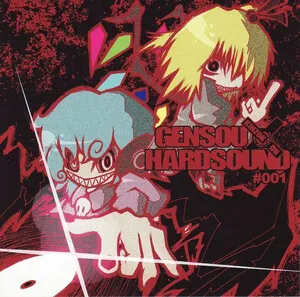
Gensou Hardsound #001
Moro
Jumpstyle
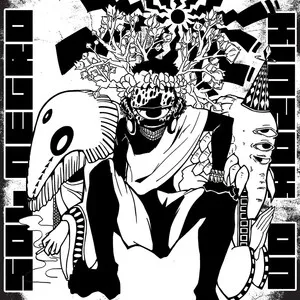
Sol Negro
Moro
Nu Style Gabber
Similar artists
4
/5
Didine Canon 16
Arabic Hip Hop
Moroccan Pop
Moroccan Rap
4
/5
Manal
Arabic Hip Hop
Arabic Rap
Moroccan Pop
3
/5
Balti
Moroccan Rap
Raï
Arabic Hip Hop
3
/5
Flenn
Arabic Hip Hop
Moroccan Pop
Moroccan Rap
3
/5
Lbenj
Moroccan Rap
Raï
Moroccan Pop
3
/5
Mc Artisan
Arabic Hip Hop
Moroccan Pop
Moroccan Rap
3
/5
Kouz1
Moroccan Pop
Moroccan Rap
Raï
3
/5
Mocci
Moroccan Rap
Raï
Arabic Hip Hop
3
/5
NORDO
Arabic Hip Hop
Moroccan Pop
Moroccan Rap
3
/5
7-Toun
Raï
Arabic Hip Hop
Moroccan Pop
Download our mobile app
Get the Melodigging app and start digging for new genres on the go
Download on the App Store
Get it on Google Play
© 2026 Melodigging
Give feedback
Legal
Melodding was created as a tribute to
Every Noise at Once
, which inspired us to help curious minds keep digging into music's ever-evolving genres.