Genres
Artists
Albums
Make Music
Sign in
Sign in
Artists
Finnish Pop
Artists
Finnish Pop
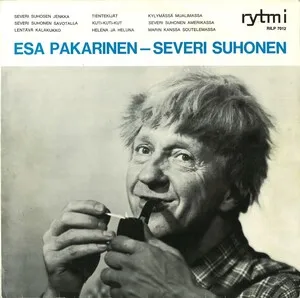
Esa Pakarinen
1966
·
1 album
Listen
2
/5
Genres
Finnish Pop
Finnish pop (often called Suomipop) is mainstream popular music created by Finnish artists, typically sung in Finnish and tailored to local sensibilities and radio formats. It blends international pop songcraft—catchy hooks, verse–pre‑chorus–chorus structures, and polished production—with the melodicism and direct emotional delivery inherited from iskelmä (Finnish schlager). Since the 1980s, synthesizers and drum machines have been common, while the 1990s–2000s brought dance‑pop and eurodance colors; the 2010s–2020s era embraces contemporary electropop, R&B inflections, and streaming‑friendly arrangements. Lyrically, Finnish pop often focuses on love, everyday life, and bittersweet introspection, balancing upbeat, anthemic choruses with a distinctly Nordic, sometimes melancholic tone.
Discover
Listen
Finnish Rock
Finnish rock (often called “suomirock”) is a broad umbrella for rock music made in Finland, notable for its melodic guitar work, singable choruses, and a lyrical bent that mixes everyday realism, irony, and Nordic melancholy. It grew out of 1960s beat, rock and roll, and rautalanka (a local, twangy instrumental rock), then absorbed punk and new wave energy in the late 1970s, and hard rock and glam sheen in the 1980s. Many of its flagship acts chose to sing in Finnish, establishing a distinctive identity separate from Anglo-American rock. Across decades, the sound ranges from high-octane boogie and rockabilly inflections (Hurriganes) to glam-infused hard rock (Hanoi Rocks), anthemic mainstream rock (Eppu Normaali, Popeda), and more alternative or art-minded currents (Sielun Veljet, CMX).
Discover
Listen
Iskelmä
Iskelmä is the Finnish counterpart to continental European schlager: a melody-forward, lyrically clear style of popular song designed for easy listening and social dancing. It blends local dance idioms such as Finnish tango, humppa, and waltz with international traditional pop and chanson, resulting in polished, hook-rich songs with sentimental or romantic themes. Across decades, iskelmä has served as a broad umbrella for Finnish mainstream pop singing, spanning orchestral arrangements, guitar-led ensembles, and, later, synth-enhanced productions—while retaining its emphasis on singable melodies and accessible emotions.
Discover
Listen
Humppa
Humppa is a Finnish social dance music style built on a brisk duple meter (2/4) at roughly 110–130 BPM. It is closely related to early jazz dance band music and the fast foxtrot, but rendered with a distinctly Nordic, oompah-driven pulse. The feel is buoyant and bouncy: a strong bass note on beat one (often by tuba or bass) followed by a lighter off‑beat “pa” on beat two, creating an unmistakable hypnotic lilt. Accordion, clarinet, saxophones, brass, and dance‑band rhythm sections carry jaunty, singable melodies and simple, major‑key harmonies tailored for social dancing. The term “humppa” was popularized in the 1950s by Finnish broadcaster Antero Alpola, drawing on the Oktoberfest “oompah” onomatopoeia. Since then, humppa has denoted both the music and the social dances performed to it across Finland’s dance pavilions (lavatanssit).
Discover
Listen
Rock And Roll
Rock and roll is a high-energy, dance-oriented popular music style that emerged in the United States in the early-to-mid 1950s. It fuses the 12‑bar blues and boogie‑woogie with the backbeat and instrumentation of rhythm & blues, the twang and storytelling of country, and the fervor of gospel. Its hallmark sound centers on a strong backbeat (accented on beats 2 and 4), driving rhythm sections, electric guitar riffs, prominent piano or saxophone leads, and catchy, chorus-forward songwriting. Typical harmonies revolve around I–IV–V progressions, often in 12-bar form, with swung or shuffle feels and punchy turnarounds. Culturally, rock and roll catalyzed a youth movement linked to dancing, teen identity, and social change. It bridged racial audiences by popularizing Black American musical traditions for mainstream listeners, and it laid the foundation for subsequent rock styles and much of modern pop.
Discover
Listen
Comedy
Comedy (as a music genre) comprises songs and recorded pieces designed primarily to make listeners laugh through parody, satire, wordplay, character voices, and situational humor. It often borrows the musical language of whatever is popular at the time—pop, rock, hip hop, folk, musical theatre—then subverts expectations with humorous lyrics, exaggerated performance, and sonic gags. Rooted in vaudeville and music hall traditions, comedy music ranges from novelty songs and topical ditties to elaborate pastiches and narrative sketches. It values comedic timing as much as musical craft, using hooks, rhyme, and arrangement to set up and deliver punchlines while remaining musically engaging.
Discover
Listen
Polka
Polka is a lively Central European couple dance and musical style in a brisk 2/4 meter, characterized by its buoyant “oom‑pah” bass-chord accompaniment and bright, diatonic melodies. Originating in Bohemia (today’s Czech Republic) in the early 19th century, it quickly became a pan-European craze before taking root across immigrant communities in the Americas. Ensembles typically feature accordion or button box/concertina, clarinet or saxophone, trumpets/trombone, tuba or string bass, and drum kit, with regional variants highlighting different lead voices and rhythmic feels. While the classical ballroom tradition codified polka into formal strains (often AABB with a contrasting trio), folk and popular styles favor singable tunes, simple I–IV–V harmonies, and tempos commonly around 115–135 BPM, inviting upbeat social dancing and communal celebration.
Discover
Listen
Nordic Old Time Dance Music
Nordic old time dance music (often called gammaldans in Swedish and Norwegian, and pelimanni music in Finnish contexts) is the Nordic take on the pan-European couple-dance repertoire that swept the continent in the 19th century. It centers on waltz, schottische (reinlender), polka, mazurka, and the Swedish hambo, performed for social dancing in village halls, farm kitchens, and civic gatherings. The sound is melody‑driven and highly danceable, led by fiddle and accordion (both diatonic/button and later piano accordion), with harmonium, guitar, and double bass providing rhythmic and harmonic support. Tunes typically come in compact two‑strain forms (AABB), in friendly fiddle keys (G, D, A), with a buoyant lilt and clear phrasing tailored to the steps. While the music is mostly major‑mode and upbeat, it also includes tender waltzes and stately mazurkas that add romantic and nostalgic shades.
Discover
Listen
Show all 8 genres
Albums
1966
2
/5
Severi Suhonen
Esa Pakarinen
Nordic Old Time Dance Music
Similar artists
2
/5
Solistiyhtye Suomi
Humppa
Finnish Pop
Finnish Rock
2
/5
Eläkeläiset
Humppa
Schlager
Rock
1
/5
Eero Avén
Humppa
Finnish Pop
Finnish Rock
4
/5
Eppu Normaali
Finnish Pop
Finnish Rock
Iskelmä
3
/5
Haloo Helsinki!
Finnish Rock
Iskelmä
Finnish Pop
3
/5
Kaija Koo
Finnish Pop
Finnish Rock
Iskelmä
3
/5
Portion Boys
Finnish Rock
Finnish Hip Hop
Finnish Pop
3
/5
Komiat
Finnish Pop
Finnish Rock
Iskelmä
3
/5
Juha Tapio
Finnish Pop
Finnish Rock
Iskelmä
3
/5
Jenni Vartiainen
Finnish Rock
Finnish Pop
Iskelmä
Download our mobile app
Get the Melodigging app and start digging for new genres on the go
Download on the App Store
Get it on Google Play
© 2026 Melodigging
Give feedback
Legal
Melodding was created as a tribute to
Every Noise at Once
, which inspired us to help curious minds keep digging into music's ever-evolving genres.