Genres
Make Music
Artists
Albums
Challenges
Sign in
Sign in
Albums
By Petras Vysniauskas
Albums
By Petras Vysniauskas
Veronika Povilionienė & Petras Vyšniauskas
March 18, 2005
Listen
1
/5
Genres
Lithuanian Folk Music
Lithuanian folk music is the traditional music of Lithuania, marked by ancient multipart singing (sutartinės), modal melodies, and a close connection to the agrarian ritual calendar. It features both monophonic and polyphonic practices, distinctive secondal harmonies and canonic entrances in sutartinės, and a rich palette of instruments such as the kanklės (Baltic zither), birbynė (reed pipe), lamzdelis (flute), daudytė (wooden trumpet), ragai (horns), skrabalai (wooden bells), dambrelis (jaw harp), and later additions like fiddle and accordion. Lyrics commonly reference nature, family, work, and life-cycle rites, and are strongly tied to regional styles (Aukštaitija, Žemaitija/Samogitia, Dzūkija, Suvalkija).
Discover
Listen
Baltic Folk Music
Baltic folk music refers to the traditional and revivalist musics of the Baltic region, primarily Lithuania and Latvia (Baltic language cultures), and often extending to Estonia (a Finnic culture within the Baltic states). It encompasses ancient vocal traditions, ritual song repertoires tied to the calendar year, and a wide variety of dance tunes that absorbed Central and Northern European influences in the 19th century. Characteristic elements include narrow-range, modal melodies; drones and heterophony; strophic poetic forms with dense alliteration; and multipart singing traditions such as Lithuanian sutartinės and Estonian regilaul (runo songs). Iconic instruments are the regional box zithers (kanklės in Lithuania, kokle in Latvia, kannel in Estonia), as well as birbynė (reed), skudučiai (panpipes), torupill (Estonian bagpipe), fiddle, and accordion. The genre also thrives in powerful choral traditions and large-scale Song and Dance Festivals that underscore communal identity and continuity.
Discover
Listen
Sutartinės
Sutartinės are ancient Lithuanian multipart songs characterized by tightly interlocking voices, canon-like entrances, and striking dissonances (especially seconds) that resolve through stepwise motion. They are traditionally performed by small groups (often two to four women) and can also be rendered instrumentally on skudučiai (end-blown panpipes), ragai/daudytės (wooden horns), or kanklės (zither). The genre features short, repetitive melodic formulas, narrow-range modal lines, and a pulsating, steady beat that supports round-dance movement. Texts span calendar-cycle rituals, work, nature, weddings, and playful themes, frequently using vocables and refrain syllables. Sutartinės are organized in types—dvejinės (in twos), trejinės (in threes), and keturinės (in fours)—and rely on hocketing and ostinati to create a hypnotic, shimmering texture. In 2010 they were inscribed on UNESCO’s Representative List of the Intangible Cultural Heritage of Humanity.
Discover
Listen
Similar albums
2025
Värav / Vārti / Vartai
The Baltic Sisters
2003
Perkūno Giesmės: Hymns to Perkūnas the Thundergod
Kūlgrinda
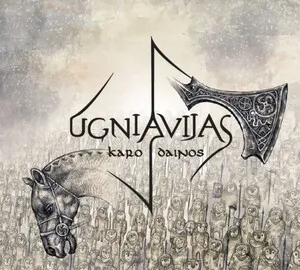
2016
Karo Dainos
Ugniavijas
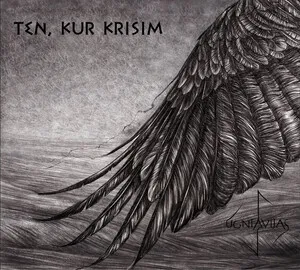
2016
Ten, kur krisim
Ugniavijas
2024
Vėjula
Merope
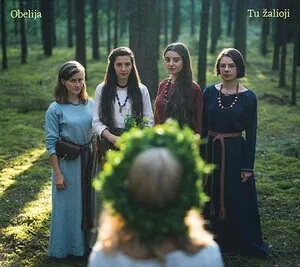
2018
Tu žalioji
Obelija
2004
Močia
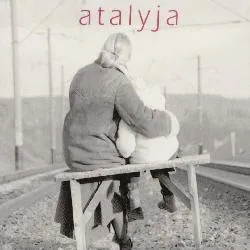
Atalyja
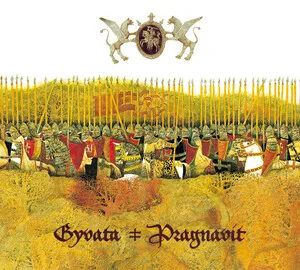
2013
Broliai karelin jojo / Ad gloriam
Gyvata / Pragnavit
2001
Atalyja
Atalyja
2015
Solo & Indre
Solo Cissokho & Indrė Jurgelevičiūtė
Download our mobile app
Get the Melodigging app and start digging for new genres on the go
Download on the App Store
Get it on Google Play
© 2026 Melodigging
Give feedback
Legal
Melodding was created as a tribute to
Every Noise at Once
, which inspired us to help curious minds keep digging into music's ever-evolving genres.