Genres
Make Music
Artists
Albums
Challenges
Sign in
Sign in
Albums
By Time Requiem
Albums
By Time Requiem
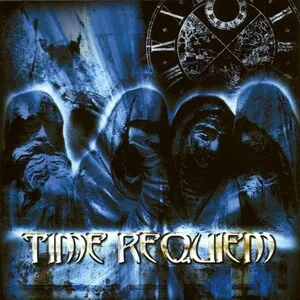
Time Requiem
April 29, 2002
Listen
1
/5
Genres
Neoclassical Metal
Neoclassical metal is a subgenre of heavy metal that fuses metal’s high-gain power and speed with the harmony, counterpoint, and virtuosity of European classical music. It emphasizes fast, ornate lead guitar and keyboard lines modeled on Baroque and Romantic-era idioms—think harmonic minor scales, diminished arpeggios, rapid sequences, pedal points, and dramatic cadences. Performers commonly use techniques like alternate picking, sweep picking, legato, tapping, and precise articulation at very high tempos. Arrangements often feature guitar–keyboard unisons or call-and-response, brisk rhythms, and clear tonal centers, evoking the drama of composers such as Bach, Vivaldi, and Paganini while keeping metal’s aggression and drive.
Discover
Listen
Progressive Metal
Progressive metal blends the ambition and extended song forms of progressive rock with the heaviness, timbre, and energy of heavy metal. It is characterized by complex arrangements, frequent time‑signature changes, virtuosic instrumental passages, thematic or concept‑driven albums, and a wide dynamic range from delicate, atmospheric sections to aggressive, high‑gain climaxes. Harmonically it draws on modal interchange, chromatic voice‑leading, and jazz‑fusion colors, while rhythmically it favors polymeters, polyrhythms, and metric modulation. Keyboards and layered production often add orchestral or cinematic scope.
Discover
Listen
Rock
Rock is a broad family of popular music centered on amplified instruments, a strong backbeat, and song forms that foreground riffs, choruses, and anthemic hooks. Emerging from mid‑20th‑century American styles like rhythm & blues, country, and gospel-inflected rock and roll, rock quickly expanded in scope—absorbing folk, blues, and psychedelic ideas—while shaping global youth culture. Core sonic markers include electric guitar (often overdriven), electric bass, drum kit emphasizing beats 2 and 4, and emotive lead vocals. Rock songs commonly use verse–chorus structures, blues-derived harmony, and memorable melodic motifs, ranging from intimate ballads to high‑energy, stadium‑sized performances.
Discover
Listen
Classical
Classical music is the notated art-music tradition of Europe and its global descendants, characterized by durable forms, carefully codified harmony and counterpoint, and a literate score-based practice. The term “classical” can refer broadly to the entire Western art-music lineage from the Medieval era to today, not just the Classical period (c. 1750s–1820s). It privileges long-form structures (such as symphonies, sonatas, concertos, masses, and operas), functional or modal harmony, thematic development, and timbral nuance across ensembles ranging from solo instruments to full orchestras and choirs. Across centuries, the style evolved from chant and modal polyphony to tonal harmony, and later to post-tonal idioms, while maintaining a shared emphasis on written notation, performance practice, and craft.
Discover
Listen
Similar albums
2005
Paper Blood
Royal Hunt
2003
Embrace the Galaxy
Richard Andersson's Space Odyssey
2005
The Astral Episode
Richard Andersson's Space Odyssey
2025
Even In Arcadia
Sleep Token
2021
This Place Will Become Your Tomb
Sleep Token
2019
Fear Inoculum
TOOL
2022
Remember That You Will Die
Polyphia
2017
Two
Sleep Token
2023
The Death We Seek
Currents
2003
Damnation
Opeth
Download our mobile app
Get the Melodigging app and start digging for new genres on the go
Download on the App Store
Get it on Google Play
© 2026 Melodigging
Give feedback
Legal
Melodding was created as a tribute to
Every Noise at Once
, which inspired us to help curious minds keep digging into music's ever-evolving genres.