Genres
Make Music
Artists
Albums
Challenges
Sign in
Sign in
Albums
By Shakti
Albums
By Shakti
This Moment
June 23, 2023
Listen
2
/5
Genres
Indo Jazz
Indo jazz is a cross-cultural fusion that blends the melodic and rhythmic frameworks of Indian classical music with the improvisational language, ensemble formats, and harmonic vocabulary of jazz. Pioneered in mid-1960s London by the Indo‑Jazz Fusions projects of saxophonist Joe Harriott and composer‑violinist John Mayer, the style typically marries raga-based melodies, drone textures, and tala time cycles with jazz head–solo–head forms, modal harmony, and interactive improvisation. The palette often includes saxophone, piano, double bass, and drum set alongside tabla, sitar or violin, bansuri, and tanpura. The result is music that can be serene and meditative yet rhythmically intricate, moving fluidly between swing and straight feels while respecting the raga’s pitch set and ornamentation (meend, gamak, and microtonal inflections).
Discover
Listen
Konnakol
Konnakol is the South Indian (Carnatic) art of vocalizing percussion using a codified set of rhythmic syllables known as solkattu. Performers speak or chant patterns such as "ta ka di mi," "ta din gi na tom," and many others to render tala (cycle) and nadai/gati (subdivision) with great clarity. It functions simultaneously as pedagogy, composition, and performance practice. Konnakol encodes complex rhythmic mathematics (kanakku), including korvai (threefold cadences) and mora (repeated phrases that resolve precisely to the cycle’s sam/1). Its focus on articulation, breath control, microtiming, and accent makes it an exacting discipline as well as a virtuosic stage art. While rooted in Carnatic classical music and typically dialoguing with instruments like mridangam, kanjira, and ghatam, konnakol has also crossed into contemporary jazz, fusion, and progressive idioms, where its sophisticated rhythmic language enriches improvisation and ensemble interplay.
Discover
Listen
Carnatic Classical
Carnatic classical (Karnāṭaka saṅgīta) is the South Indian tradition of art music, centered in the Dravidian cultural regions of Andhra Pradesh, Karnataka, Kerala, Tamil Nadu, and Telangana. It is a raga–tala system: melody is organized by rāga (a melodic framework with characteristic phrases and ornamentation called gamaka) and rhythm is organized by tāla (cyclic meters with intricate subdivisions). The repertoire is strongly devotional, with the vast majority of canonical compositions (kritis/keerthanas and varnams) in Telugu and Sanskrit, alongside important works in Tamil and Kannada. Performance is voice-led (even in instrumental music), with a kutcheri (concert) format that balances composed items and improvisation: ālāpana (unmetered raga exploration), niraval (melodic–lyric expansion), kalpana swaras (solfège improvisation), and the climactic rāgam–tānam–pallavi. Core timbres include tambura (drone), violin or veena for melody, and mridangam, ghatam, kanjira, and morsing for percussion. Compared to North India’s Hindustani music, Carnatic music retained a more continuous temple and bhakti (devotional) lineage and less Persian/Islamicate influence, yielding dense gamaka, brisk development, and highly codified rhythmic arithmetic.
Discover
Listen
Similar albums
2023
Songs for Broken Ships
MD Pallavi & Andi Otto
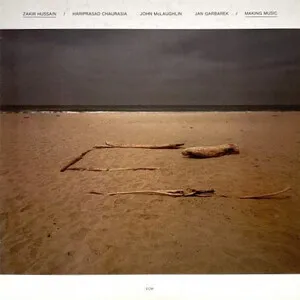
1987
Making Music
Zakir Hussain
1977
Natural Elements
Shakti With John McLaughlin
2025
Nilam
Ganavya
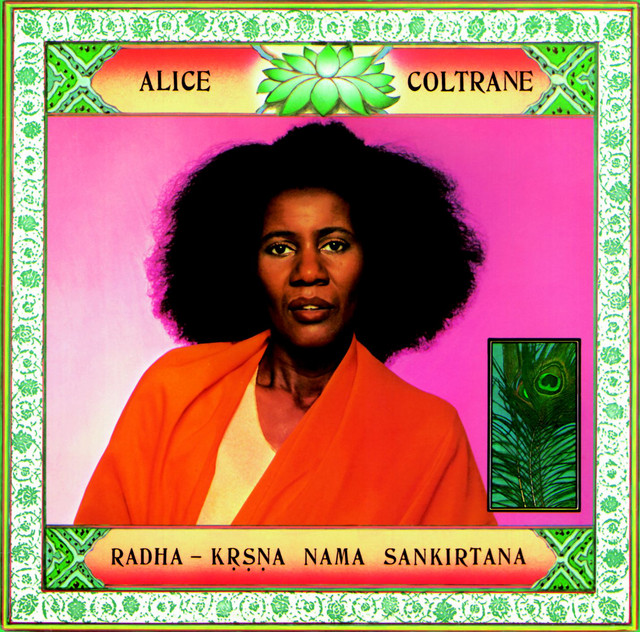
2005
Radha-Kṛṣṇa Nama Sankirtana
Alice Coltrane
2024
Like the Sky I've Been Too Quiet
Ganavya
2024
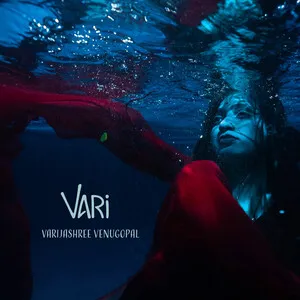
Vari
Varijashree Venugopal
2011
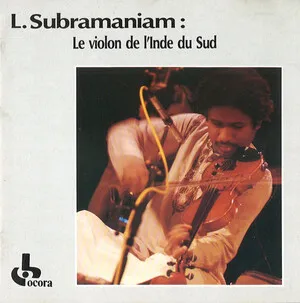
Le violon de l'Inde du Sud
L. Subramaniam
2009
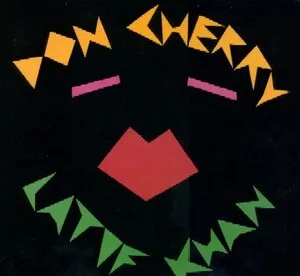
Don Cherry & Latif Khan
Don Cherry & Latif Khan
1971
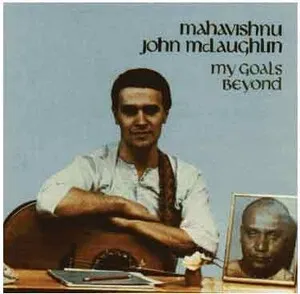
My Goal's Beyond
Mahavishnu John McLaughlin
Download our mobile app
Get the Melodigging app and start digging for new genres on the go
Download on the App Store
Get it on Google Play
© 2026 Melodigging
Give feedback
Legal
Melodding was created as a tribute to
Every Noise at Once
, which inspired us to help curious minds keep digging into music's ever-evolving genres.