Genres
Make Music
Artists
Albums
Challenges
Sign in
Sign in
Albums
By They Might Be Giants
Albums
By They Might Be Giants
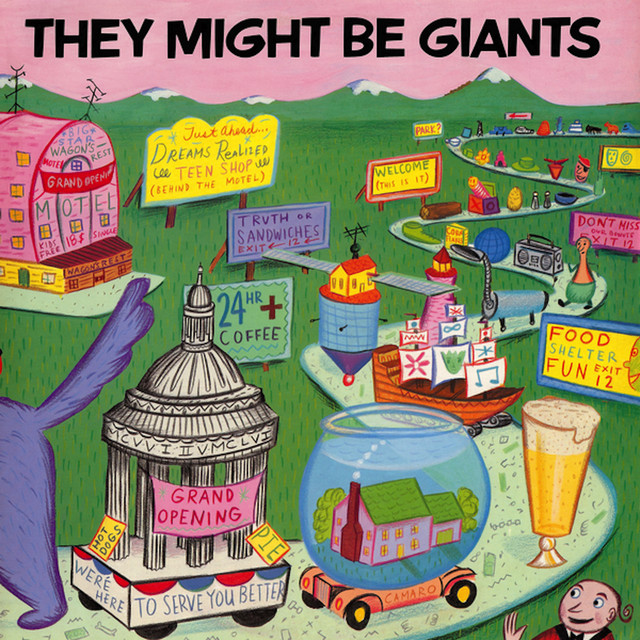
They Might Be Giants
November 4, 1986
Listen
3
/5
Genres
Geek Rock
Geek rock is a branch of alternative and power-pop-oriented rock defined as much by its subject matter and persona as by its sound. Bands embrace brainy, self-deprecating humor and celebrate interests stereotypically labeled as “geeky,” including science, math, computing, gaming, sci‑fi, and pop culture lore. Musically, it favors catchy hooks, concise song forms, and bright guitar tones, often augmented by keyboards, synths, or unusual instruments (accordion, toy piano). Vocals tend to be clean and articulate so that witty, reference‑laden lyrics land clearly. The mood ranges from upbeat and playful to tenderly introspective, with frequent wordplay, narrative storytelling, and a charmingly offbeat presentation.
Discover
Listen
Alternative Rock
Alternative rock is a broad umbrella for guitar-based rock that emerged from the independent and college-radio scenes as a counterpoint to mainstream, commercial rock. It blends the energy and ethos of punk with the textural and songwriting experiments of post-punk, new wave, jangle pop, and noise rock, often foregrounding introspective or socially aware lyrics. Across its many strains—from the melodic minimalism of college rock to the loud-quiet-loud dynamics of grunge and the artful experimentation of Radiohead-era modernism—alternative rock prioritizes authenticity, sonic individuality, and a do-it-yourself approach. Its sound ranges from chiming, chorus-laden clean guitars to abrasive distortion and feedback, supported by straightforward rock rhythms or off-kilter grooves, and production that can be either raw and live-sounding or polished yet unconventional.
Discover
Listen
Rock
Rock is a broad family of popular music centered on amplified instruments, a strong backbeat, and song forms that foreground riffs, choruses, and anthemic hooks. Emerging from mid‑20th‑century American styles like rhythm & blues, country, and gospel-inflected rock and roll, rock quickly expanded in scope—absorbing folk, blues, and psychedelic ideas—while shaping global youth culture. Core sonic markers include electric guitar (often overdriven), electric bass, drum kit emphasizing beats 2 and 4, and emotive lead vocals. Rock songs commonly use verse–chorus structures, blues-derived harmony, and memorable melodic motifs, ranging from intimate ballads to high‑energy, stadium‑sized performances.
Discover
Listen
Electronic
Electronic is a broad umbrella genre defined by the primary use of electronically generated or electronically processed sound. It encompasses music made with synthesizers, drum machines, samplers, computers, and studio/tape techniques, as well as electroacoustic manipulation of recorded or synthetic sources. The genre ranges from academic and experimental traditions to popular and dance-oriented forms. While its sonic palette is rooted in electricity and circuitry, its aesthetics span minimal and textural explorations, structured song forms, and beat-driven club permutations. Electronic emphasizes sound design, timbre, and studio-as-instrument practices as much as melody and harmony.
Discover
Listen
Similar albums
2000
Gizmodgery
Self
1999
Breakfast With Girls
Self
2011
The King Of Limbs
Radiohead
1990
Flood
They Might Be Giants
2019
Imagination
Foster The People
2022
Stranger Things: Soundtrack from the Netflix Series, Season 4
Talking Heads
2012
Amnesia
KMFDM
2000
Clear Hearts Grey Flowers
Jack Off Jill
2016
Spirit Phone
Lemon Demon
2008
Nightmare Revisited
Marilyn Manson
Download our mobile app
Get the Melodigging app and start digging for new genres on the go
Download on the App Store
Get it on Google Play
© 2026 Melodigging
Give feedback
Legal
Melodding was created as a tribute to
Every Noise at Once
, which inspired us to help curious minds keep digging into music's ever-evolving genres.