Genres
Make Music
Artists
Albums
Challenges
Sign in
Sign in
Albums
By Various Artists
Albums
By Various Artists
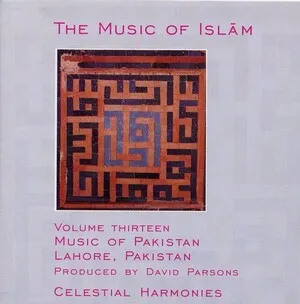
The Music of Islām: Volume Thirteen - Music of Pakistan; Lahore, Pakistan
January 1, 1998
Listen
1
/5
Genres
Khyal
Khyal (often spelled khayal) is the principal improvisatory vocal genre of North Indian (Hindustani) classical music. The word means “imagination,” and the style celebrates inventive melodic expansion within the strict grammar of raga and tala. A typical performance centers on two compositions (bandish): a slow, expansive vilambit or bada khyal followed by a fast drut or chhota khyal. Singers develop the raga through alap-like vistaar (melodic elaboration), bol-alap and bol-bant (text-based improvisation), sargam passages (solfège), and taans (fast, cascading runs) that culminate on the sam (downbeat). Khyal emphasizes microtonal nuance and vocal ornamentation—meend (glides), andolan (slow oscillations), gamak (heavy shakes), and intricate layakari (rhythmic play). It is accompanied by a tanpura drone, tabla in a chosen tala (often teentaal, ektal, or jhoomra), and a melodic support instrument such as sarangi or harmonium. Over the last two centuries, distinct gharanas (schools) have shaped its aesthetics, including Gwalior, Agra, Kirana, Jaipur-Atrauli, Patiala, Mewati, and Rampur-Sahaswan.
Discover
Listen
Indian Classical
Indian classical music (Shastriya Sangeet / Mārga Sangeet) is the art-music tradition of the Indian subcontinent, organized around melodic frameworks called raga and cyclical meters called tala. It has two major streams: Hindustani music in the North, which foregrounds extended improvisation and raga exploration, and Carnatic music in the South, which is composition-centric with structured but highly sophisticated improvisation. A related eastern tradition is Odissi (from present-day Odisha), whose classical lineage spans roughly two millennia. Despite regional distinctions, these systems share common theoretical roots, performance aesthetics, and a spiritual-philosophical view of music as a vehicle for rasa (embodied aesthetic emotion).
Discover
Listen
South Asian Classical Music
South Asian classical music is the art-music tradition of the Indian subcontinent built around raga (melodic frameworks) and tala (cyclical rhythmic structures). It emphasizes microtonal nuance, ornamentation (gamaka), and a continuous drone, producing a highly expressive, meditative, and often devotional soundworld. The tradition cohered from ancient liturgical and courtly practices and later diverged into two major streams: Hindustani (North Indian) and Carnatic (South Indian). Both systems share the raga–tala grammar but differ in repertoire, performance format, instrumentation, and stylistic emphasis. Improvisation is central in both, balancing formal compositions with spontaneous exploration.
Discover
Listen
Similar albums
2020
Pakistan Is for the Peaceful
Ustad Saami
1999
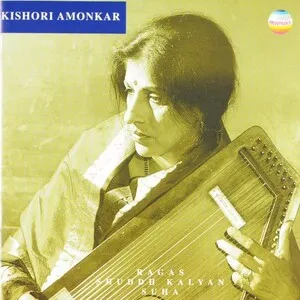
Raga Shuddh Kalyan & Raga Suha
Kishori Amonkar
2011
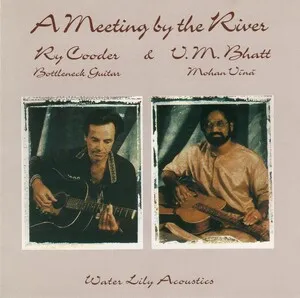
A Meeting by the River
Ry Cooder & Vishwa Mohan Bhatt
1998
Portrait of Genius
Ravi Shankar
1968
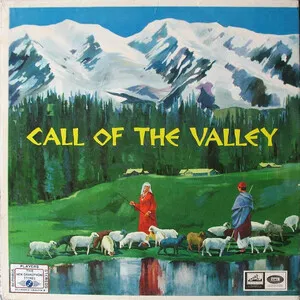
Call of the Valley
Shivkumar Sharma, Brij Bhushan Kabra & Hariprasad Chaurasia
1990
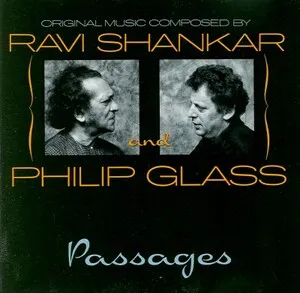
Passages
Philip Glass / Ravi Shankar
2011
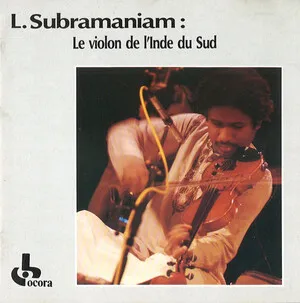
Le violon de l'Inde du Sud
L. Subramaniam
1993
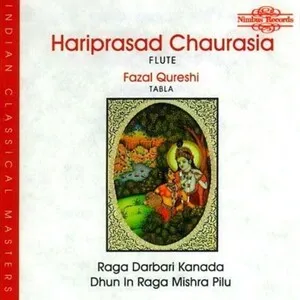
Raga Darbari Kanada / Dhun in Raga Mishra Pilu
Hariprasad Chaurasia
1962
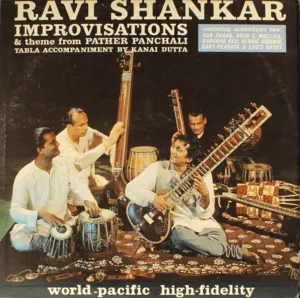
Improvisations
Ravi Shankar
1966
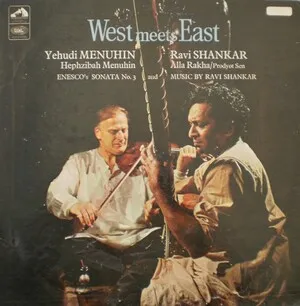
West Meets East
George Enescu
Download our mobile app
Get the Melodigging app and start digging for new genres on the go
Download on the App Store
Get it on Google Play
© 2026 Melodigging
Give feedback
Legal
Melodding was created as a tribute to
Every Noise at Once
, which inspired us to help curious minds keep digging into music's ever-evolving genres.