Genres
Make Music
Artists
Albums
Challenges
Sign in
Sign in
Albums
By Yamato Ensemble
Albums
By Yamato Ensemble
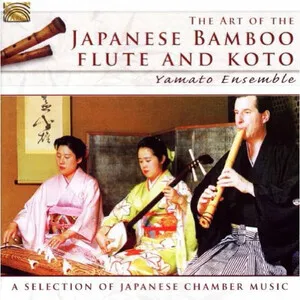
The Art of the Japanese Bamboo Flute and Koto
January 1, 1993
Listen
1
/5
Genres
Danmono
Danmono is a classical Japanese koto repertoire consisting of instrumental pieces built from successive sections called dan (“steps” or “stanzas”). Originating in the early Edo period, these works established the archetype of solo koto artistry that later became central to the broader sōkyoku tradition. Each piece unfolds through a chain of dan that articulate a clear sense of progression, often reflecting the Japanese aesthetic principle of jo–ha–kyū (introduction, development, and rapid conclusion). Canonical examples include Rokudan no Shirabe (“Six Sections”), Hachidan no Shirabe (“Eight Sections”), and Midare (“Disorder,” notable for its irregular sectional lengths). Musically, danmono favors pentatonic modal tunings such as hirajōshi and kumoi-jōshi, idiomatic arpeggiation and broken-chord textures, timbral coloration via koto plectra (tsume), and ornaments like slides (suri) and presses (oshi). Although originally conceived for solo koto, danmono pieces are widely performed in sankyoku settings with shamisen and shakuhachi.
Discover
Listen
Sōkyoku
Sōkyoku (箏曲) is the classical Japanese repertoire for the koto zither that gained prominence in the Edo period. Centered on the 13‑string koto, it features refined timbres, flowing melodies, and an emphasis on space (ma) and expressive nuance. Although performed primarily on the Japanese koto, the idiom is closely related to the broader East Asian zither tradition; in some modern or cross‑cultural contexts, the Chinese guzheng may be used to render sōkyoku repertoire. Sōkyoku is often heard solo or within the sankyoku ensemble alongside shamisen and/or shakuhachi, creating an intimate chamber texture. Core forms include danmono (theme‑and‑variations instrumentals) and kumiuta (song cycles), and the music frequently employs traditional koto tunings such as hira‑jōshi and kumoi‑jōshi. The performance aesthetic values subtle ornamentation, flexible rhythm, and lyrical expression.
Discover
Listen
Similar albums
2000
The Art of the Koto, Volume One
Yatsuhashi Kengyo 八橋検校 / Nanae Yoshimura 吉村七重
2006
Koto Music of Japan
Zumi-Kai Original Instrumental Group
2020
The Koto Music of Michio Miyagi 宮城道雄の箏
Michio Miyagi 宮城道雄 / Yatsuhashi Kengyo 八橋検校
1964
18th Century Traditional Music of Japan (Koto Music of the Edo Period)
Keiko Matsuo 松尾恵子
1959
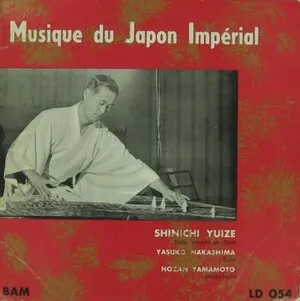
Musique du Japon impérial
Shinichi Yuize 唯是震一, Yasuko Nakashima 唯是靖子 & Hozan Yamamoto 山本邦山
2005
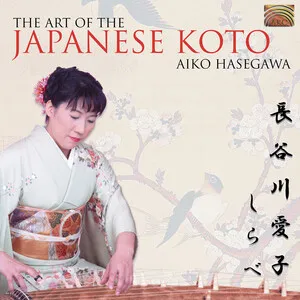
The Art of the Japanese Koto
Yatsuhashi Kengyo 八橋検校 / Aiko Hasegawa 長谷川愛子
2009
Japanese Koto Music
Satomi Saeki
2006
Japanese Traditional Koto and Shakuhachi Music
Satomi Saeki & Alcvin Ryūzen Ramos
1973
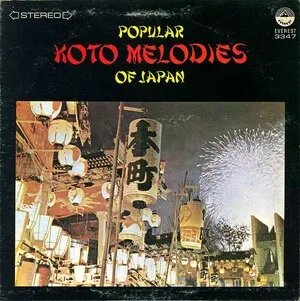
Popular Koto Melodies of Japan
Toshiko Yonekawa
1991
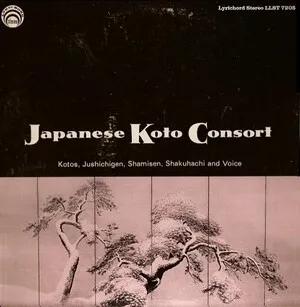
Japanese Koto Consort: Kotos, Jushichigen, Shamisen, Shakuhachi and Voice
Master Musicians of the Ikuta School
Download our mobile app
Get the Melodigging app and start digging for new genres on the go
Download on the App Store
Get it on Google Play
© 2026 Melodigging
Give feedback
Legal
Melodding was created as a tribute to
Every Noise at Once
, which inspired us to help curious minds keep digging into music's ever-evolving genres.