Genres
Make Music
Artists
Albums
Challenges
Sign in
Sign in
Albums
By Astor Piazzolla
Albums
By Astor Piazzolla
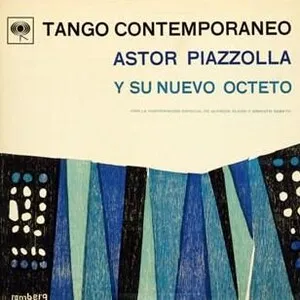
Tango contemporáneo
June 27, 1963
Listen
1
/5
Genres
Latin
Latin (as a genre label) is a broad umbrella used by the recording industry to categorize popular music rooted in Latin America, the Caribbean, and the Iberian world, often characterized by syncopated Afro-diasporic rhythms, dance-forward grooves, and lyrics primarily in Spanish or Portuguese. As a marketplace category that took shape in the mid-20th century United States, it gathers diverse traditions—Afro-Cuban, Brazilian, Mexican, and Caribbean styles—into a shared space. In practice, "Latin" spans everything from big-band mambo and bolero ballads to contemporary pop, rock, hip hop, and dance fusions produced by artists of Latin American heritage.
Discover
Listen
Jazz
Jazz is an improvisation-centered music tradition that emerged from African American communities in the early 20th century. It blends blues feeling, ragtime syncopation, European harmonic practice, and brass band instrumentation into a flexible, conversational art. Defining features include swing rhythm (a triplet-based pulse), call-and-response phrasing, blue notes, and extended harmonies built on 7ths, 9ths, 11ths, and 13ths. Jazz is as much a way of making music—spontaneous interaction, variation, and personal sound—as it is a set of forms and tunes. Across its history, jazz has continually hybridized, from New Orleans ensembles and big-band swing to bebop, cool and hard bop, modal and free jazz, fusion, and contemporary cross-genre experiments. Its influence permeates global popular and art music.
Discover
Listen
Tango
Tango is a song-and-dance music from the Río de la Plata region, crystallizing in Buenos Aires (Argentina) and Montevideo (Uruguay) in the late 19th century. It is characterized by a melancholic, dramatic tone; richly expressive melodies; and a distinctive rhythmic feel rooted in the habanera and milonga. Core ensembles feature bandoneón, violin(s), piano, double bass, and sometimes guitar, forming the famed orquesta típica. Across the 1920s–1950s it became a worldwide craze, moving from rough immigrant bars to grand salons and radio, developing highly sophisticated arranging and performance practices. Lyrics often employ lunfardo (Buenos Aires slang) and dwell on urban nostalgia, love, betrayal, and the neighborhood (el barrio). Note on terminology: in flamenco, “tangos” is a distinct palo (song form) with a lively 4/4 compás, often in A Phrygian, closely related in feeling to rumba flamenca. Although it shares the name and a spirited character, flamenco tangos is a different tradition from the Río de la Plata tango described above.
Discover
Listen
Rioplatense Music
Rioplatense music refers to the musical traditions that emerged around the Río de la Plata basin—centered on Buenos Aires (Argentina) and Montevideo (Uruguay). It blends Afro-Uruguayan rhythms, gaucho song forms, and a wide palette of European immigrant dances and salon styles into a distinctive urban sound. At its core are tango, milonga, and candombe, whose characteristic syncopations, bittersweet melodies, and expressive performance practices (rubato, arrastre, canyengue swing) embody the region’s cosmopolitan yet local identity. Typical ensembles feature bandoneón, violin, piano, double bass, and guitar, while rhythmic foundations often trace back to the Cuban habanera and Afro-Uruguayan drum patterns. Lyrics frequently use lunfardo (local slang) and dwell on love, longing, night life, migration, and urban nostalgia.
Discover
Listen
Latin American Classical Music
Latin American classical music is the concert-music tradition cultivated across the Americas south of (and including parts of) Mexico, drawing on European art-music forms while integrating Indigenous, Afro‑Latin, and criollo musical languages. It encompasses sacred and secular repertoires from the colonial baroque through romantic nationalism, modernism, and contemporary experimental currents. Stylistically, it blends European harmony, counterpoint, and orchestral practice with regional rhythmic cells (sesquiáltera/hemiola, 3‑2/2‑3 clave, malambo, huapango), modal and pentatonic inflections from Andean and Mesoamerican sources, and timbral colors inspired by local instruments and dances. The result ranges from exuberant, rhythmically vital symphonic music to intimate guitar works and choral music suffused with local idioms.
Discover
Listen
Similar albums
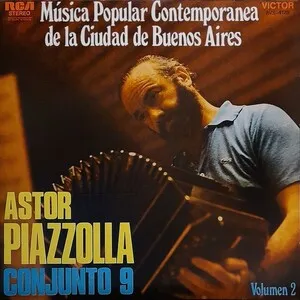
1972
Música popular contemporánea de la ciudad de Buenos Aires, Vol. 2
Astor Piazzolla Conjunto 9
2005
Di Meola Plays Piazzolla
Al Di Meola
2008
Mare Nostrum
Mare Nostrum
1997
Cité de la musique
Dino Saluzzi
2005
Five Tango Sensations
Astor Piazzolla / Kronos Quartet
1972
Música popular contemporánea de la ciudad de Buenos Aires, Vol. 1
Astor Piazzolla Conjunto 9
2001
La revancha del tango
Gotan Project
2007
Mar dulce
Bajofondo
1997
Introducing
Ruben Gonzalez
1984
Lilás
Djavan
Download our mobile app
Get the Melodigging app and start digging for new genres on the go
Download on the App Store
Get it on Google Play
© 2026 Melodigging
Give feedback
Legal
Melodding was created as a tribute to
Every Noise at Once
, which inspired us to help curious minds keep digging into music's ever-evolving genres.