Genres
Make Music
Artists
Albums
Challenges
Sign in
Sign in
Albums
Albums
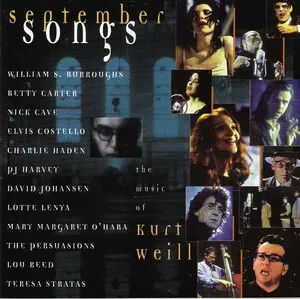
September Songs: The Music of Kurt Weill
May 9, 1997
Listen
1
/5
Genres
Rock
Rock is a broad family of popular music centered on amplified instruments, a strong backbeat, and song forms that foreground riffs, choruses, and anthemic hooks. Emerging from mid‑20th‑century American styles like rhythm & blues, country, and gospel-inflected rock and roll, rock quickly expanded in scope—absorbing folk, blues, and psychedelic ideas—while shaping global youth culture. Core sonic markers include electric guitar (often overdriven), electric bass, drum kit emphasizing beats 2 and 4, and emotive lead vocals. Rock songs commonly use verse–chorus structures, blues-derived harmony, and memorable melodic motifs, ranging from intimate ballads to high‑energy, stadium‑sized performances.
Discover
Listen
Jazz
Jazz is an improvisation-centered music tradition that emerged from African American communities in the early 20th century. It blends blues feeling, ragtime syncopation, European harmonic practice, and brass band instrumentation into a flexible, conversational art. Defining features include swing rhythm (a triplet-based pulse), call-and-response phrasing, blue notes, and extended harmonies built on 7ths, 9ths, 11ths, and 13ths. Jazz is as much a way of making music—spontaneous interaction, variation, and personal sound—as it is a set of forms and tunes. Across its history, jazz has continually hybridized, from New Orleans ensembles and big-band swing to bebop, cool and hard bop, modal and free jazz, fusion, and contemporary cross-genre experiments. Its influence permeates global popular and art music.
Discover
Listen
Show Tunes
Show tunes are songs written for stage musicals and revues, designed to advance plot, reveal character, or provide memorable set‑piece moments. They favor strong, singable melodies, clear structures (often AABA 32‑bar or verse–chorus), witty and narrative lyrics, and orchestrations that support drama and choreography. While rooted in the Great American Songbook, show tunes draw on operetta, vaudeville, ragtime, jazz, and popular songcraft, and they are typically performed by stage voices (from legit to belt) with pit orchestras. Because many became popular standards beyond the theater, show tunes occupy a central place in American popular music and are frequently adapted for cabaret, big band, and vocal jazz.
Discover
Listen
Cabaret
Cabaret is an intimate form of stage entertainment centered on songs, witty monologues, satire, and character pieces, typically presented in small rooms with table seating and a master of ceremonies. Performers address the audience directly, and the atmosphere is conversational, risqué, and often politically or socially pointed. Musically, cabaret blends the French chanson tradition with Weimar-era “Kabarett” and, later, American torch-song and jazz idioms. Arrangements are usually piano-led with small ensembles (accordion, violin, clarinet, upright bass, light percussion), supporting nuanced storytelling and dramatic delivery. Vocal approaches range from parlando (speech-like) delivery to a smoky croon. Common grooves include waltz and musette-inflected 3/4, tango and habanera patterns, foxtrot, and slow blues; harmonies are tonal with chromatic color and expressive rubato. Lyrics favor irony, double entendre, longing, and social commentary.
Discover
Listen
Musical Theatre And Entertainment
Musical theatre and entertainment is an umbrella term for stage works that combine spoken drama with song, dance, comedy, and popular spectacle. It spans a range of formats—revue, vaudeville/variety, music hall, operetta, zarzuela, cabaret, and, later, the modern musical—that were designed first and foremost to delight broad public audiences. In theatre studies it is often treated as one of the four classical branches of the theater (alongside spoken drama, opera, and dance/ballet). Historically, it crystallized in Europe and the United States during the 19th century and flourished into the mid‑20th century, evolving in dialogue with popular music, dance fashions, and new technologies (from gas and electric lighting to film and radio).
Discover
Listen
Classical
Classical music is the notated art-music tradition of Europe and its global descendants, characterized by durable forms, carefully codified harmony and counterpoint, and a literate score-based practice. The term “classical” can refer broadly to the entire Western art-music lineage from the Medieval era to today, not just the Classical period (c. 1750s–1820s). It privileges long-form structures (such as symphonies, sonatas, concertos, masses, and operas), functional or modal harmony, thematic development, and timbral nuance across ensembles ranging from solo instruments to full orchestras and choirs. Across centuries, the style evolved from chant and modal polyphony to tonal harmony, and later to post-tonal idioms, while maintaining a shared emphasis on written notation, performance practice, and craft.
Discover
Listen
Similar albums
1955
Lotte Lenya singt Kurt Weill
Kurt Weill / Lotte Lenya
1980
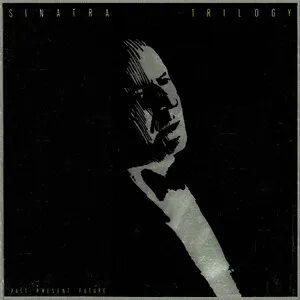
Trilogy: Past, Present & Future
Frank Sinatra
1964
Hello, Dolly!
Louis Armstrong
2014
Chess
Benny Andersson, Tim Rice & Björn Ulvaeus
2019
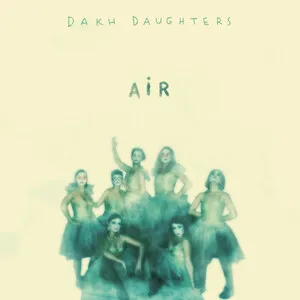
Air
Dakh Daughters
2011
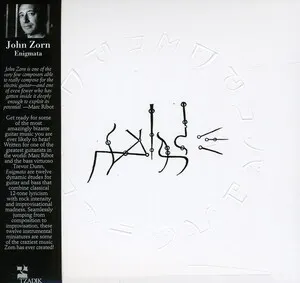
Enigmata
John Zorn
1999
Fossanova
Belle Chase Hotel
2008
Lucifer: Book of Angels Volume 10
Bar Kokhba
1961
Blue Hawaii
Elvis Presley
2006
High School Musical
Download our mobile app
Get the Melodigging app and start digging for new genres on the go
Download on the App Store
Get it on Google Play
© 2026 Melodigging
Give feedback
Legal
Melodding was created as a tribute to
Every Noise at Once
, which inspired us to help curious minds keep digging into music's ever-evolving genres.