Genres
Make Music
Artists
Albums
Challenges
Sign in
Sign in
Albums
By Tonus Peregrinus
Albums
By Tonus Peregrinus
Sacred Music From Notre-Dame Cathedral
July 1, 2005
Listen
1
/5
Genres
Ars Antiqua
Ars antiqua is a medieval European musical style that flourished roughly from the late 12th century to the early 14th century, with its center of gravity in Paris and the Notre Dame Cathedral school. It is defined by the consolidation of measured rhythm through the six rhythmic modes, the cultivation of polyphony in organum and discant styles, and the emergence of the early motet and conductus. Composers favored two to four vocal parts, with a chant-derived tenor forming the foundation and upper voices providing melismatic and texted counterpoint. Harmony emphasized perfect consonances (unisons, fourths, fifths, and octaves), with cadences carefully prepared. Ars antiqua laid crucial groundwork for European notation (including Franconian mensural concepts), enabling more precise rhythmic coordination and setting the stage for the innovations of the later Ars nova.
Discover
Listen
Classical
Classical music is the notated art-music tradition of Europe and its global descendants, characterized by durable forms, carefully codified harmony and counterpoint, and a literate score-based practice. The term “classical” can refer broadly to the entire Western art-music lineage from the Medieval era to today, not just the Classical period (c. 1750s–1820s). It privileges long-form structures (such as symphonies, sonatas, concertos, masses, and operas), functional or modal harmony, thematic development, and timbral nuance across ensembles ranging from solo instruments to full orchestras and choirs. Across centuries, the style evolved from chant and modal polyphony to tonal harmony, and later to post-tonal idioms, while maintaining a shared emphasis on written notation, performance practice, and craft.
Discover
Listen
Medieval Classical Music
Medieval classical music refers to the body of sacred and secular art music created in Europe from roughly the 5th to the late 15th centuries. It encompasses the Christian chant traditions of the early Middle Ages, the emergence of notated polyphony in the High Middle Ages, and the rhythmically and formally sophisticated Ars Nova of the 14th century. At its core are modal melodies (church modes), primarily vocal textures, and a gradual evolution from monophony (single melodic line) to increasingly complex polyphony. Notation develops from adiastematic neumes to staff-based pitch notation and, later, mensural systems that codify rhythm. Characteristic sonorities emphasize perfect consonances (octaves, fifths, and fourths), with triadic harmony only beginning to coalesce near the end of the period. Though rooted in the liturgy (Mass, Office, and Latin song), the era also nurtured rich vernacular traditions—troubadours, trouvères, Minnesänger—and instrumental practices on harp, vielle, recorder, lute, and organ. The period laid the foundational techniques, theories, and repertories that define the entire subsequent Western classical tradition.
Discover
Listen
Similar albums
2006
Le chant des Templiers
Ensemble Organum / Marcel Pérès
1994
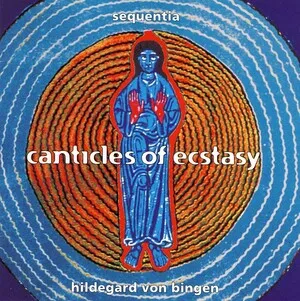
Canticles of Ecstasy
Hildegard von Bingen / Sequentia
1985
A Feather on the Breath of God
Hildegard von Bingen
1989
Perotin
Pérotin / The Hilliard Ensemble
2010
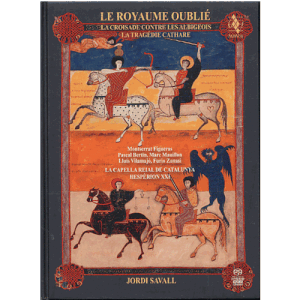
Le royaume oublié : la croisade contre les Albigeois - la tragédie cathare
Beatritz de Diá
1994
Love's Illusion: Music From the Montpellier Codex, 13th Century
[anonymous] / Anonymous 4
1997
Sacred Music From 12th-Century Paris
Léonin
1989
Ars magis subtiliter
Johannes Symonis Hasprois / Ensemble Project Ars Nova
2004
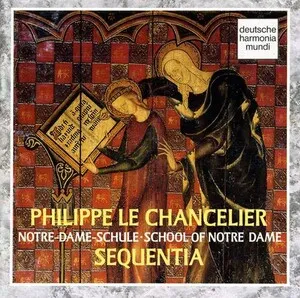
Notre-Dame-Schule
Philippe le Chancelier / Sequentia
1995
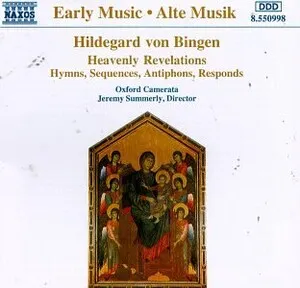
Heavenly Revelations: Hymns, Sequences, Antiphons, Responds
Hildegard von Bingen / Oxford Camerata / Jeremy Summerly
Download our mobile app
Get the Melodigging app and start digging for new genres on the go
Download on the App Store
Get it on Google Play
© 2026 Melodigging
Give feedback
Legal
Melodding was created as a tribute to
Every Noise at Once
, which inspired us to help curious minds keep digging into music's ever-evolving genres.