Genres
Artists
Albums
Make Music
Sign in
Sign in
Albums
By Boston Symphony Orchestra
Albums
By Boston Symphony Orchestra
Poulenc: Concerto for Organ, Strings and Timpani / Stravinsky: Jeu de Cartes
September 16, 2016
Listen
Genres
Moscow School
The Moscow School is a classical performance tradition centered on the Moscow Conservatory and its satellite institutions, renowned especially for its pianism. It is characterized by a singing tone, long-breathed phrasing, structural clarity, and rigorous technique coupled with emotional depth. Although best known for piano, the approach extends to chamber music and orchestral playing: careful voicing, architectural control of large forms, expressive but disciplined rubato, and a rich dynamic palette. Its practitioners balance fidelity to the score with a cultivated cantabile line and a deep, often elegiac lyricism associated with the Russian late-Romantic aesthetic.
Discover
Listen
Concerto
A concerto is a large-scale composition that sets one or more solo instruments in dynamic dialogue with an orchestra. Its core idea is contrast—between soloist and tutti—and the dramatic negotiation of power, color, and thematic responsibility. While Baroque concertos often relied on ritornello form, the Classical era standardized a three-movement plan (fast–slow–fast) with sonata principles in the opening movement. The Romantic period emphasized virtuosity and expressive foregrounding of the soloist, and the 20th–21st centuries broadened the palette with new instruments, harmonies, and formats. Across eras, the concerto remains a showcase for instrumental character, technical brilliance, and the art of orchestral conversation.
Discover
Listen
Classical
Classical music is the notated art-music tradition of Europe and its global descendants, characterized by durable forms, carefully codified harmony and counterpoint, and a literate score-based practice. The term “classical” can refer broadly to the entire Western art-music lineage from the Medieval era to today, not just the Classical period (c. 1750s–1820s). It privileges long-form structures (such as symphonies, sonatas, concertos, masses, and operas), functional or modal harmony, thematic development, and timbral nuance across ensembles ranging from solo instruments to full orchestras and choirs. Across centuries, the style evolved from chant and modal polyphony to tonal harmony, and later to post-tonal idioms, while maintaining a shared emphasis on written notation, performance practice, and craft.
Discover
Listen
Similar albums
Hide discovered
2017
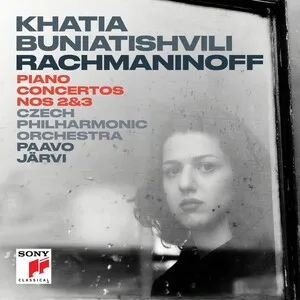
Piano Concertos Nos 2 & 3
Sergey Rakhmaninov Сергей Рахманинов
1986
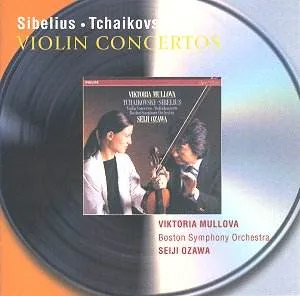
Violin Concertos
Pyotr Tchaikovsky Пётр Чайковский / Jean Sibelius
1992
Brahms: Symphonies Nos. 2 & 3
Johannes Brahms; Saito Kinen Orchestra, Seiji Ozawa
2023
Tchaikovsky: Symphony No. 4 in F minor, Op. 36 / Stravinsky: The Firebird (complete original version, 1910)
Stravinsky; Orchestre de Paris, Seiji Ozawa
Koussevitzky Conducts Copland
Serge Koussevitzky, Boston Symphony Orchestra
2025
Valses nobles et sentimentales / Alborada del gracioso / Une Barque sur l'Océan / Pavane pour une infante défunte
Maurice Ravel; Boston Symphony Orchestra, Seiji Ozawa
1996
Symphony No. 1 / Nänie
Brahms; Boston Symphony Orchestra, Bernard Haitink
1990
Overtures & Preludes
Richard Wagner, Berliner Philharmoniker, 小澤征爾 & Dirigent
2025
The Piano Concertos | Solo Works
Shostakovich; Yuja Wang, Boston Symphony Orchestra, Andris Nelsons
2016
Piston: Symphony No. 6 - Martinu: Fantasies Symphoniques
Charles Munch & Boston Symphony Orchestra
Download our mobile app
Get the Melodigging app and start digging for new genres on the go
Download on the App Store
Get it on Google Play
© 2026 Melodigging
Give feedback
About & FAQ
Legal
Melodding was created as a tribute to
Every Noise at Once
, which inspired us to help curious minds keep digging into music's ever-evolving genres.