Genres
Make Music
Artists
Albums
Challenges
Sign in
Sign in
Albums
By Tim Sparks
Albums
By Tim Sparks
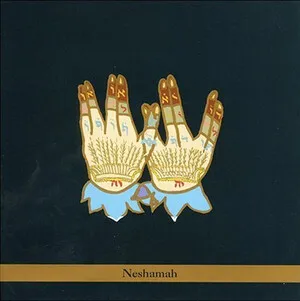
Neshamah
August 17, 1999
Listen
1
/5
Genres
Rock
Rock is a broad family of popular music centered on amplified instruments, a strong backbeat, and song forms that foreground riffs, choruses, and anthemic hooks. Emerging from mid‑20th‑century American styles like rhythm & blues, country, and gospel-inflected rock and roll, rock quickly expanded in scope—absorbing folk, blues, and psychedelic ideas—while shaping global youth culture. Core sonic markers include electric guitar (often overdriven), electric bass, drum kit emphasizing beats 2 and 4, and emotive lead vocals. Rock songs commonly use verse–chorus structures, blues-derived harmony, and memorable melodic motifs, ranging from intimate ballads to high‑energy, stadium‑sized performances.
Discover
Listen
Avant-Garde
Avant-garde music is an umbrella term for boundary-pushing practices that challenge prevailing norms of harmony, rhythm, timbre, form, and performance. It privileges experimentation, conceptual rigor, and a willingness to reframe what counts as music at all. Historically tied to early 20th‑century artistic modernism, avant-garde music introduced atonality, the emancipation of noise, and new forms of notation and process. It embraces indeterminacy, extended techniques, electronics, spatialization, and multimedia performance, treating sound as material to be sculpted, questioned, and reinvented.
Discover
Listen
Jazz
Jazz is an improvisation-centered music tradition that emerged from African American communities in the early 20th century. It blends blues feeling, ragtime syncopation, European harmonic practice, and brass band instrumentation into a flexible, conversational art. Defining features include swing rhythm (a triplet-based pulse), call-and-response phrasing, blue notes, and extended harmonies built on 7ths, 9ths, 11ths, and 13ths. Jazz is as much a way of making music—spontaneous interaction, variation, and personal sound—as it is a set of forms and tunes. Across its history, jazz has continually hybridized, from New Orleans ensembles and big-band swing to bebop, cool and hard bop, modal and free jazz, fusion, and contemporary cross-genre experiments. Its influence permeates global popular and art music.
Discover
Listen
Klezmer
Klezmer is the traditional instrumental music of Ashkenazi Jews from Eastern Europe, originally performed by itinerant bands for weddings and communal celebrations. It is characterized by expressive, voice-like ornamentation (krekhts, slides, trills), flexible phrasing, and a repertoire of dance forms such as freylekhs, bulgar, sher, khosidl, and horas. Modal color is central: the freygish (Ahava Rabbah/Phrygian dominant) and Mi Sheberakh (Ukrainian Dorian) modes are common, lending the music its plaintive, celebratory, and at times bittersweet sound. Typical ensembles feature clarinet or violin as lead, with tsimbl (hammered dulcimer), accordion, trumpet/trombone, bass, and later American additions like piano and drum set. While rooted in Jewish liturgical and Hasidic song, klezmer absorbed 19th‑century European social dances (polka, waltz, mazurka) and Balkan/Romanian influences (notably the free-rhythm doina), producing a flexible style that moves from rhapsodic improvisation to propulsive dance tunes.
Discover
Listen
Similar albums
2015
Cerberus: Book of Angels Volume 26
The Spike Orchestra
1969
Hot Rats
Frank Zappa
2000
It's Understood
Estradasphere
1982
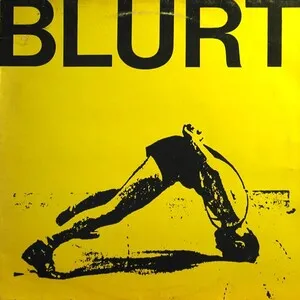
Blurt
Blurt
2016
Pixvae
Pixvae
2012
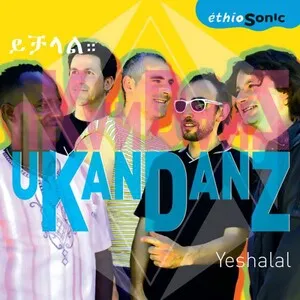
Yetchalal
Ukandanz
2006
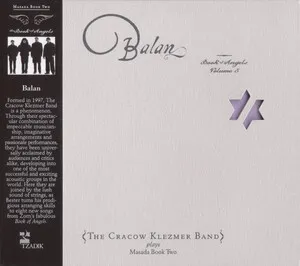
Balan: Book of Angels Volume 5
The Cracow Klezmer Band
2006
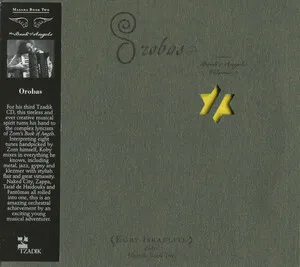
Orobas: Book of Angels Volume 4
Koby Israelite
1961
Blue Hawaii
Elvis Presley
2020
Sunset In The Blue
Melody Gardot
Download our mobile app
Get the Melodigging app and start digging for new genres on the go
Download on the App Store
Get it on Google Play
© 2026 Melodigging
Give feedback
Legal
Melodding was created as a tribute to
Every Noise at Once
, which inspired us to help curious minds keep digging into music's ever-evolving genres.