Genres
Make Music
Artists
Albums
Challenges
Sign in
Sign in
Albums
By Namdziliin Norovbanzad
Albums
By Namdziliin Norovbanzad
Mongolian Songs
July 9, 2008
Listen
1
/5
Genres
Jazz
Jazz is an improvisation-centered music tradition that emerged from African American communities in the early 20th century. It blends blues feeling, ragtime syncopation, European harmonic practice, and brass band instrumentation into a flexible, conversational art. Defining features include swing rhythm (a triplet-based pulse), call-and-response phrasing, blue notes, and extended harmonies built on 7ths, 9ths, 11ths, and 13ths. Jazz is as much a way of making music—spontaneous interaction, variation, and personal sound—as it is a set of forms and tunes. Across its history, jazz has continually hybridized, from New Orleans ensembles and big-band swing to bebop, cool and hard bop, modal and free jazz, fusion, and contemporary cross-genre experiments. Its influence permeates global popular and art music.
Discover
Listen
Urtiin Duu
Urtiin duu (Mongolian long song) is a traditional Mongolian vocal genre characterized by extremely long, sustained syllables, wide melodic leaps, and richly ornamented, melismatic lines. It is usually performed solo with free, rubato timing and accompanied by the morin khuur (horse-head fiddle), although unaccompanied renditions also exist. The term "long" refers to the prolonged duration of sung syllables and the expansive melodic lines rather than to the length of the piece itself. The melodies often use pentatonic frameworks, expansive ranges, and expressive techniques such as portamento, glissandi, and subtle microtonal inflections to evoke the vastness of the steppe, horses, and nomadic life. Urtiin duu is a pillar of Mongolian musical identity and has been recognized by UNESCO as part of the Intangible Cultural Heritage of Humanity.
Discover
Listen
Mongolian Music
Mongolian music encompasses the traditional vocal and instrumental practices of the Mongolian steppe, centered on the morin khuur (horsehead fiddle), long song (urtyn duu), short song (bogino duu), epic song (tuuli), and the overtone-rich vocal art of khöömii (throat singing). Its melodic language is largely pentatonic, with expansive, arching phrases that evoke open landscapes, horses, and nomadic life. Textures range from solo voice with a sustained drone to heterophonic ensemble playing, and rhythms move fluidly between free, rubato narrative delivery and lively dance meters for bielgee (seated dance) and festive pieces. Ritual and religious strands—especially Buddhist chant and older shamanic practices—intertwine with courtly and folk repertories shaped during and after the Mongol Empire, yielding a music that is at once intimate, contemplative, and epic in scale.
Discover
Listen
Turkic-Mongolic Music
Turkic-Mongolic music is a broad family of Inner Asian musical traditions shaped by nomadic lifeways across the steppe, taiga, and desert zones from Mongolia and Siberia to Xinjiang and Central Asia. It emphasizes timbre, overtone color, and modal melody over dense harmony, often centering a drone or open fifths with anhemitonic pentatonic contour. Characteristic practices include overtone (throat) singing, epic chant, long-song with free rhythm, and dance songs with “galloping” rhythms that mimic horse movement. Common instruments include horse-head fiddles (morin khuur), two-string lutes (igil, topshuur, dombra, komuz), frame and shaman drums, and jaw harps (khomus/temir komuz). Texts frequently recount genealogies, heroic epics, pastoral imagery, and spiritual cosmologies linked to Tengrism, Buddhism, and Islam. Across Turkic- and Mongolic-speaking communities, local styles vary—Uyghur muqam cycles are long-form modal suites, Kazakh and Kyrgyz traditions foreground plucked lutes and instrumental toqs/kyuis, and Tuvan and Mongolian repertoires foreground throat singing and long-song aesthetics—yet all share a preference for modal melody, flexible rhythm, and timbre-focused expression.
Discover
Listen
Similar albums
2020
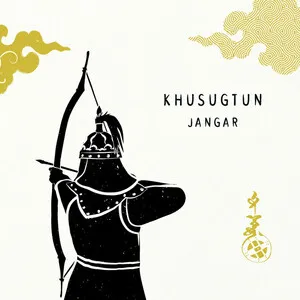
Jangar
Khusugtun
2000
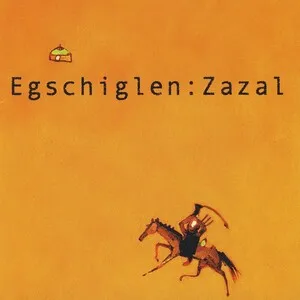
Zazal
Egschiglen
2009
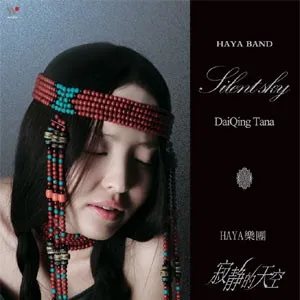
Silent Sky 寂靜的天空
Daiqing Tana 黛青塔娜 & Haya Band HAYA樂團
2007
Gereg
Egschiglen
2006
Made in Altan Urag
Altan Urag
1997
Gobi
Egschiglen
2023
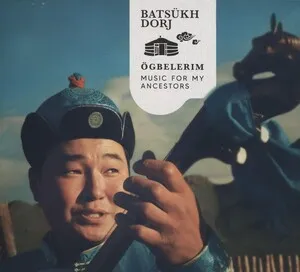
Ögbelerim: Music for My Ancestors
Batsükh Dorj
2005
Tal Nutag
Urna Chahar-Tugchi
2012
Introducing Hanggai
Hanggai
2019
The Gereg
The Hu
Download our mobile app
Get the Melodigging app and start digging for new genres on the go
Download on the App Store
Get it on Google Play
© 2026 Melodigging
Give feedback
Legal
Melodding was created as a tribute to
Every Noise at Once
, which inspired us to help curious minds keep digging into music's ever-evolving genres.