Genres
Make Music
Artists
Albums
Challenges
Sign in
Sign in
Albums
By Csókolom
Albums
By Csókolom
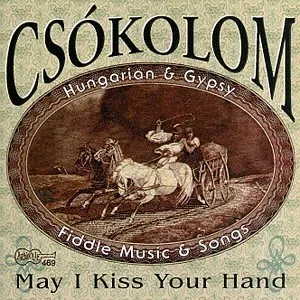
May I Kiss Your Hand
1998
Listen
1
/5
Genres
Hungarian Folk Music
Hungarian folk music is the traditional music of the Carpathian Basin’s Hungarian-speaking communities, performed for dancing, storytelling, ritual, and everyday social life. It is characterized by a fiddle-led band (prímás) supported by a three‑string viola (kontra) playing drone-triad shuffles, a double bass (bőgő) marking off‑beats, and often a cimbalom (hammered dulcimer). Melodies frequently use old-style pentatonic and heptatonic modes (notably Dorian and Mixolydian), with rich ornamentation, parlando‑rubato declamation in ballads, and strict tempo giusto in dance tunes. Core dance types include the csárdás (typically a slow lassú followed by a fast friss), verbunk (recruitment dance with dotted rhythms), ugrós, and regional suites from Transylvania (Mezőség, Kalotaszeg, Szék), Gyimes, and Moldva. Singing is usually strophic, with narrow-to-moderate ambitus, heterophonic variation between voice and fiddle, and text topics ranging from love and work to historical and humorous narratives. The 20th‑century collection work of Bartók and Kodály, and the late‑20th‑century táncház (dance‑house) revival, helped sustain a living, village-rooted performance practice in urban settings.
Discover
Listen
Romani Folk Music
Romani folk music is the diverse, diasporic musical tradition of the Romani people, whose ancestors migrated from the Indian subcontinent into the Middle East and Europe during the late medieval period. Carrying core melodic and rhythmic ideas with them, Romani musicians absorbed and reinterpreted local styles, creating a family of related yet regionally distinct musics across Central, Eastern, Southern, and Western Europe. Common features include ornate, highly expressive melodies with melismas and slides; flexible tempo practices (rubato introductions leading into faster dance sections); and modal colors such as harmonic minor and the Phrygian dominant (often called "Gypsy" or freygish in European discourse). Instrumentation varies by region—fiddles and cimbalom in the Carpathian basin; clarinet, accordion, and cimbalom in Romania and Hungary; brass bands in the Balkans; and guitar-based ensembles among Iberian Gitanos. Dance repertoires (e.g., csárdás, hora, kolo, čoček) and the Romani language often feature, alongside local tongues.
Discover
Listen
Similar albums
2002
Rávágok a zongorára
Parno Graszt
2002
Y'a des cigales dans la fourmilière
La Rue Kétanou
1993
Gitans
Thierry Robin
1990
Sans domicile fixe
Bratsch
2001
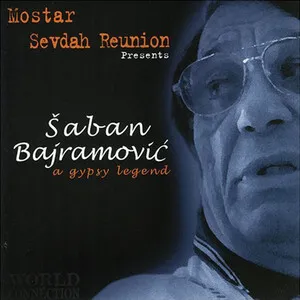
A Gypsy Legend
Šaban Bajramović & Mostar Sevdah Reunion
1998
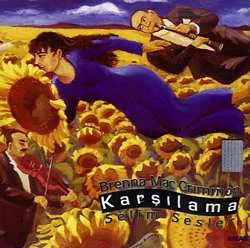
Karşılama
Brenna MacCrimmon & Selim Sesler
1998
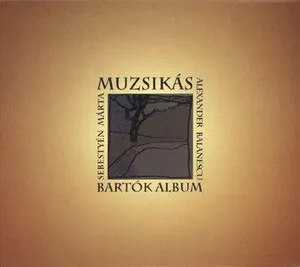
Bartók Album
Muzsikás
2011
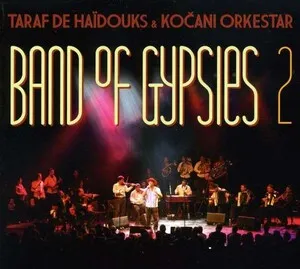
Band of Gypsies 2
Taraf de Haïdouks & Kočani Orkestar
2006
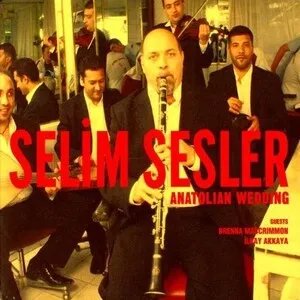
Anatolian Wedding
Selim Sesler
2004
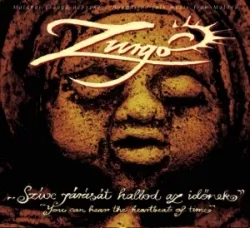
Szíve járását hallod az időnek
Zurgó
Download our mobile app
Get the Melodigging app and start digging for new genres on the go
Download on the App Store
Get it on Google Play
© 2026 Melodigging
Give feedback
Legal
Melodding was created as a tribute to
Every Noise at Once
, which inspired us to help curious minds keep digging into music's ever-evolving genres.