Genres
Make Music
Artists
Albums
Challenges
Sign in
Sign in
Albums
By Jan Jelinek
Albums
By Jan Jelinek
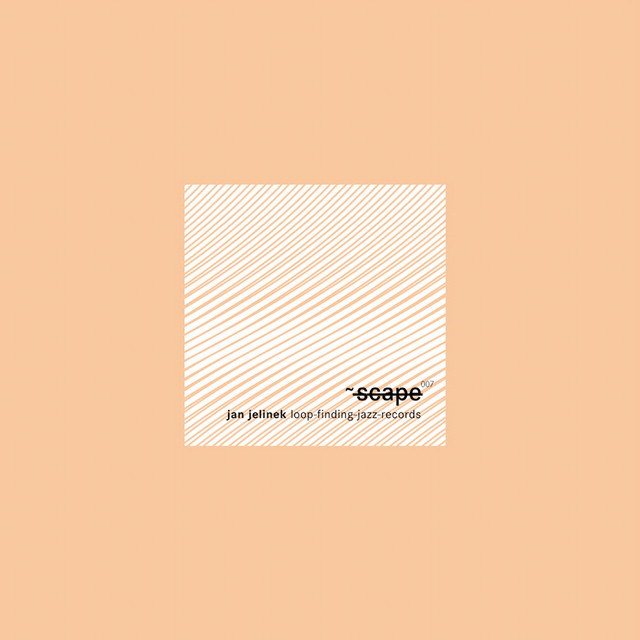
Loop-Finding-Jazz-Records
January 1, 2001
Listen
3
/5
Genres
Microhouse
Microhouse is a sparse, detail‑oriented strain of house music that strips grooves down to their essentials and focuses on micro‑edits, subtle percussive textures, and small timbral changes over time. Typically hovering around 118–126 BPM, it favors dry 4/4 kicks, shuffled hi‑hats, sub‑bass pulses, and meticulously arranged glitches, clicks, and found sounds. Rather than big breakdowns, microhouse builds tension through repetition, negative space, and tiny variations, often borrowing the reductionist ethos of minimal techno and the textural play of glitch and IDM. The result is club music that feels intimate and hypnotic: danceable yet restrained, warm yet abstract, and deeply attentive to sound design and micro‑timing.
Discover
Listen
Glitch
Glitch is an experimental electronic music genre that foregrounds the sounds of technological error—digital clicks, pops, clipping, buffer underruns, CD skipping, software crashes, and bit‑reduction. Rather than hiding artifacts, producers use them as primary musical material, often arranged through extreme micro‑editing and non‑linear sequencing. Texturally, glitch spans austere minimalism to warm, hazy ambience. Rhythms tend to be fragmented and asymmetrical, with sudden cuts, stutters, and silences that create tension and negative space. The palette commonly includes sine‑tone grains, granular clouds, filtered noise, and hyper‑detailed percussive fragments, sometimes sitting over subdued drones or dub‑inflected low end. The style emerged in the late 1990s around labels such as Mille Plateaux, influenced by IDM, minimal techno, and the aesthetics of failure in digital media. It later permeated pop and beat‑driven styles through sound‑design techniques that evoke imperfection and transience.
Discover
Listen
Ambient Techno
Ambient techno blends the spacious, atmospheric qualities of ambient music with the pulse and structure of techno. It favors subtle four-on-the-floor rhythms, soft-edged percussion, and long-evolving pads and drones over aggressive beats or hooks. Tracks typically unfold slowly across extended lengths, privileging texture, timbre, and psychoacoustic space. The bass is warm and rounded, delays and reverbs are dubby, and harmonic movement is minimal or modal, creating a hypnotic, contemplative flow suited to both attentive listening and late-night dancefloors. Compared with ambient house, ambient techno tends to be more austere and less pop-sample oriented; compared with dub techno, it is often less explicitly rooted in reggae-derived rhythms and may embrace more beatless passages.
Discover
Listen
Ambient Dub
Ambient dub fuses the studio-as-instrument ethos of Jamaican dub with the spacious textures and slow-motion pacing of ambient and ambient house. It is marked by deep sub‑bass, echo‑drenched percussion, and vast, reverb‑heavy soundscapes where delays, filtering, and tape‑style feedback become primary compositional tools. Tracks tend to be long, hypnotic, and minimal, often incorporating field recordings, gentle synth pads, and fragmentary vocals that are treated as atmospheric elements rather than lyrical leads. Emerging in the early 1990s UK, the style crystallized through influential artists and compilations that showcased a reflective, psychedelic, and immersive approach to dub-informed electronic music.
Discover
Listen
Idm
IDM (often expanded as "Intelligent Dance Music") is a strand of experimental electronic music that applies the sound palette and production methods of club genres to listening-focused, often home-oriented works. It favors intricate rhythm programming, unusual time signatures, and richly textured sound design, blending ambient atmospheres with techno’s pulse, electro’s syncopation, and breakbeat’s fragmentation. The music often de-emphasizes the dancefloor in favor of headphone detail, algorithmic structure, and timbral exploration. The term itself is contentious—many artists rejected the "intelligent" label—yet it became a convenient tag for the early- to mid‑1990s cluster of Warp, Rephlex, and related scenes that foregrounded complexity, abstraction, and emotional ambiguity.
Discover
Listen
Techno
Techno is a four-on-the-floor, machine-driven form of electronic dance music that emerged in mid-to-late 1980s Detroit. It is characterized by steady 4/4 kick drums, repetitive and hypnotic rhythmic patterns, synthetic timbres, and an emphasis on texture, groove, and forward momentum over elaborate harmony. Producers typically use drum machines, sequencers, and synthesizers to build layered percussion, pulsing basslines, and evolving motifs. While often dark and minimalistic, techno spans a wide spectrum—from soulful, futuristic Detroit aesthetics to hard, industrially tinged European strains—yet it consistently prioritizes kinetic energy for dancefloors and a sense of machine futurism.
Discover
Listen
House
House is a dance music genre that emerged in Chicago in the early 1980s, defined by a steady four-on-the-floor kick drum, off-beat hi-hats, soulful or hypnotic vocals, and groove-centric basslines. Typical tempos range from 118–130 BPM, and tracks are structured in DJ-friendly 16–32 bar phrases designed for seamless mixing. Drawing on disco’s celebratory spirit, electro-funk’s drum-machine rigor, and Italo/Hi-NRG’s synth-led sheen, house prioritizes repetition, tension-and-release, and communal energy on the dancefloor. Its sound palette often includes 808/909 drums, sampled or replayed disco/funk elements, filtered loops, piano/organ stabs, and warm, jazzy chords. Over time, house diversified into many substyles—deep house, acid house, French house, tech house, progressive house, and more—yet it remains a global foundation of club culture, known for emphasizing groove, inclusivity, and euphoria.
Discover
Listen
Electronic
Electronic is a broad umbrella genre defined by the primary use of electronically generated or electronically processed sound. It encompasses music made with synthesizers, drum machines, samplers, computers, and studio/tape techniques, as well as electroacoustic manipulation of recorded or synthetic sources. The genre ranges from academic and experimental traditions to popular and dance-oriented forms. While its sonic palette is rooted in electricity and circuitry, its aesthetics span minimal and textural explorations, structured song forms, and beat-driven club permutations. Electronic emphasizes sound design, timbre, and studio-as-instrument practices as much as melody and harmony.
Discover
Listen
Similar albums
1992
Selected Ambient Works 85-92
Aphex Twin
2010
There Is Love in You
Four Tet
1996
In Sides
Orbital
1993
Surfing On Sine Waves
Polygon Window
2013
To the Disco ‘77 & Hybrid Minds Remixes
Move D
2015
Howl
Rival Consoles
2025
Surfing On Sine Waves (Expanded Edition)
Polygon Window
2019
DJ-Kicks (Peggy Gou) [DJ Mix]
Dorisburg
2022
Spectrum
Max Cooper
2004
Serial Hodgepodge
Lusine
Download our mobile app
Get the Melodigging app and start digging for new genres on the go
Download on the App Store
Get it on Google Play
© 2026 Melodigging
Give feedback
Legal
Melodding was created as a tribute to
Every Noise at Once
, which inspired us to help curious minds keep digging into music's ever-evolving genres.