Genres
Make Music
Artists
Albums
Challenges
Sign in
Sign in
Albums
By Kayhan Kalhor
Albums
By Kayhan Kalhor
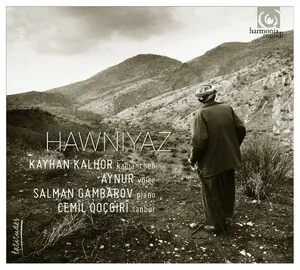
Hawniyaz
June 24, 2016
Listen
1
/5
Genres
Jazz Mugham
Jazz mugham is a hybrid style from Azerbaijan that fuses the modal, improvisatory tradition of mugham with the harmony, rhythm, and ensemble practice of modern jazz. Typically led by piano, saxophone, or voice (khananda), it places mugham’s modal pathways (dastgahs such as Rast, Shur, Segah, and Bayati-Shiraz) and melismatic phrasing over jazz harmonies, grooves, and forms drawn from bebop, cool, modal, and post-bop. The result balances deep, contemplative modal development with the swing, syncopation, and interactive improvisation of jazz. Pioneered in Baku by Vagif Mustafazadeh in the 1960s and popularized internationally by Aziza Mustafa Zadeh in the 1990s, jazz mugham has become a distinctive voice within both Azerbaijani music and the broader global-jazz conversation.
Discover
Listen
Kurdish Music
Kurdish music is the traditional and contemporary music of the Kurdish people, spanning the mountainous regions of present‑day Iraq, Turkey, Iran, and Syria. It centers on modal melodies, rich vocal ornamentation, and poetic storytelling, and it ranges from unaccompanied epic singing (dengbêj) to driving dance music for circle dances (govend/halay). Its melodic language is closely tied to Near Eastern modal systems (maqam/dastgāh), with characteristic use of the Kurd/Bayât‑e Kurd mode (akin to a minor scale with a lowered second) and related hijaz/bayat families. Common meters include 2/4 and 6/8 for dances, alongside asymmetrical meters such as 7/8 and 9/8. Typical instruments include the tembûr/tanbur and saz (bağlama), frame drums (daf) and double-headed drums (dohol), reed and double‑reed winds (ney, zurna, balaban/duduk), as well as kamancheh and violin; modern ensembles may add keyboards and electric bağlama. Lyrically, Kurdish songs are often performed in Kurmanji, Sorani, and Zazakî, exploring themes of love, nature, heroism, exile, and resistance. The sound can be at once melancholic and epic, yet also celebratory and communal in its dance repertoires.
Discover
Listen
Persian Classical
Persian classical (musiqi-e asil) is the art-music tradition of Iran centered on the modal system called dastgāh and its body of canonical melodies known as the radif. Performances are typically intimate and improvisation-forward, unfolding through a succession of gusheh (short melodic pieces) within a dastgāh, guided by recognizable cadential gestures (forud) and a central tone (shāhed). Its sound world features nuanced microtonal inflections using koron (lowered) and sori (raised) accidentals, fluid rhythmic freedom in avāz (non-metric improvisation), and contrasting metered forms like pishdarāmad, chahārmezrāb, tasnif (song), and reng (dance). Core instruments include tar, setar, kamancheh, santur, ney, and tombak (tonbak), with the human voice employing elaborate ornaments (tahrir). The repertoire draws on classical Persian poetry (Hafez, Rumi, Saadi), creating a contemplative, mystical, and deeply expressive aesthetic.
Discover
Listen
Persian Music
Persian music refers broadly to the musical traditions of Iran, centered on the radif repertoire and the modal system known as the dastgāh and its related āvāz branches. It is characterized by microtonal intervals (koron and sori accidentals), fluid melodic development through short pieces called gusheh, and a performance practice that balances composition with refined improvisation (bedāheh-navāzi). Typical ensembles feature tar, setar, kamancheh, santur, ney, and frame drums such as tombak and daf, with vocals employing the distinctive ornament called tahrir. Texts often draw on classical Persian poetry (Hafez, Rumi, Saadi), yielding contemplative, romantic, and introspective moods. While the tradition’s roots reach back to pre-Islamic Persia, its courtly and urban forms crystallized from the Safavid era onward and were codified in the Qajar period, continuing to influence regional modal musics across West and Central Asia.
Discover
Listen
Azerbaijani Music
Azerbaijani music is a broad tradition from the South Caucasus that spans courtly modal art music (mugham), bardic ashig poetry-singing, rural dance bands with zurna–naghara, and 20th–21st century composed, pop, and jazz hybrids. Its art core is the modal system of mugham—suites built on named modes (Rast, Shur, Segah, Chargah, Bayati-Shiraz, Shushtar, Humayun), microtonal inflection, and improvisation by a khananda (vocalist) accompanied by tar, kamancha, and gaval. Alongside this stands the ashig (ashugh) tradition, in which poet-singers accompany themselves on the saz to deliver epic love, mystic, and social poetry in intricate meters. Across the 20th century, Azerbaijani composers, crooners, and innovators fused these idioms with opera, symphonic writing, estrada/pop, and jazz to create distinct modern styles such as symphonic mugham and jazz-mugham.
Discover
Listen
Similar albums
2024
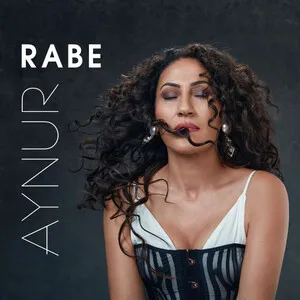
Rabe
Aynur
2005
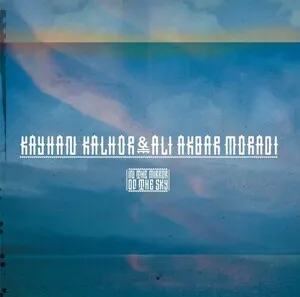
In the Mirror of the Sky
Kayhan Kalhor & Ali Akbar Moradi
2005
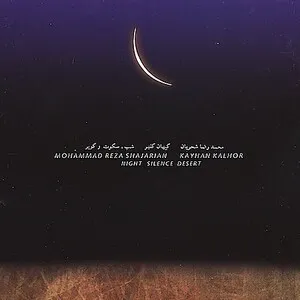
Night Silence Desert
Mohammad Reza Shajarian محمدرضا شجریان & Kayhan Kalhor
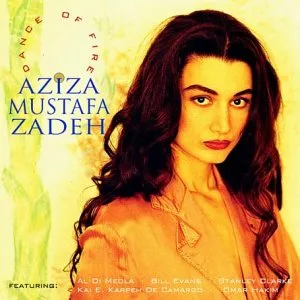
1995
Dance of Fire
Aziza Mustafa Zadeh
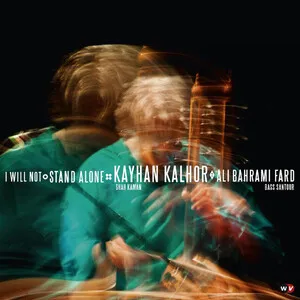
2012
I Will Not Stand Alone
Kayhan Kalhor & Ali Bahrami Fard
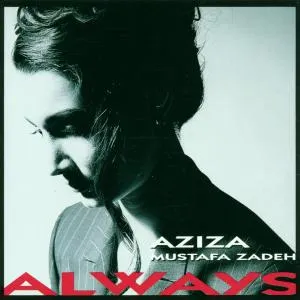
1993
Always
Aziza Mustafa Zadeh
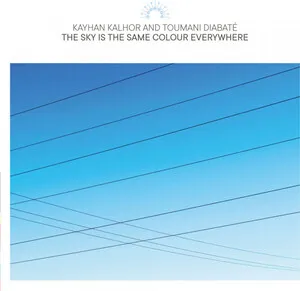
2023
The Sky Is the Same Colour Everywhere
Kayhan Kalhor & Toumani Diabaté
2019
It's Still Autumn
Kayhan Kalhor & Rembrandt Frerichs Trio
2006
The Wind
Kayhan Kalhor & Erdal Erzincan
2008
Silent City
Kayhan Kalhor & Brooklyn Rider
Download our mobile app
Get the Melodigging app and start digging for new genres on the go
Download on the App Store
Get it on Google Play
© 2026 Melodigging
Give feedback
Legal
Melodding was created as a tribute to
Every Noise at Once
, which inspired us to help curious minds keep digging into music's ever-evolving genres.