Genres
Make Music
Artists
Albums
Challenges
Sign in
Sign in
Albums
By Barbarito Torres
Albums
By Barbarito Torres
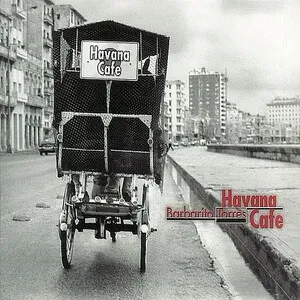
Havana Cafe
February 16, 2007
Listen
2
/5
Genres
Afro-Cuban Jazz
Afro-Cuban jazz (often historically called Cubop) is a fusion of Afro-Cuban rhythmic traditions and North American jazz harmony, melody, and improvisation. It sets jazz writing and soloing inside the matrix of the clave, combining straight-eighth Afro-Cuban grooves (mambo, rumba, son montuno, danzón) with big-band and bebop vocabulary. Hallmarks include piano montunos (guajeos), tumbao bass lines, horn mambos and moñas (syncopated riffs), and a percussion section of congas, bongos, timbales, cowbell, and claves. The result is music that is harmonically sophisticated yet dance-driven, balancing arranged horn passages with open sections for improvisation, and emphasizing call-and-response and layered polyrhythms.
Discover
Listen
Latin
Latin (as a genre label) is a broad umbrella used by the recording industry to categorize popular music rooted in Latin America, the Caribbean, and the Iberian world, often characterized by syncopated Afro-diasporic rhythms, dance-forward grooves, and lyrics primarily in Spanish or Portuguese. As a marketplace category that took shape in the mid-20th century United States, it gathers diverse traditions—Afro-Cuban, Brazilian, Mexican, and Caribbean styles—into a shared space. In practice, "Latin" spans everything from big-band mambo and bolero ballads to contemporary pop, rock, hip hop, and dance fusions produced by artists of Latin American heritage.
Discover
Listen
Son Cubano
Son cubano is a foundational Cuban genre that fuses Spanish-derived song forms and harmony with Afro-Cuban rhythms and percussion. Born in eastern Cuba (Oriente) and crystallized in Havana in the 1910s–1920s, it became the backbone of much of 20th‑century Latin popular music. Typical ensembles began as sextetos (tres, guitar, bongó, maracas, claves, and bass or marímbula) and later evolved into septetos with trumpet. Conjunto formats in the 1940s added piano, congas, and multiple horns. The music rides a son clave (in 3‑2 or 2‑3 orientation), features interlocking tres guajeos, a walking/tumbao bass that anticipates the downbeat, and call‑and‑response vocals in the montuno section. Harmonically it is rooted in I–IV–V with bluesy dominant sevenths and occasional secondary dominants. Lyrically it balances romance, everyday life, and streetwise wit, always aimed at dancing and social gathering.
Discover
Listen
Jazz
Jazz is an improvisation-centered music tradition that emerged from African American communities in the early 20th century. It blends blues feeling, ragtime syncopation, European harmonic practice, and brass band instrumentation into a flexible, conversational art. Defining features include swing rhythm (a triplet-based pulse), call-and-response phrasing, blue notes, and extended harmonies built on 7ths, 9ths, 11ths, and 13ths. Jazz is as much a way of making music—spontaneous interaction, variation, and personal sound—as it is a set of forms and tunes. Across its history, jazz has continually hybridized, from New Orleans ensembles and big-band swing to bebop, cool and hard bop, modal and free jazz, fusion, and contemporary cross-genre experiments. Its influence permeates global popular and art music.
Discover
Listen
Guajira
Guajira is a Cuban song genre with rural, pastoral imagery, derived from the countryside verse-singing tradition known as punto cubano and formalized at the turn of the 20th century. Musically, it favors a lilting, moderate tempo with habanera/tresillo undercurrents, clear major-key harmonies, and lyrical, narrative melodies often set to décimas (ten-line stanzas). Its texts nostalgically portray the guajiro (rural farmer), love, nature, and everyday country life. Historically, a related rhythmic and thematic idea travelled to Spain in the 18th–19th centuries as “punto de La Habana,” entering flamenco as the palo called guajira. In Cuba, the genre was codified in urban theater and zarzuela; Jorge Anckermann’s 1899 song “El arroyo que murmura” is widely cited as the first Cuban guajira and became a template for later works. Over the 20th century the guajira intersected with son, producing the popular hybrid guajira-son and standards such as “Guantanamera.”
Discover
Listen
Similar albums
1997
Introducing
Ruben Gonzalez
1997
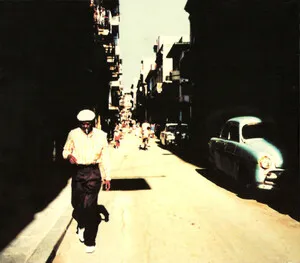
Buena Vista Social Club
Buena Vista Social Club
1994
Amazonas
Cal Tjader
2000
Guajiro natural
Polo Montañez
1997
Buena Vista Social Club
Buena Vista Social Club
1999
Buena Vista Social Club Presents Ibrahim Ferrer
Ibrahim Ferrer
1997
A toda Cuba le gusta
Afro-Cuban All Stars
2011
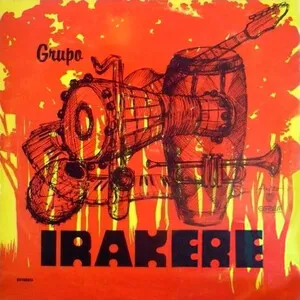
Grupo Irakere
Irakere
1997
Introducing...
Rubén González
2014
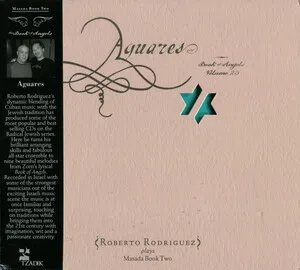
Aguares: Book of Angels Volume 23
Roberto Rodriguez
Download our mobile app
Get the Melodigging app and start digging for new genres on the go
Download on the App Store
Get it on Google Play
© 2026 Melodigging
Give feedback
Legal
Melodding was created as a tribute to
Every Noise at Once
, which inspired us to help curious minds keep digging into music's ever-evolving genres.