Your digging level
Description
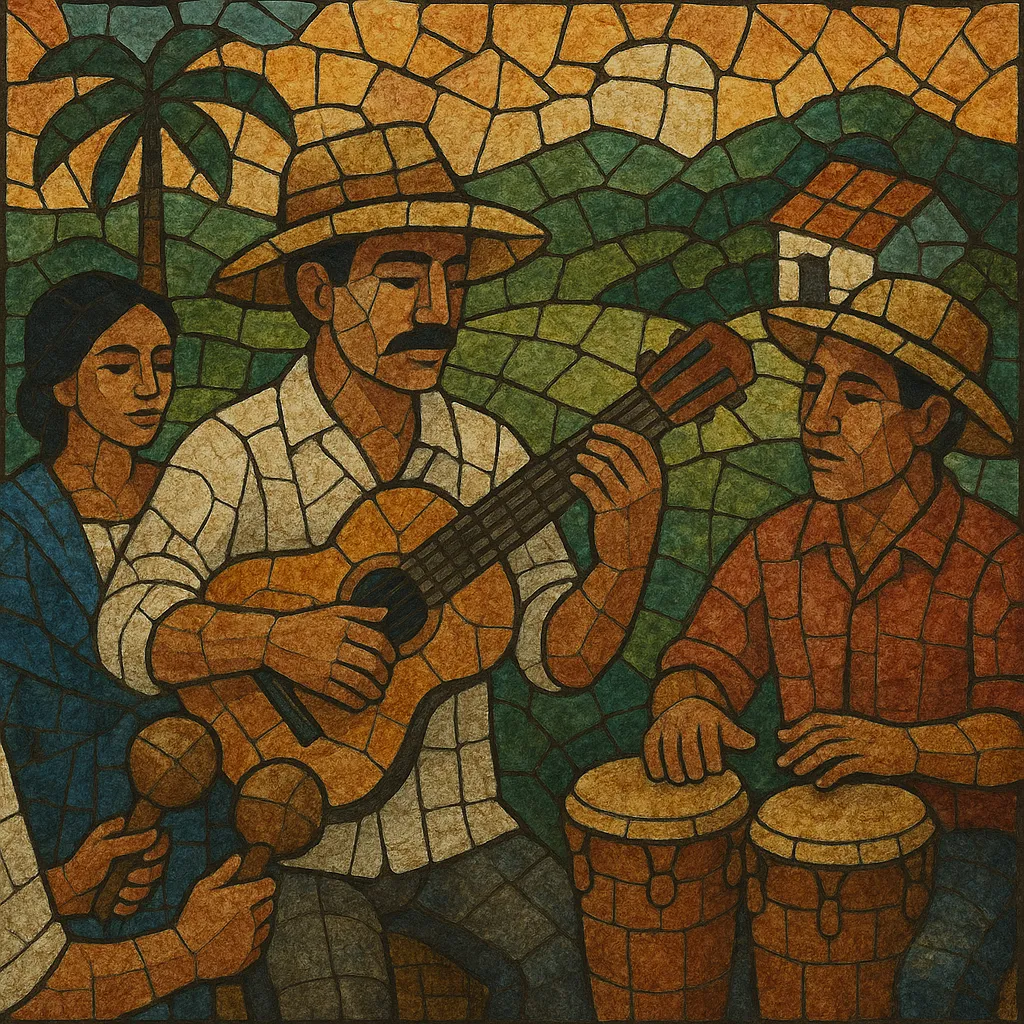
Guajira is a Cuban song genre with rural, pastoral imagery, derived from the countryside verse-singing tradition known as punto cubano and formalized at the turn of the 20th century.
Musically, it favors a lilting, moderate tempo with habanera/tresillo undercurrents, clear major-key harmonies, and lyrical, narrative melodies often set to décimas (ten-line stanzas). Its texts nostalgically portray the guajiro (rural farmer), love, nature, and everyday country life.
Historically, a related rhythmic and thematic idea travelled to Spain in the 18th–19th centuries as “punto de La Habana,” entering flamenco as the palo called guajira. In Cuba, the genre was codified in urban theater and zarzuela; Jorge Anckermann’s 1899 song “El arroyo que murmura” is widely cited as the first Cuban guajira and became a template for later works. Over the 20th century the guajira intersected with son, producing the popular hybrid guajira-son and standards such as “Guantanamera.”