Genres
Make Music
Artists
Albums
Challenges
Sign in
Sign in
Albums
By Conlon Nancarrow
Albums
By Conlon Nancarrow
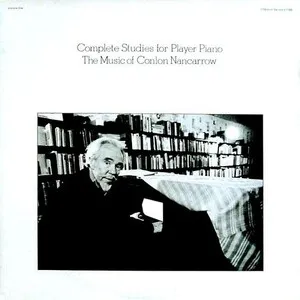
Complete Studies for Player Piano, Volume One
November 1, 1999
Listen
1
/5
Genres
Mechanical Music
Mechanical music is music generated by self‑playing instruments that read and reproduce music through purely mechanical means, with no major electronically controlled elements. Typical carriers include pinned cylinders and discs (music boxes and barrel organs), perforated paper rolls (player pianos), and cardboard music books (fairground and dance organs). Sound is produced by physical actions—plucked steel teeth, organ pipes driven by bellows, struck strings or percussion—set in motion by clockworks, cranks, weights, or pneumatic actions. The result is a precise, repeatable performance that reflects both the arrangement encoded on the medium and the tonal character of the instrument.
Discover
Listen
Étude
An étude is a short solo instrumental piece, most commonly for piano, designed to develop a specific technical skill while also standing as a musically satisfying work. Emerging in the early 19th century from pedagogical "studies," the concert étude transformed drill-like patterns (arpeggios, octaves, double notes, leaps, rapid scales, polyrhythms) into expressive miniatures suitable for the stage. Typical études are through-composed or ternary in shape, last a few minutes, and center on a single technical focus that is woven into the musical fabric. Although most associated with the piano, the étude tradition extends to violin, winds, brass, and other instruments, where sets of studies target instrument-specific techniques. Over time the genre has ranged from classical tonality (Czerny, Chopin) to late-Romantic and modern harmonic languages (Rachmaninoff, Scriabin, Debussy) and into avant-garde textures and extended techniques (Ligeti).
Discover
Listen
Classical
Classical music is the notated art-music tradition of Europe and its global descendants, characterized by durable forms, carefully codified harmony and counterpoint, and a literate score-based practice. The term “classical” can refer broadly to the entire Western art-music lineage from the Medieval era to today, not just the Classical period (c. 1750s–1820s). It privileges long-form structures (such as symphonies, sonatas, concertos, masses, and operas), functional or modal harmony, thematic development, and timbral nuance across ensembles ranging from solo instruments to full orchestras and choirs. Across centuries, the style evolved from chant and modal polyphony to tonal harmony, and later to post-tonal idioms, while maintaining a shared emphasis on written notation, performance practice, and craft.
Discover
Listen
Similar albums
2017
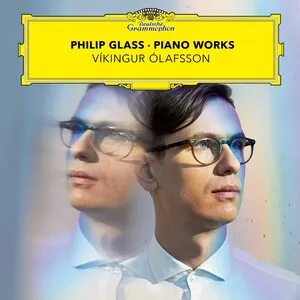
Piano Works
Philip Glass / Víkingur Ólafsson
2024
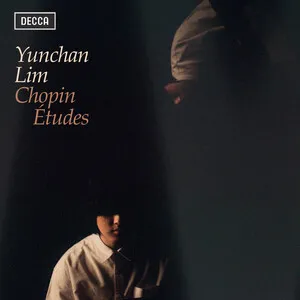
Études
Frédéric Chopin / Yunchan Lim 임윤찬
2001
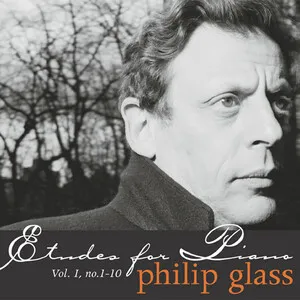
Etudes for Piano, Vol. I, No.1-10
Philip Glass
2007
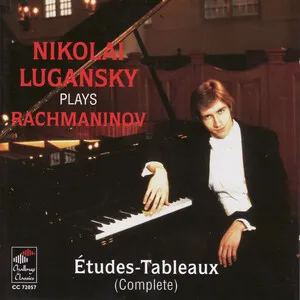
Études-Tableaux (Complete)
Sergey Rakhmaninov Сергей Рахманинов / Nikolai Lugansky
2014
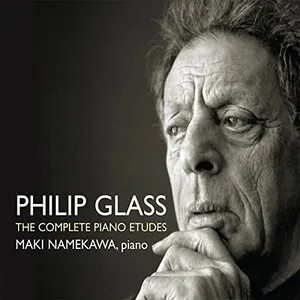
The Complete Piano Etudes
Philip Glass / Maki Namekawa
1996
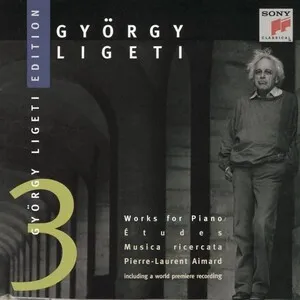
György Ligeti Edition 3: Works for Piano: Études / Musica ricercata
György Ligeti / Pierre-Laurent Aimard
1993
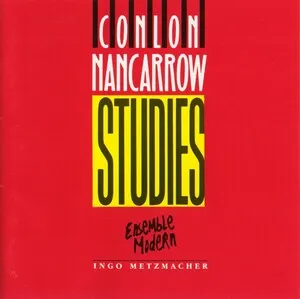
Studies
Conlon Nancarrow / Ensemble Modern / Ingo Metzmacher
2005
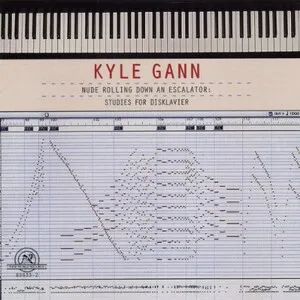
Nude Rolling Down an Escalator: Studies for Disklavier
Kyle Gann / John Woodruff / Ray Johnson
1997
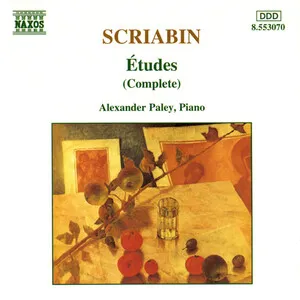
Études (Complete)
Alexander Scriabin Александр Скрябин / Alexander Paley
2006
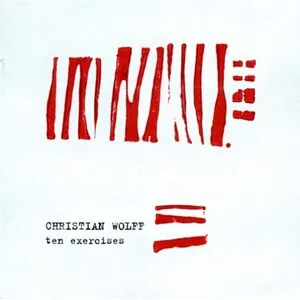
Ten Exercises
Christian Wolff
Download our mobile app
Get the Melodigging app and start digging for new genres on the go
Download on the App Store
Get it on Google Play
© 2026 Melodigging
Give feedback
Legal
Melodding was created as a tribute to
Every Noise at Once
, which inspired us to help curious minds keep digging into music's ever-evolving genres.