Genres
Make Music
Artists
Albums
Challenges
Sign in
Sign in
Albums
By Ravi Shankar
Albums
By Ravi Shankar
Chants of India
1997
Listen
1
/5
Genres
Mantra
Mantra is a devotional chant-based music centered on the repetitive intonation of sacred syllables, words, or phrases—most commonly in Sanskrit, Gurmukhi, Pali, or Tibetan. While its liturgical roots are ancient, the modern recorded genre crystallized in the late 20th century through the global yoga and meditation movement. Typical performances feature long, cyclical repetitions over drones, gentle percussion, and spacious textures that invite contemplation and collective participation. Musically, mantra tends to favor modal harmony, steady or subtly evolving rhythms, and incremental dynamic arcs rather than verse–chorus structures. Instrumentation often blends Indian classical timbres (harmonium, tanpura, tabla) with acoustic guitar, hand percussion, and ambient/new-age sound design. The experience is meditative, heart-centered, and communal, distinguishing it from the more lyrical bhajan and the call-and-response song form of kirtan.
Discover
Listen
Vedic Chant
Vedic chant is the millennia‑old a cappella recitation of the Vedas in Vedic Sanskrit, preserved through an exacting oral tradition. It is characterized by three pitch accents (udātta, anudātta, and svarita), microscopic timing control, and codified pronunciation rules that ensure phonetic and semantic fidelity across generations. Unlike melodic song, Vedic chant employs tightly delimited tonal contours rather than expansive scales, and it avoids harmony, accompaniment, and improvisation. Reciters render texts in metrical patterns such as Gāyatrī, Triṣṭubh, and Jagatī, using canonical recitation methods (pāṭhas) like Saṁhitā, Pada, Krama, Jatā, and Ghana to cross‑verify and stabilize the transmission. Performed by trained Brahmin lineages and Veda pāṭhaśālās, the chant functions as liturgy in Vedic rituals and as a vehicle for memorization, meditation, and sacred sound (śabda) practice. Its sonic austerity and ritual precision have profoundly shaped the aesthetics and pedagogy of South Asian classical and devotional music.
Discover
Listen
South Asian Music
South Asian music is a broad regional meta-genre that encompasses the diverse classical, devotional, folk, and popular traditions of the Indian subcontinent, including India, Pakistan, Bangladesh, Nepal, Sri Lanka, Bhutan, and the Maldives. It is organized primarily around modal melody (raga/ragini systems and related regional modes), cyclical rhythm (tala and folk meters), and a strong emphasis on improvisation, ornamentation, and timbral nuance. A constant drone (often tanpura or shruti box) and intricate percussion languages (bols) are characteristic across many forms. Devotional currents (bhajan, kirtan, qawwali), courtly and Sufi lineages, and countless folk idioms feed into modern popular styles from filmi/Bollywood to regional pop and diaspora fusions. While the roots reach back to ancient Vedic chant and early treatises, much of the classical grammar and performance practice recognizable today coalesced between the late medieval and early modern periods, shaped by temple, court, and Sufi contexts and later interfacing with colonial modernity and global pop.
Discover
Listen
Indian Classical
Indian classical music (Shastriya Sangeet / Mārga Sangeet) is the art-music tradition of the Indian subcontinent, organized around melodic frameworks called raga and cyclical meters called tala. It has two major streams: Hindustani music in the North, which foregrounds extended improvisation and raga exploration, and Carnatic music in the South, which is composition-centric with structured but highly sophisticated improvisation. A related eastern tradition is Odissi (from present-day Odisha), whose classical lineage spans roughly two millennia. Despite regional distinctions, these systems share common theoretical roots, performance aesthetics, and a spiritual-philosophical view of music as a vehicle for rasa (embodied aesthetic emotion).
Discover
Listen
South Asian Classical Music
South Asian classical music is the art-music tradition of the Indian subcontinent built around raga (melodic frameworks) and tala (cyclical rhythmic structures). It emphasizes microtonal nuance, ornamentation (gamaka), and a continuous drone, producing a highly expressive, meditative, and often devotional soundworld. The tradition cohered from ancient liturgical and courtly practices and later diverged into two major streams: Hindustani (North Indian) and Carnatic (South Indian). Both systems share the raga–tala grammar but differ in repertoire, performance format, instrumentation, and stylistic emphasis. Improvisation is central in both, balancing formal compositions with spontaneous exploration.
Discover
Listen
Similar albums
2011
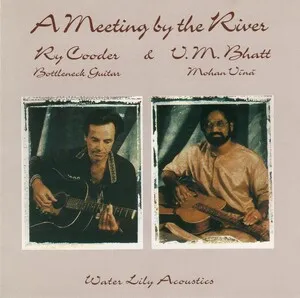
A Meeting by the River
Ry Cooder & Vishwa Mohan Bhatt
1998
Portrait of Genius
Ravi Shankar
2011
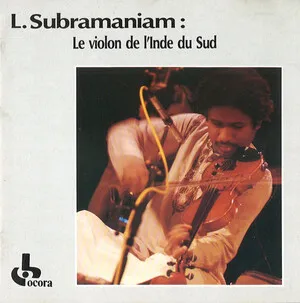
Le violon de l'Inde du Sud
L. Subramaniam
1993
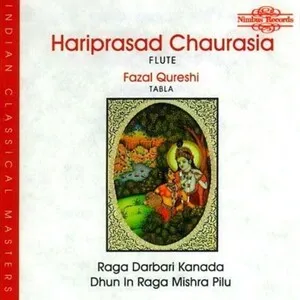
Raga Darbari Kanada / Dhun in Raga Mishra Pilu
Hariprasad Chaurasia
1962
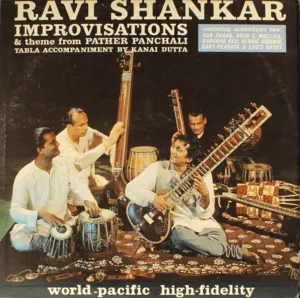
Improvisations
Ravi Shankar
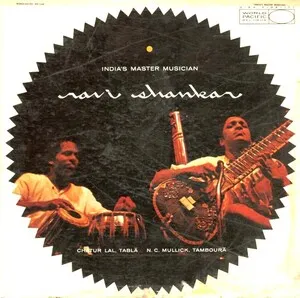
1959
India's Master Musician
Ravi Shankar
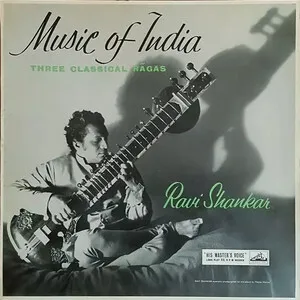
2000
Music of India: Three Classical Rāgas
Ravi Shankar
1993
Raga Yaman
Zia Mohiuddin Dagar
1995
Kirwani: Essence of a Raag
Krishna Bhatt & Zakir Hussain
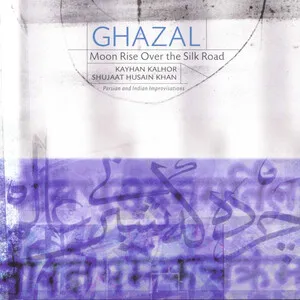
2000
Moon Rise Over the Silk Road
Ghazal
Download our mobile app
Get the Melodigging app and start digging for new genres on the go
Download on the App Store
Get it on Google Play
© 2026 Melodigging
Give feedback
Legal
Melodding was created as a tribute to
Every Noise at Once
, which inspired us to help curious minds keep digging into music's ever-evolving genres.