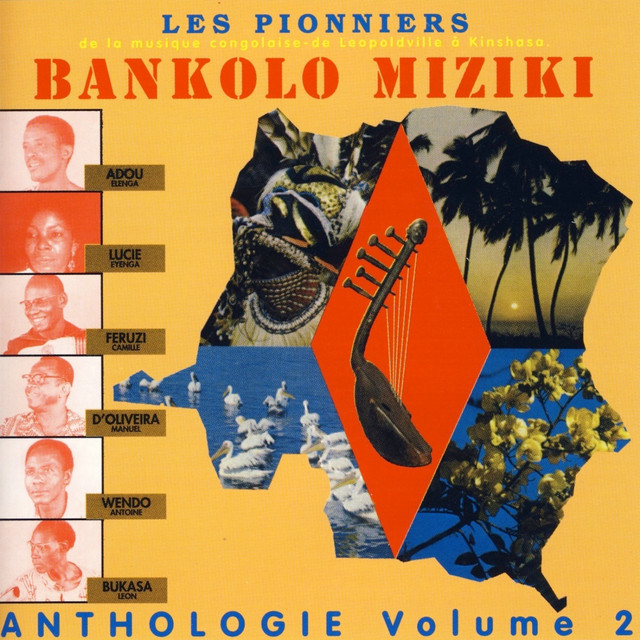
Musique traditionnelle congolaise refers to the rich, precolonial and community-based musical practices of the Congo Basin, especially in today’s Democratic Republic of the Congo. It is grounded in polyrhythmic percussion (ngoma drums, lokole slit drums), interlocking ostinatos, and call-and-response vocals.
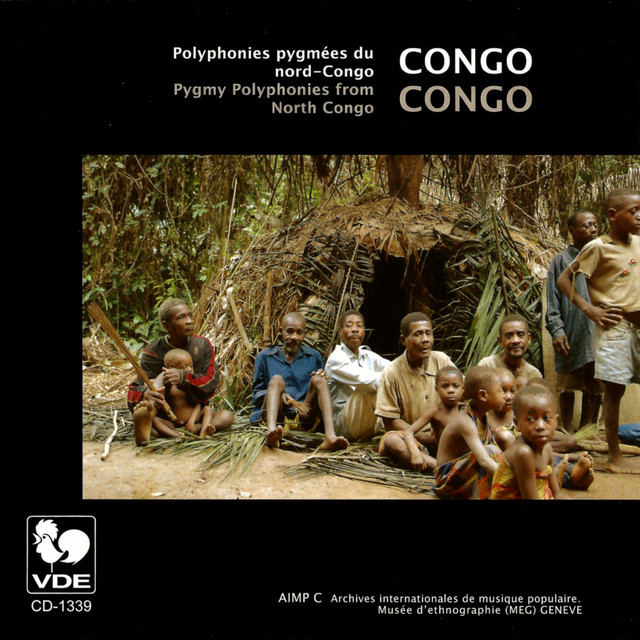
Across regions and peoples (Luba, Mongo, Kongo, Lokele, Zande, plus forest communities such as the Mbuti and Aka), performances fuse dance and song for rituals, work, initiation, weddings, healing, and storytelling. Idiophones such as the likembe/sanza (lamellophone), wooden slit drums (lokole), xylophones, rattles, and bells create cyclic timelines, while arched harps, mouth bows, and flutes color melodic textures. Scales are often pentatonic or hexatonic, and polyphonic techniques—especially pygmy-style hocketing, yodeling, and dense vocal counterpoint—produce shimmering, trance-like textures.
Rather than a fixed repertoire, the style is a living practice: flexible, participatory, and functional. Its rhythmic logic (12/8 grooves, 3:2 cross-rhythms), responsorial structure, and dance-led form shaped later popular Congolese styles.