Genres
Make Music
Artists
Albums
Challenges
Sign in
Sign in
Albums
By Julia Wolfe
Albums
By Julia Wolfe
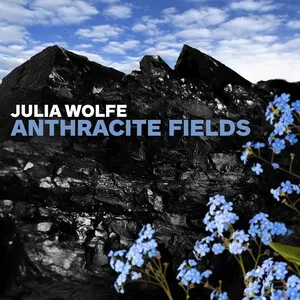
Anthracite Fields
September 25, 2015
Listen
1
/5
Genres
Experimental
Experimental music is an umbrella term for practices that prioritize exploration, process, and discovery over adherence to established genre norms. It embraces new sound sources, nonstandard tuning systems, indeterminacy and chance operations, graphic and open-form scores, extended techniques, and technology-led sound design (tape, electronics, computers, and live processing). Rather than a single style, it is a methodology and ethos: testing hypotheses about sound, structure, and performance, often blurring boundaries between composition, improvisation, sound art, and performance art. Listeners can expect unfamiliar timbres, unusual forms, and an emphasis on how music is made as much as the resulting sound.
Discover
Listen
Oratorio
An oratorio is a large‑scale, multi‑movement work for voices and orchestra, typically on a sacred narrative subject, performed without staging, costumes, or scenery. It combines solo recitatives and arias with powerful choruses and instrumental movements, using a dramatic arc similar to opera but presented as a concert work. Languages and styles vary by era and region (Italian and Latin in early Roman oratorios, German for Lutheran works such as Bach’s, and English for Handel’s). While most are sacred, secular oratorios also exist. Across the Baroque, Classical, Romantic, and modern eras, the oratorio evolved from intimate devotional storytelling to monumental public concert pieces, often intended for festivals and large choirs.
Discover
Listen
Classical
Classical music is the notated art-music tradition of Europe and its global descendants, characterized by durable forms, carefully codified harmony and counterpoint, and a literate score-based practice. The term “classical” can refer broadly to the entire Western art-music lineage from the Medieval era to today, not just the Classical period (c. 1750s–1820s). It privileges long-form structures (such as symphonies, sonatas, concertos, masses, and operas), functional or modal harmony, thematic development, and timbral nuance across ensembles ranging from solo instruments to full orchestras and choirs. Across centuries, the style evolved from chant and modal polyphony to tonal harmony, and later to post-tonal idioms, while maintaining a shared emphasis on written notation, performance practice, and craft.
Discover
Listen
Similar albums
1976
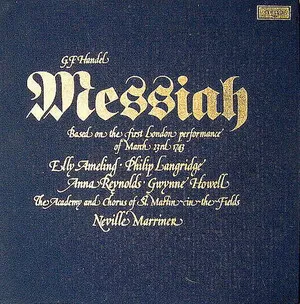
Messiah
Georg Friedrich Händel
1999
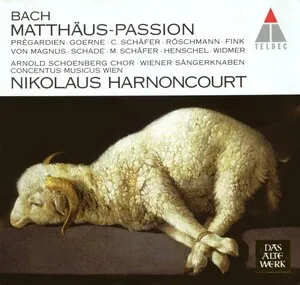
Matthäus-Passion
Johann Sebastian Bach
2001
Matthäus-Passion
Johann Sebastian Bach
1987
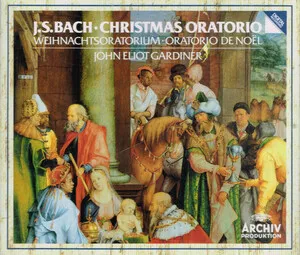
Christmas Oratorio
Johann Sebastian Bach / John Eliot Gardiner
2009
Shadow Mission - Held V
Kirlian Camera
2022
Matthäus-Passion
Johann Sebastian Bach
2001
Johannes-Passion
Johann Sebastian Bach / Johann Hermann Schein
2022
fabric presents Leon Vynehall (Mixed)
Skee Mask
1996
Maddalena ai piedi di Cristo
Antonio Caldara
2004
The Seasons
Joseph Haydn
Download our mobile app
Get the Melodigging app and start digging for new genres on the go
Download on the App Store
Get it on Google Play
© 2026 Melodigging
Give feedback
Legal
Melodding was created as a tribute to
Every Noise at Once
, which inspired us to help curious minds keep digging into music's ever-evolving genres.