Genres
Make Music
Artists
Albums
Challenges
Sign in
Sign in
Albums
By Martha Argerich
Albums
By Martha Argerich
24 Préludes, Op. 28; Préludes Nr. 25, Op. 45; Nr. 26, Op. Posth.
January 1, 2002
Listen
2
/5
Genres
Romanticism
Romanticism in music is a 19th‑century movement that prioritizes individual expression, emotional intensity, and evocative storytelling over the balanced clarity of the Classical era. It expands harmony with richer chromaticism and distant modulations, stretches forms (longer developments, cyclic structures), and favors flexible tempo (rubato) and extreme dynamics. Orchestras grow in size and color (tuba, piccolo, contrabassoon, harp, expanded brass and percussion), while the piano becomes a primary vehicle for intimate expression and virtuoso display. Key genres include the art song (Lied), character piece, symphony and symphonic poem, and grand opera with leitmotifs. Program music—works that narrate scenes, poems, or ideas—stands alongside absolute music, both suffused with heightened subjectivity, nature imagery, nationalism, and the sublime.
Discover
Listen
Romantic Classical
Romantic classical (Romantic-era) music is the 19th‑century phase of Western art music in which expression, individuality, and imagination came to the fore. Composers expanded the orchestra, embraced chromatic harmony and bold modulations, and favored long‑breathed, emotive melodies. Aligned with the wider Romantic movement in literature and the arts, it prized the subjective—love, nature, the supernatural, nationalism, and the sublime—often through programmatic narratives. New and transformed genres (the symphonic poem, grand opera, the art song/Lied, concert overtures) coexisted with reimagined Classical forms (symphony, sonata, concerto) that grew in scale and harmonic daring. From ca. 1800 through the early 20th century, Romantic music stretched from Beethoven’s heroic style and Schubert’s lyricism to Wagner’s leitmotivic dramas and Tchaikovsky’s symphonic ballet-infused language, culminating in late-Romantic gigantism and post-Romantic continuations.
Discover
Listen
Prelude
A prelude is a short, often improvisatory-sounding instrumental piece that traditionally precedes another work or sets a tonal and expressive atmosphere on its own. Emerging in the early Baroque era from the practice of freely extemporizing before a liturgical or secular performance, the prelude evolved from unmeasured lute and keyboard introductions into highly crafted pieces for organ, harpsichord, and later piano. In the 19th century it became an autonomous character piece (e.g., Chopin’s Op. 28), while in the 20th century composers explored cyclic sets across all keys and a wide range of styles (Debussy, Rachmaninoff, Shostakovich). Despite its brevity and flexibility, the prelude typically establishes a key or mode, a figuration pattern, and a distinct mood, favoring clear tonal focus, continuous flow, and a compelling gesture over strict formal constraints.
Discover
Listen
Similar albums
2010
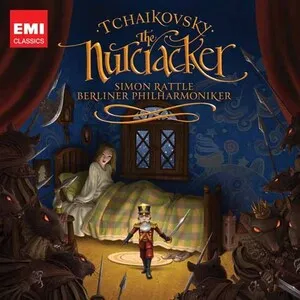
The Nutcracker
Pyotr Tchaikovsky Пётр Чайковский / Berliner Philharmoniker / Simon Rattle
1976
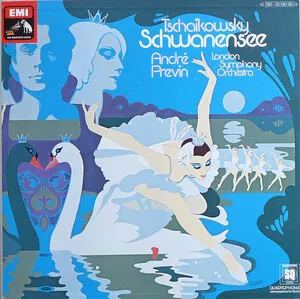
Swan Lake
Pyotr Tchaikovsky Пётр Чайковский / London Symphony Orchestra / André Previn
2005
Nocturnes
Frédéric Chopin / Maurizio Pollini
1987
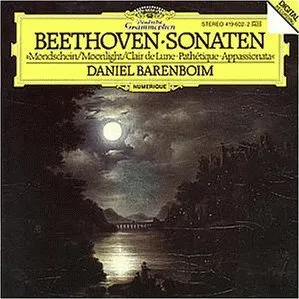
Sonaten: Mondschein; Pathétique; Appassionata
Ludwig van Beethoven / Daniel Barenboim
1984
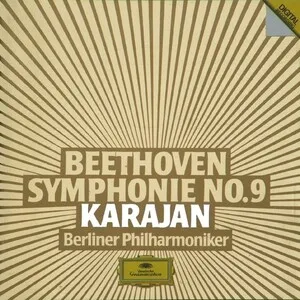
Symphonie No.9
Ludwig van Beethoven / Berliner Philharmoniker / Herbert von Karajan
1985
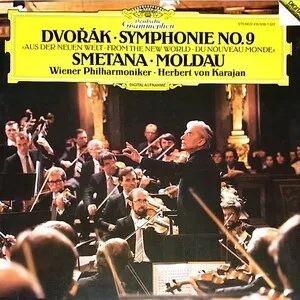
Symphonie No. 9 »Aus der neuen Welt« / Moldau
Antonín Dvořák / Bedřich Smetana
1988
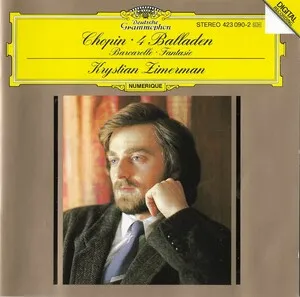
4 Balladen; Barcarolle; Fantasie
Frédéric Chopin / Krystian Zimerman
1984
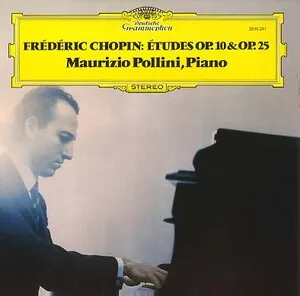
Études Op.10 & Op.25
Frédéric Chopin / Maurizio Pollini
1965
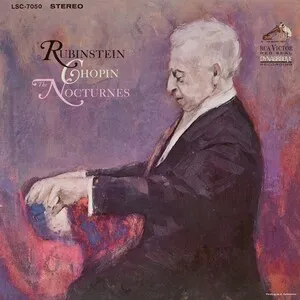
The Nocturnes
Frédéric Chopin / Artur Rubinstein
1984
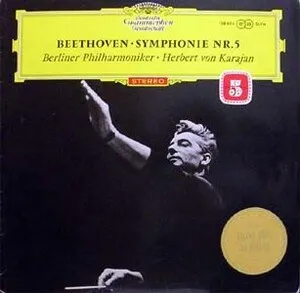
Symphonie Nr. 5
Ludwig van Beethoven / Berliner Philharmoniker / Herbert von Karajan
Download our mobile app
Get the Melodigging app and start digging for new genres on the go
Download on the App Store
Get it on Google Play
© 2026 Melodigging
Give feedback
Legal
Melodding was created as a tribute to
Every Noise at Once
, which inspired us to help curious minds keep digging into music's ever-evolving genres.