Your digging level
Description
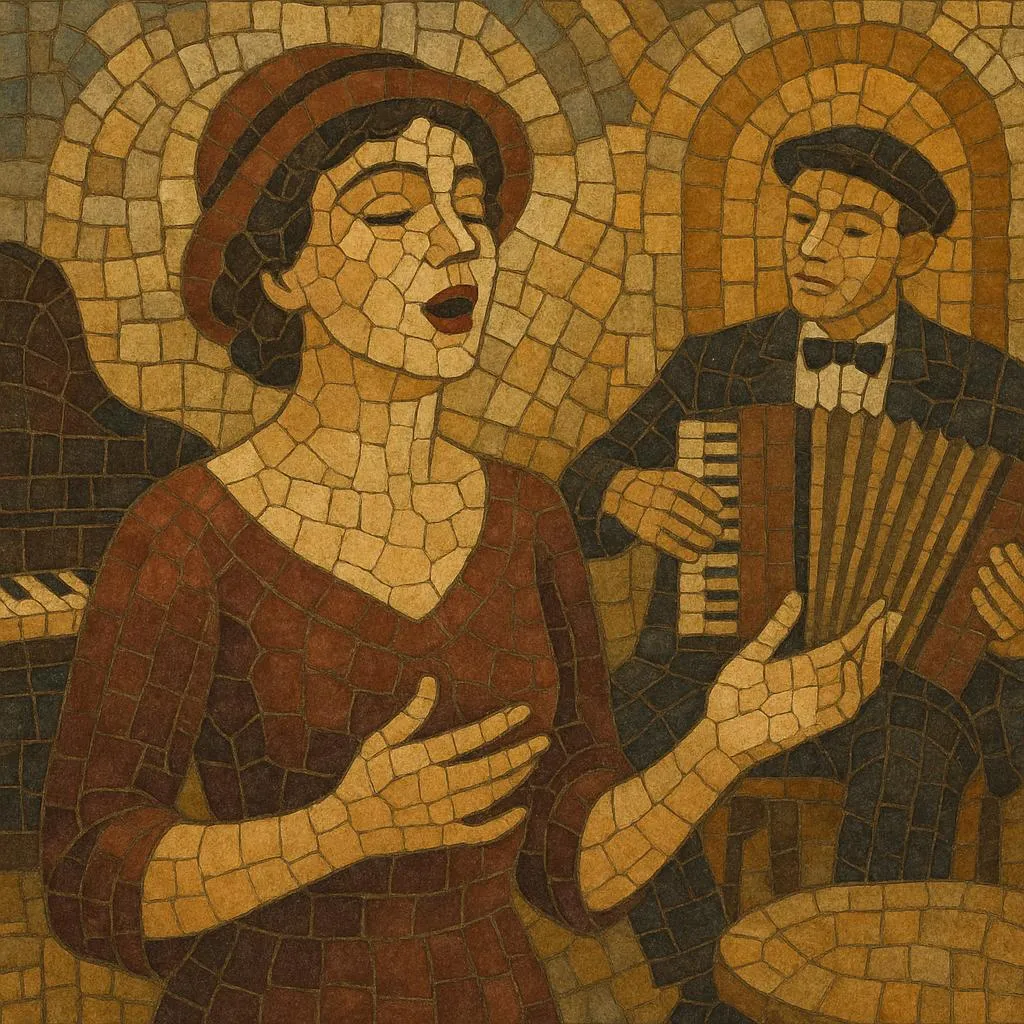
Vintage chanson refers to the early, classic era of French chanson that blossomed from the Belle Époque through the mid‑20th century. It centers on a clear, expressive solo voice telling compact stories in finely crafted verses, typically accompanied by piano, accordion, or small ensembles.
Rooted in cabaret and café‑concert culture, vintage chanson balances literary lyrics—witty, ironic, romantic, or melancholic—with memorable, singable melodies. Rhythms draw on musette waltz, tango, and later swing, while harmonies remain tonal and elegant. The performance ideal values impeccable diction, nuanced phrasing, and theatrical presence.
As a popular stage and record tradition, vintage chanson shaped the sound and sensibility of later French pop and singer‑songwriting, and it remains a touchstone for narrative songcraft worldwide.
History
The roots of vintage chanson lie in the late 19th‑century café‑concerts and Parisian cabarets, where singer‑poets developed short, narrative songs for intimate rooms. The aesthetics prized clever wordplay, satirical social observation, and dramatic delivery, supported by piano or small ensembles. Musette dance culture and the urban waltz became central rhythmic signatures.
Between World War I and II, chanson matured on stage, on shellac records, and in early radio/cinema. Arrangements grew more polished, adding accordion, strings, and light jazz rhythm sections. Lyrical themes ranged from street‑level realism and bittersweet romance to topical commentary—a reflection of Parisian modern life.
After World War II, chanson’s classic voice expanded with swing and jazz inflections, while maintaining literary ambition and theatricality. The singer‑as‑author ideal (chansonnier/chanteur‑à‑textes) became a hallmark, influencing concert presentation, recording practices, and the burgeoning LP market.
By the late 1950s and early 1960s, vintage chanson’s style and repertoire formed the bedrock for newer currents—rive gauche poets, yé‑yé, and later French pop/rock. Its emphasis on narrative clarity, poetic language, and intimate performance continues to inform French singer‑songwriting and global art‑song traditions.