Your digging level

For this genre
0/8
🏆
Sign in, then listen to this genre to level up

Description

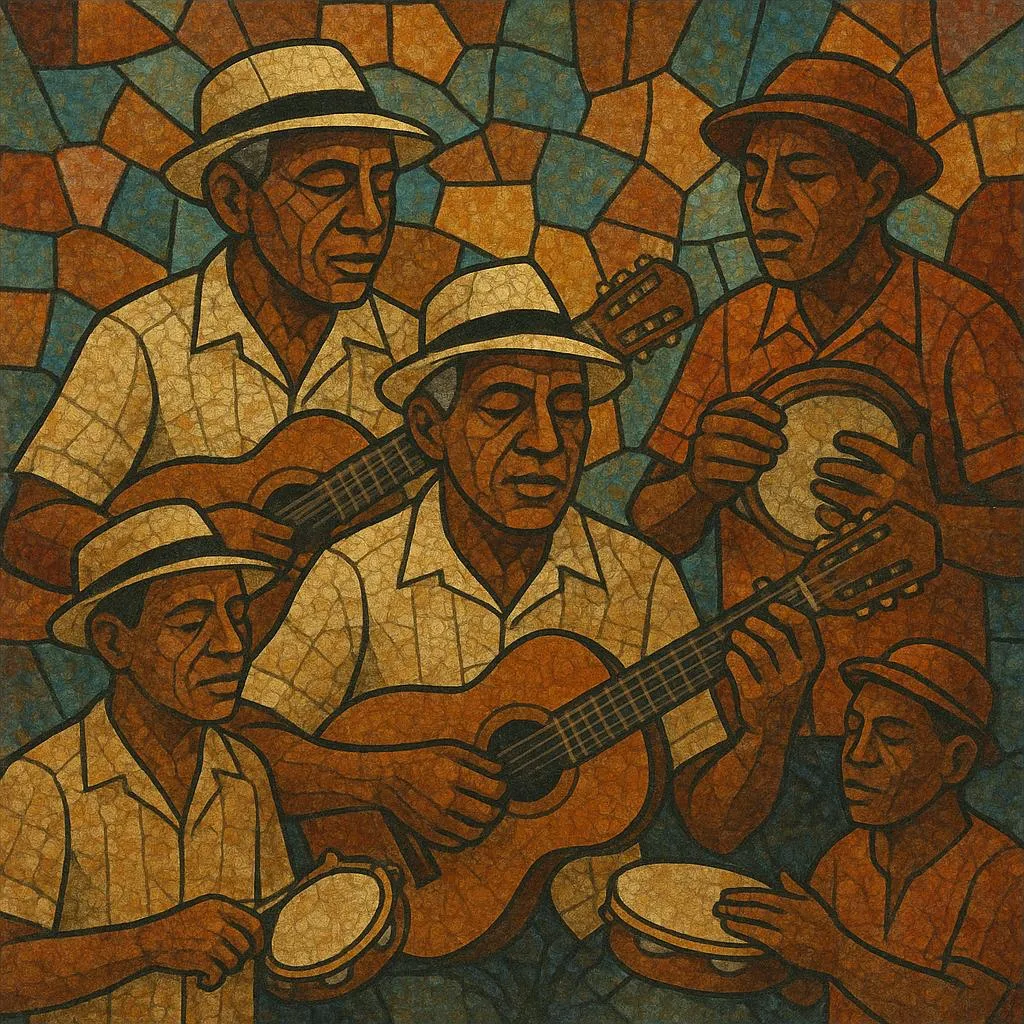
Velha guarda is a Brazilian umbrella label for the “old guard” of samba: veteran composers and singers linked to Rio de Janeiro’s samba‑school tradition who safeguard pre–bossa nova practices.

As a sound, it favors acoustic roda de samba ensembles (violão, cavaquinho, pandeiro, surdo, tamborim, cuíca), mid‑tempo samba swing, call‑and‑response refrains, and melodically rich lines rooted in early urban popular song. Repertoire typically includes sambas de terreiro, partido‑alto verses, choros and carnival marchinhas carried by elders of historic schools like Portela, Mangueira and Salgueiro.

In streaming platforms and cataloging, the tag also groups classic mid‑20th‑century sambistas whose recordings keep the style’s conversational phrasing, poetic everyday themes, and traditional harmonies.


Sources: Spotify, Wikipedia, Discogs, RYM, MB, user feedback and other online sources

History

Origins (samba schools and the “old guard”)

The term velha guarda originally names the elder wing of a samba school—often founders or long‑standing members—who preserve its musical customs and parade in positions of honor. This social/musical role coalesced inside Rio’s escolas de samba from the early 20th century.

First named ensembles

The first ensemble to formalize the label on records and stages was the Velha Guarda da Mangueira, created in 1943 by founders such as Cartola and Carlos Cachaça to showcase the school’s classic sambas de terreiro and composers.

Consolidation on records

In 1970, Paulinho da Viola gathered Portela’s elder composers for the landmark LP “Portela, Passado de Glória,” effectively launching the recording project Velha Guarda da Portela and cementing velha guarda as a recognizable banner for traditional samba on disc and stage.

Expansion across schools and recognition

Other schools formed their own groups, such as the Velha Guarda do Salgueiro (founded in 1980), which later earned a Latin Grammy nomination, illustrating the style’s living continuity and prestige.

Heritage status

In the 21st century, these ensembles have been recognized as guardians of intangible heritage in Rio de Janeiro—e.g., Portela’s and Mangueira’s old guards received municipal cultural‑heritage recognition—affirming velha guarda’s role as a repository of classic samba practice.

How to make a track in this genre

Core ensemble and groove
•   Use acoustic samba instrumentation: violão (often 7‑string for bass runs), cavaquinho for harmonic stabs, pandeiro and surdo for pulse, tamborim for off‑beat accents, plus cuíca or agogô sparingly. •   Aim for a relaxed but forward “samba swing” feel (roughly 90–120 BPM). Keep the surdo marking the downbeat while pandeiro subdivides; tamborim can play carreteiro patterns for lift.
Harmony and melody
•   Write singable, conversational melodies with room for call‑and‑response between lead and coro. •   Favor tonal harmony with rich dominant motion (V–I, secondary dominants, bII7 tritone approach). On guitar, color chords with 7ths/9ths/13ths; descending bass lines on the 7‑string help connect phrases.
Form and text
•   Common forms: verse–refrain samba de terreiro; partido‑alto strophic cycles with improvisable lines. •   Lyrical themes center on everyday Rio life, nostalgia, love, humor, malandragem, and tributes to the escola’s community—plain diction and imagery work best.
Arrangement and delivery
•   Keep textures airy; prioritize unison coro refrains that audiences can sing. Feature short cavaquinho/guitar turnarounds or a brief choro‑tinged instrumental interlude. •   Record mostly live in the room to preserve blend and swing; avoid over‑quantization—micro‑timing is part of the tradition.

Top tracks

Locked
Share your favorite track to unlock other users’ top tracks

Upcoming concerts

in this genre
Influenced by
Has influenced

Download our mobile app

Get the Melodigging app and start digging for new genres on the go
© 2026 Melodigging
Melodding was created as a tribute to Every Noise at Once, which inspired us to help curious minds keep digging into music's ever-evolving genres.
Buy me a coffee for Melodigging