Your digging level
Description
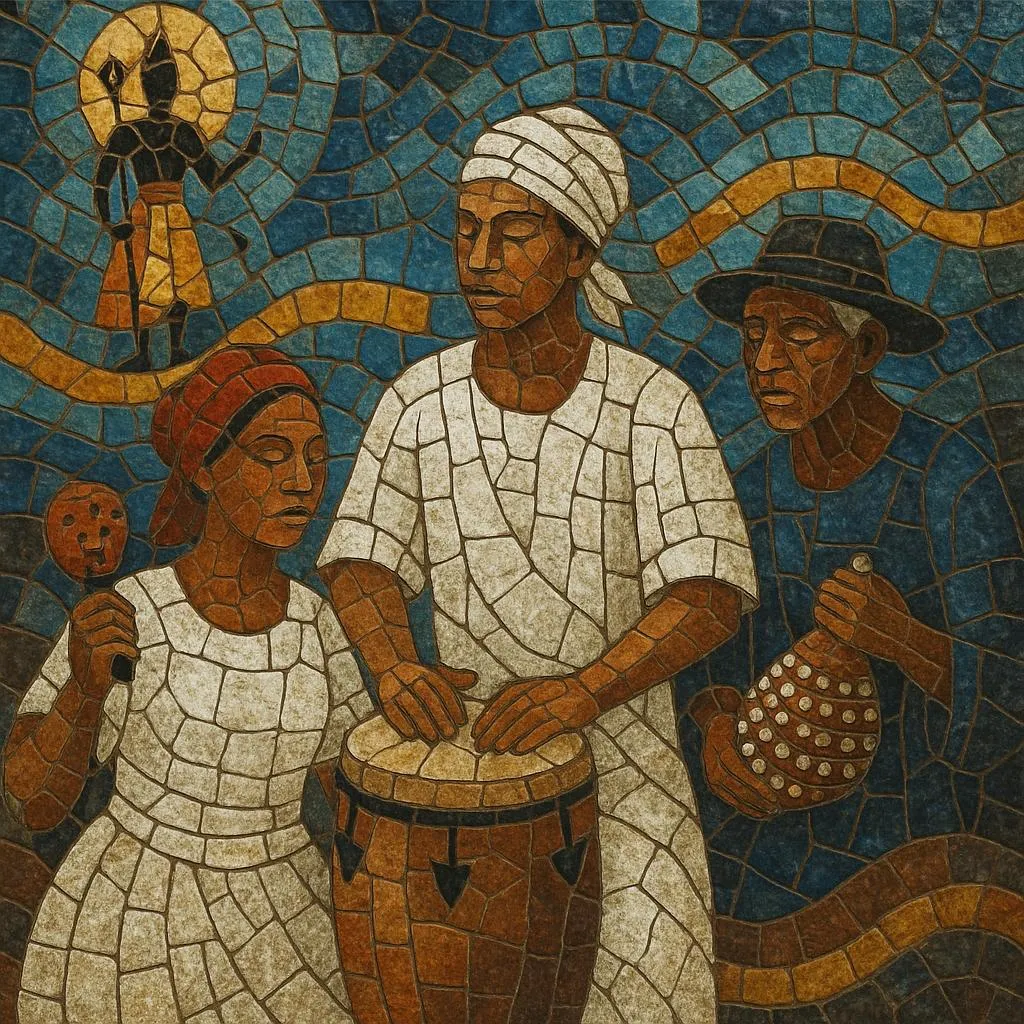
Umbanda (as a musical style) refers to the sung prayers and drum-centered rhythms that accompany the Afro‑Brazilian Umbanda religion, founded in the early 20th century. In temples (terreiros), these songs—known as pontos cantados—invoke deities (Orixás) and spiritual guides (such as caboclos and pretos‑velhos) through call‑and‑response choruses, steady hand‑drumming, and rattles and bells.
Musically, Umbanda blends West/Central African drumming logics with Portuguese‑language sacred poetry and elements from Catholic hymnody and Kardecist Spiritism. Texts are short, repetitive, and functional: they open works, salute entities, cleanse space, and guide spirit incorporation. Tempos range from meditative to danceable, and harmony (when guitars or keyboards are used) stays simple so the ritual pulse and voices remain paramount.
History
Umbanda religious practice crystallized in Rio de Janeiro in 1908, synthesizing elements of Candomblé, Indigenous cosmologies, Portuguese Catholic devotion, and Kardecist Spiritism. Its music grew out of pre‑existing Afro‑Brazilian drum practices (batuque, Candomblé toques) and popular sacred singing. Early terreiros codified pontos cantados as the sonic medium for greetings, protection, and the arrival of spiritual guides.
As Umbanda spread across Brazil’s urban centers, ensembles standardized the basic percussion battery (atabaques of different sizes, agogô, ganzá/shakers) and responsorial singing. Recordings of pontos appeared on small labels and documentary LPs, while mainstream samba and MPB artists began to quote Umbanda/Candomblé imagery and rhythms, making the ritual sound recognizable to wider audiences.
The Afro‑Sambas and samba‑de‑terreiro traditions bled into concert music and radio: composers and singers incorporated ijexá‑like grooves, invocations of Orixás, and liturgical refrains. Although not all such repertoire is strictly “Umbanda music,” the aesthetic (steady hand‑drum ostinati, call‑and‑response, salutation choruses) became a reference point in Brazilian popular music and carnival genres.
Today, pontos are widely shared in print, online anthologies, and community recordings. Terreiros retain local repertoires and toques, while younger musicians produce respectful studio versions with guitar, bass, and keys that preserve the chant’s function. The result is a living liturgical genre that coexists with its echoes in MPB, axé, samba‑enredo, and other Brazil‑wide styles.