Your digging level
Description
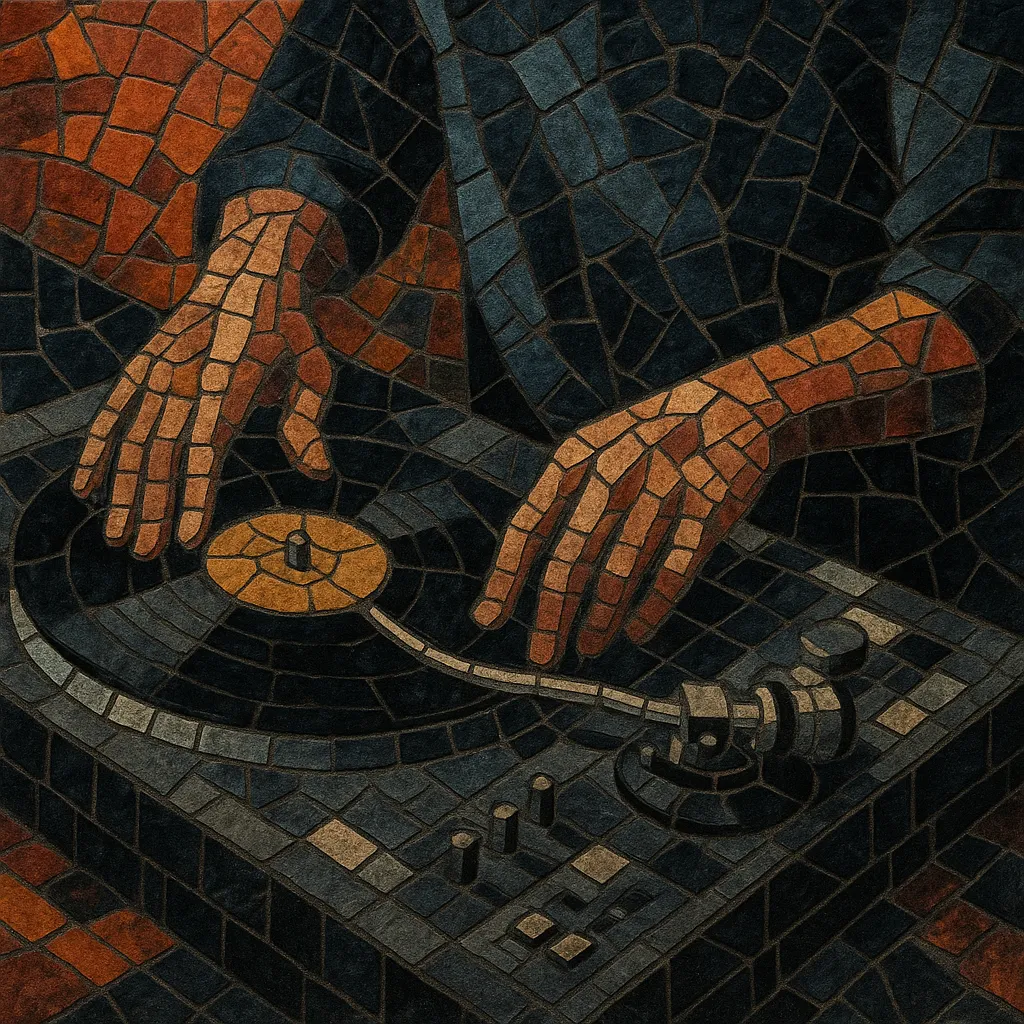
Turntable music is a strand of experimental and electroacoustic practice that treats the phonograph/turntable as a musical instrument rather than a playback device.
Artists manipulate records, cartridges, and the mechanics of the deck to create textures, rhythms, drones, and collages. Techniques include live mixing of disparate records, exploiting locked grooves, variable-speed playback, back-cueing, needle drops, surface-noise extraction, and "prepared" turntables using objects (tape, paper, coins, rubber bands) placed on records or the platter. While it overlaps with hip‑hop DJ techniques, turntable music is typically less beat‑matching oriented and more focused on sound exploration, improvisation, and composition in the spirit of avant‑garde, sound art, and musique concrète.
The results range from fragile, nostalgic crackle and looping harmonies to abrasive noise, dense collages, and site-specific installations. Performances may be fully improvised, partially scored, or realized as fixed-media compositions built from recorded turntable sessions.
History
John Cage’s Imaginary Landscape No. 1 (1939) used variable‑speed turntables and test‑tone records, establishing the turntable as a concert instrument. In the 1940s–50s, musique concrète pioneers used phonographs alongside tape to cut, loop, and transform recorded sound. Fluxus and conceptual artists (e.g., Milan Knížák’s “Broken Music”) further reframed records and players as sculptural and sonic materials.
While hip‑hop DJs in the Bronx developed backspins and scratching (a parallel, populist lineage), experimental artists began borrowing and abstracting those gestures into non‑dance contexts. The turntable became a tool for collage, noise, and live electroacoustic improvisation in galleries, small theaters, and underground venues.
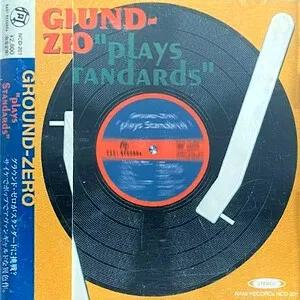
Christian Marclay, Philip Jeck, Otomo Yoshihide, eRikm, Martin Tétreault, and others established distinct vocabularies: degraded loop elegies (Jeck), hyper-gestural cut-up (eRikm), feedback- and band-integrated turntables (Yoshihide), and object-based manipulations (Marclay). Labels, festivals, and sound-art spaces documented the idiom, while custom dubplates, locked-groove records, and multi‑arm/modified decks expanded technique.
Contemporary practitioners blend analog decks with laptops, live sampling, granular processing, and multichannel diffusion. Turntable music now spans club-adjacent experiments, quiet minimalism, and gallery installations. Vinyl’s renewed availability and maker culture (laser-cut/3D‑printed tools, DIY cartridges) continue to evolve its performative and compositional possibilities.