Your digging level

For this genre
0/8
🏆
Sign in, then listen to this genre to level up

Description

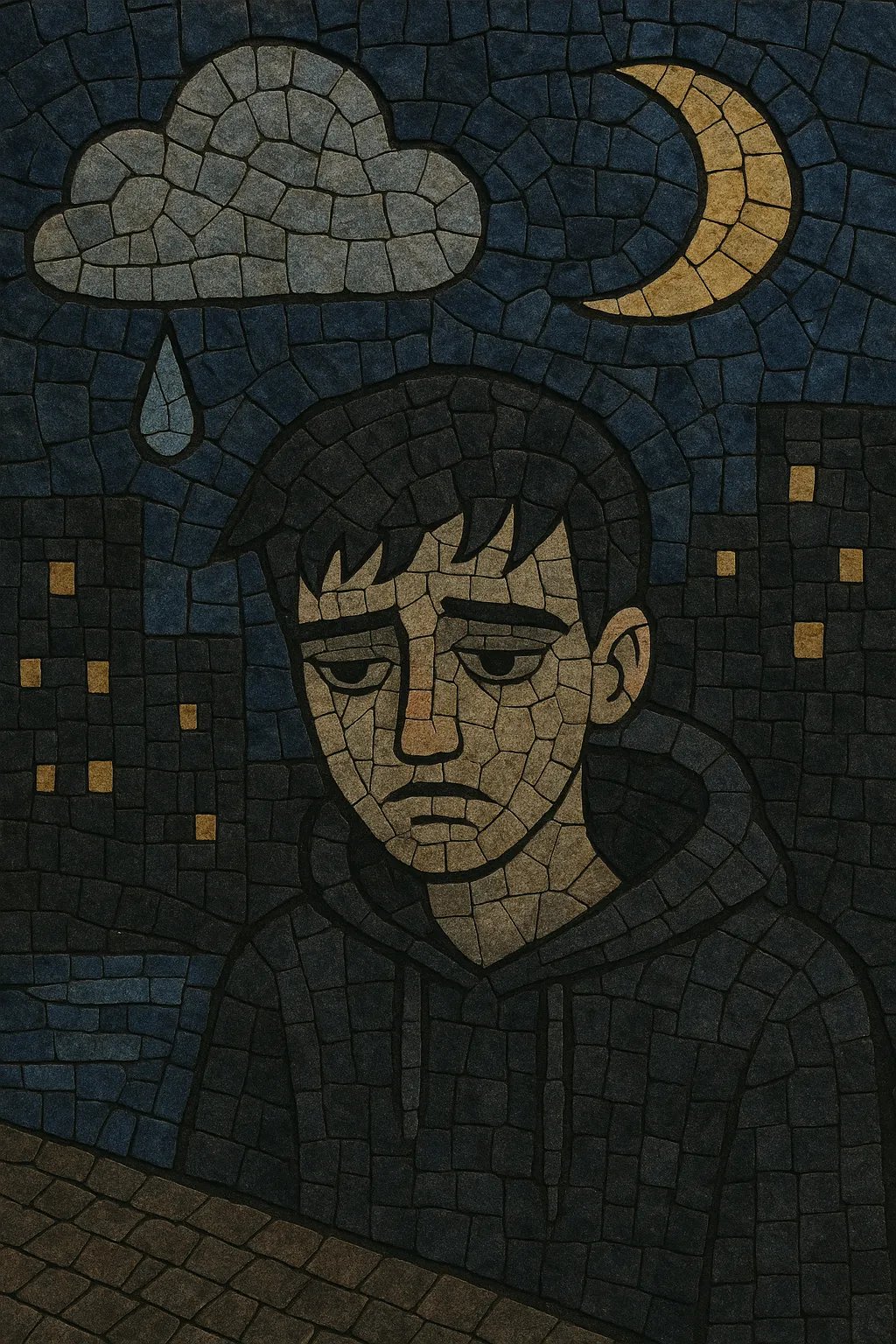
Trap triste (Spanish for “sad trap”) is a Spanish‑language offshoot of trap that emphasizes melancholic, introspective songwriting over minimalist, atmospheric beats.

It blends minor‑key piano or guitar loops, airy pads, and reverb‑soaked textures with modern trap drum programming—808 slides, sparse kicks, and fast hi‑hat rolls. Vocals are typically sung‑rap with heavy Auto‑Tune, drawing on the emotive cadences of emo rap and the hazy feel of cloud rap while retaining Latin trap’s rhythmic backbone.

Lyrically, it centers on heartbreak, loneliness, late‑night reflection, and personal vulnerability, often using straightforward, diary‑like phrasing that connects quickly with listeners on streaming platforms and social media.


Sources: Spotify, Wikipedia, Discogs, Rate Your Music, MusicBrainz, and other online sources

History

Origins (mid–late 2010s)

Trap triste emerged in the Spanish‑speaking world during the mid–late 2010s as artists adapted the emotional directness of U.S. emo rap and the hazy ambience of cloud rap to the rhythms of trap and Latin trap. The style quickly found a home on SoundCloud and YouTube, where “type beats” labeled as “trap triste” and “sad trap” proliferated and helped standardize its sound.

Spain and the Spanish‑language trap boom

Early Spanish‑language trap movements in Spain (e.g., the mid‑2010s wave around street‑level trap and melancholic, lo‑fi aesthetics) showed how emotive themes could coexist with trap percussion. This seeded an audience for more openly sentimental, melodic takes on the genre across the Iberian and Latin spheres.

Argentina’s breakthrough and codification

By 2017–2019, Argentina’s explosive trap scene—fueled by freestyle circuits and youth collectives—leaned hard into melodic, vulnerable songwriting. Tracks with somber piano or guitar loops, intimate Auto‑Tuned toplines, and half‑time 808 patterns became a recognizable palette. Editorial playlists and viral videos tagged as “trap triste” helped codify the term and export the sound across Latin America and into global streaming ecosystems.

Aesthetic consolidation in the 2020s

In the 2020s, trap triste broadened its toolkit: more live‑sounding guitars, softer R&B harmonies, and subtler drum programming. Crossovers with indie R&B and Latin pop expanded its reach, while producers continued to issue beat packs and instrumentals optimized for confessional, hook‑forward songwriting. The result is a stable, well‑defined mood‑driven micro‑scene that thrives on playlists and short‑form video.

How to make a track in this genre

Sound palette and tempo
•   Use minor keys (A minor, D minor, E minor are common) at 130–150 BPM, often felt at half‑time (65–75 BPM). •   Center the beat on a melancholic loop: close‑miked piano, nylon‑string or clean electric guitar, or a lo‑fi synth pad. Keep the motif simple and repetitive. •   Add space: long reverb tails, gentle tape/pitch wobble, and subtle noise floors to create intimacy.
Drums and low end
•   Program trap hats with alternating 1/8–1/16 patterns, tasteful trilletes, and occasional stutters; keep rolls expressive but not busy. •   Use a soft but deep 808 with glides; let the kick and 808 either layer or alternate—avoid over‑punchy kicks. •   Keep percussion sparse; one or two ear‑candy elements (rimshot, foley clap) are enough.
Harmony and melody
•   Favor i–VI–VII or i–iv–V progressions; add 7ths/9ths for R&B color. •   Toplines should be sung‑rap with Auto‑Tune set for expressive glide rather than robotic correction. Melodic contours should rise into choruses and fall back for verses.
Lyrics and delivery
•   Themes: heartbreak, longing, self‑doubt, late‑night reflection. Write plainly, like journal entries; vivid but unadorned images connect best. •   Delivery: close, confessional tone; layered doubles and soft ad‑libs to widen hooks without sacrificing intimacy.
Arrangement and mixing
•   Structure: short intro (4–8 bars loop), verse–hook focus, minimal bridge; aim for 2:30–3:00 runtime. •   Carve space with gentle sidechain to the kick, low‑shelf control on pads, and de‑essing on airy vocals. •   Mastering: preserve dynamics; target a moderate loudness that suits playlist listening (avoid squashing transients).

Main artists

Top tracks

Locked
Share your favorite track to unlock other users’ top tracks
Influenced by
Has influenced
Challenges
Digger Battle
Let's see who can find the best track in this genre
© 2026 Melodigging
Melodding was created as a tribute to Every Noise at Once, which inspired us to help curious minds keep digging into music's ever-evolving genres.
Buy me a coffee for Melodigging