Your digging level
Description
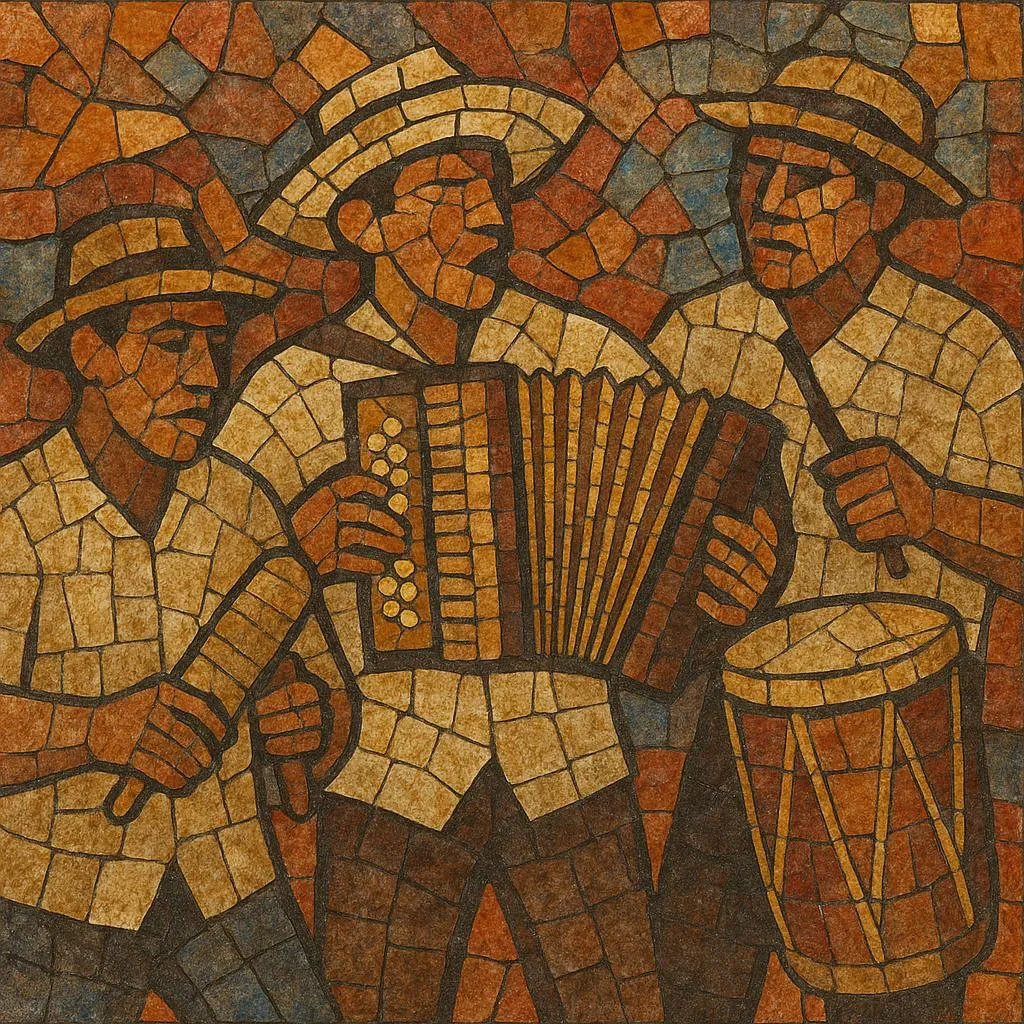
Típico (often called música típica panameña) is Panama’s rural dance‑band music centered on the diatonic button accordion, small hand drum (caja), and guiro/guacharaca, later joined by electric bass, drum kit, and keyboards. It grew on the Azuero Peninsula and nearby provinces as party and festival music for towns and countryside dances.
Stylistically it blends Panamanian folk dance rhythms (notably local cumbia santeña and punto) with accordion song forms and a hallmark shouted call known as the saloma. The groove is infectious and two‑steppy, with bright accordion melodies, strummed or scraped percussion textures, and lyrics that move between romantic love songs, witty double entendres, and proud evocations of regional identity.
History
The diatonic button accordion arrived in Panama in the early 20th century and was eagerly adopted in the Azuero Peninsula (provinces such as Herrera and Los Santos). Rural dance customs, including local cumbia and punto, provided the rhythmic bed for early conjunto ensembles (accordion, caja, guiro). By the 1940s and 1950s, radio exposure and town fiestas helped solidify a recognizable "típico" style, distinguished by driving two‑step rhythms, fast instrumental passages, and the piercing country shout called saloma.
As the genre spread from village plazas to ballrooms and festivals, bands added electric bass, amplified accordion, and eventually drum kits and keyboards. Touring circuits, record labels, and national festivals (including folk gatherings on the Azuero Peninsula) turned típico into a mainstream social soundtrack, while still retaining its campesino character and dance function.
In recent decades, típico has remained a pillar of popular taste in Panama, thriving at patronal fiestas, weddings, and large dance halls. Artists modernized arrangements, stagecraft, and production while keeping core elements—accordion lead, caja/guacharaca pulse, and saloma. Contemporary acts cross over onto national charts and collaborate with other tropical and pop idioms, yet típico continues to signal regional pride and Panamanian identity.