Your digging level
Description
Tigrigna pop is contemporary popular music sung in Tigrinya (Tigrigna), the Semitic language of Eritrea and Ethiopia’s Tigray region. It blends traditional Tigrinya melodic modes and dance rhythms with modern band or electronic production.
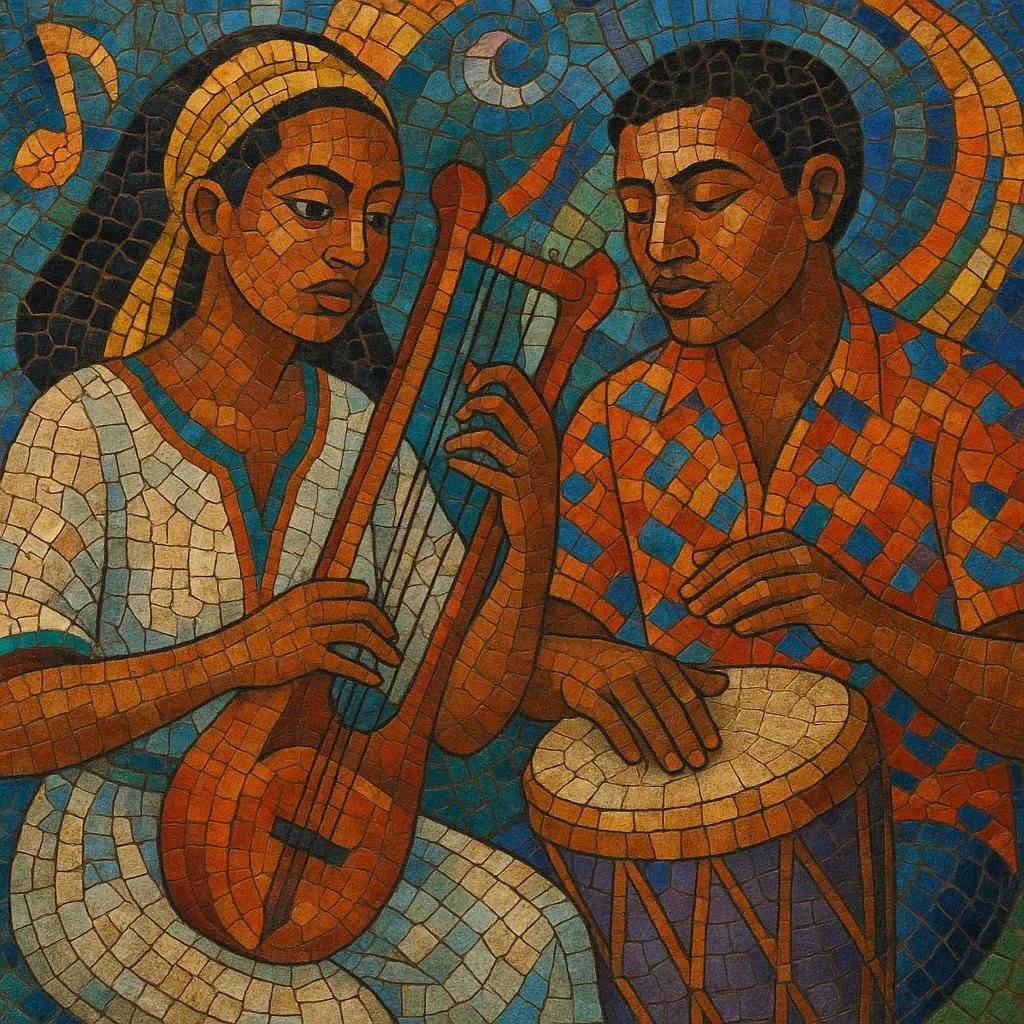
Typical songs feature a lilting 6/8 or 12/8 “guayla” groove, pentatonic-based melodies with expressive, melismatic vocals, and a mix of indigenous instruments (krar/krar‑electric, kebero, masenqo/wata) alongside guitar, keyboards, drum machines, and saxophone or horn stabs. Themes range from love and longing to social reflection and communal celebration, often punctuated by ululation and call‑and‑response.
Developing from 1960s–70s urban recording scenes (Asmara/Addis Ababa) and flourishing after Eritrean independence in the 1990s, Tigrigna pop today circulates widely through satellite TV, VCD/DVD culture, YouTube, and the global diaspora.
History
Tigrigna pop emerged as Tigrinya‑language artists began adapting folk song forms to modern ensembles and studio practice in Asmara and, to a degree, Addis Ababa. Early innovators electrified the krar, folded saxophones and trap drums into wedding and dance repertoires, and set the template of lilting compound meters paired with pentatonic vocal lines.
Through the regional cassette economy, Tigrinya artists circulated widely across the Horn of Africa and diaspora hubs. Bands refined the “guayla” dance beat, arrangements with guitar/keys/horns became standard, and studio production began to favor brighter, dance‑forward mixes suitable for weddings, clubs, and community gatherings.
Following Eritrea’s independence (1993), a surge of cultural production helped codify Tigrigna pop’s sound and imagery. VCD/DVD releases, satellite TV programs, and state and private cultural troupes amplified the genre. Diaspora musicians in Europe, North America, and the Middle East added reggae, R&B, and synth‑pop touches while maintaining Tigrinya melodic identity.
YouTube, streaming, and social media further globalized Tigrigna pop. Producers embraced punchier drum programming, glossy synth lines, and hybrid bass grooves while retaining kebero accents, krar motifs, and expressive, melismatic singing. Political upheavals in the region also shaped lyrical content, with some artists turning to reflective, patriotic, or diasporic narratives.
Signature traits include compound‑meter dance feels (6/8 or 12/8), pentatonic‑modal melodies related to broader Ethiopic qenet practice, antiphonal choruses, ornamental vocal lines, and the interplay of indigenous timbres (krar, kebero, masenqo/wata) with modern band or electronic production.