Your digging level
Description
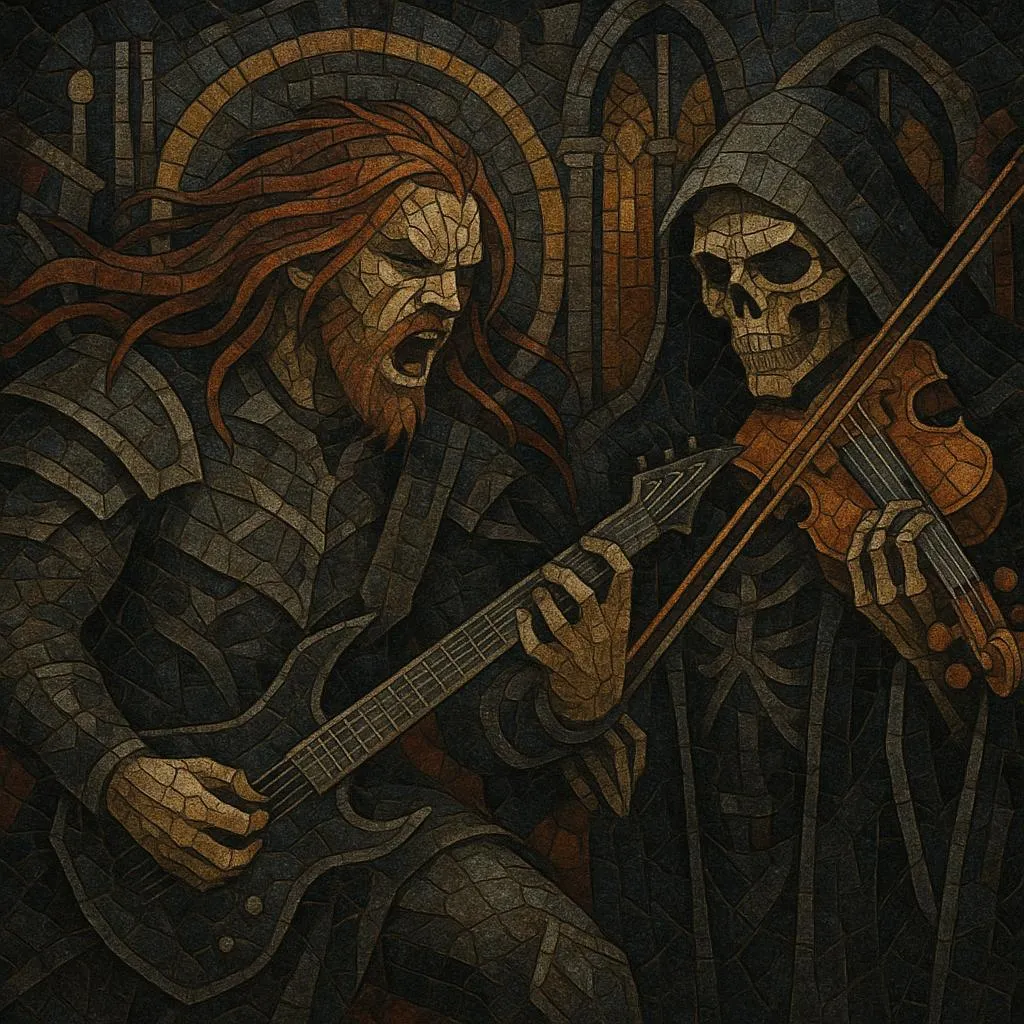
Symphonic melodic death metal blends the twin-guitar melodies, harmonized leads, and energetic riffing of melodic death metal with the grandiose arrangements of symphonic metal and classical orchestration.
Typical tracks combine harsh vocals (growls and screams) with sweeping strings, brass, choirs, and cinematic keyboards. The result is a sound that is both aggressive and emotionally expansive: fast and technically demanding, yet richly melodic and often epic in scale. Lyric themes frequently explore myth, history, fantasy, and existential reflection.
Production ranges from guitar-forward mixes with supportive symphonic pads to fully integrated orchestral arrangements recorded (or convincingly programmed) as if scoring a film. The style is especially associated with Nordic scenes where melodeath and symphonic traditions intersected.
History
Melodic death metal emerged in Sweden’s Gothenburg scene in the early–mid 1990s, foregrounding twin-guitar harmonies and memorable leads over death metal’s foundation. Around the same time, symphonic metal was flourishing in Northern Europe, bringing keyboards, choir textures, and classical tropes into heavy music. Bands in Finland and Sweden began to fuse these worlds, adding keyboard-driven strings, choral pads, and neoclassical lead writing to the melodeath template. Early adopters established the core vocabulary: rapid alternate-picked riffs, harmonized guitars in minor modes, and cinematic keyboard/orchestral layers.
Through the 2000s the style matured as productions grew more polished and orchestral writing more ambitious. Composers increasingly treated the orchestra as a co-equal voice rather than simple accompaniment, drawing from film-score harmony (e.g., pedal-point brass, ostinati, and choir swells). Power metal and neoclassical metal influenced lead phrasing and key-centric modulations, while death metal preserved rhythmic heft. DAW-based orchestration and sample libraries made large-scale arrangements more accessible, accelerating adoption by studios and independent bands worldwide.
In the 2010s, the genre spread across Europe, North America, and Asia, with projects embracing fuller orchestrations (real or virtual), mixed-vocal approaches, and concept-album storytelling. Productions often balance modern metal clarity (tight low end, articulate kicks) with wide, reverberant symphonic soundstages. Today, symphonic melodic death metal sits at the crossroads of extreme music and cinematic composition—appealing to listeners who want both visceral intensity and sweeping, emotionally charged melodies.
-
•
Sketch main theme on piano/strings; outline verse/chorus riffs on guitar.
•Harmonize the lead for dual guitars; write counterlines for violins/woodwinds.
•Program rhythm section; add choir/brass swells at structural peaks.
•Record guitars/bass/vocals; refine orchestration around the final takes.
•Mix with a clear low‑end anchor and a wide, cinematic top‑end.