Your digging level
Description
Somali pop is a modern, urban style of Somali-language popular music that blends local song forms and dance rhythms with electric bands and studio production.
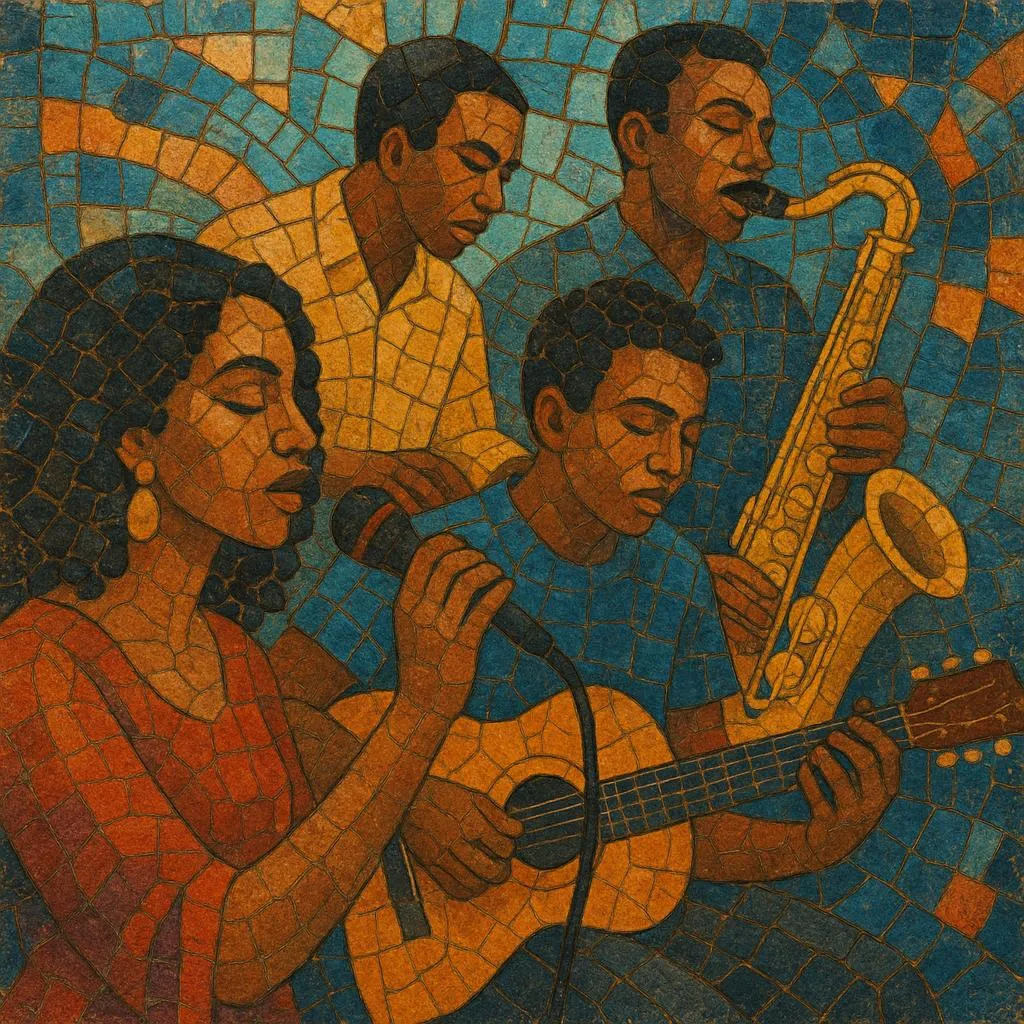
Its signature sound grew out of Mogadishu’s nightclub and radio scenes: nimble guitar riffs, electric organ or synths, bright horn sections, and the traditional kaban (oud) weaving through melodies that draw on Somali poetic song, Arabic maqam coloration, and Indian Ocean coastal grooves. Rhythms often alternate between swaying 6/8 and steady 4/4, supporting call-and-response hooks and romantic or socially observant lyrics.
Across generations, Somali pop has continually absorbed global currents—from funk, disco, reggae, and jazz to Afrobeats and hip hop—while keeping Somali prosody, dance (e.g., dhaanto), and timbral ornamentation at its core. The result is a danceable yet lyrical pop idiom that feels both cosmopolitan and unmistakably Somali.

History
Modern Somali popular music coalesced around Radio Mogadishu, theater troupes, and urban bands that modernized older song forms (qaraami) with amplified instruments and the kaban (oud). National ensembles and city bands professionalized performance and set the stage for a new urban sound.
By the 1970s, a distinctly Somali pop aesthetic had formed in Mogadishu and other cities. House bands and touring ensembles embraced electric guitars, organs, drum kits, and brass—folding funk, disco, reggae, and jazz phrasing into Somali melodies and verse. State-supported cultural groups, nightclub residencies, and a lively cassette economy helped singers and bands reach audiences across the Horn of Africa and the diaspora.
In the 1980s, sophisticated arrangements and studio craft flourished. Dancefloor-friendly grooves, call-and-response choruses, and lyrical songcraft produced a canon of enduring hits, remembered for their melodic richness and glittering, horn-laced arrangements.
Civil war and displacement fragmented the domestic scene, but Somali pop continued in the diaspora (East Africa, the Gulf, Europe, and North America). Home studios, weddings, diaspora festivals, and satellite media sustained the style. Pop singers increasingly used programmed drums and synthesizers, aligning with global R&B and hip hop while preserving Somali poetic delivery.
International archival projects and reissues drew global attention to the classic band era, while a new wave of artists—often raised between Somalia/Somaliland and the diaspora—fused Afrobeats, EDM textures, and trap-influenced production with Somali prosody and dance rhythms. Viral hits and YouTube-first releases reconnected the style to a worldwide audience, renewing interest in both contemporary singles and historic recordings.

Best playlists