Your digging level
Description
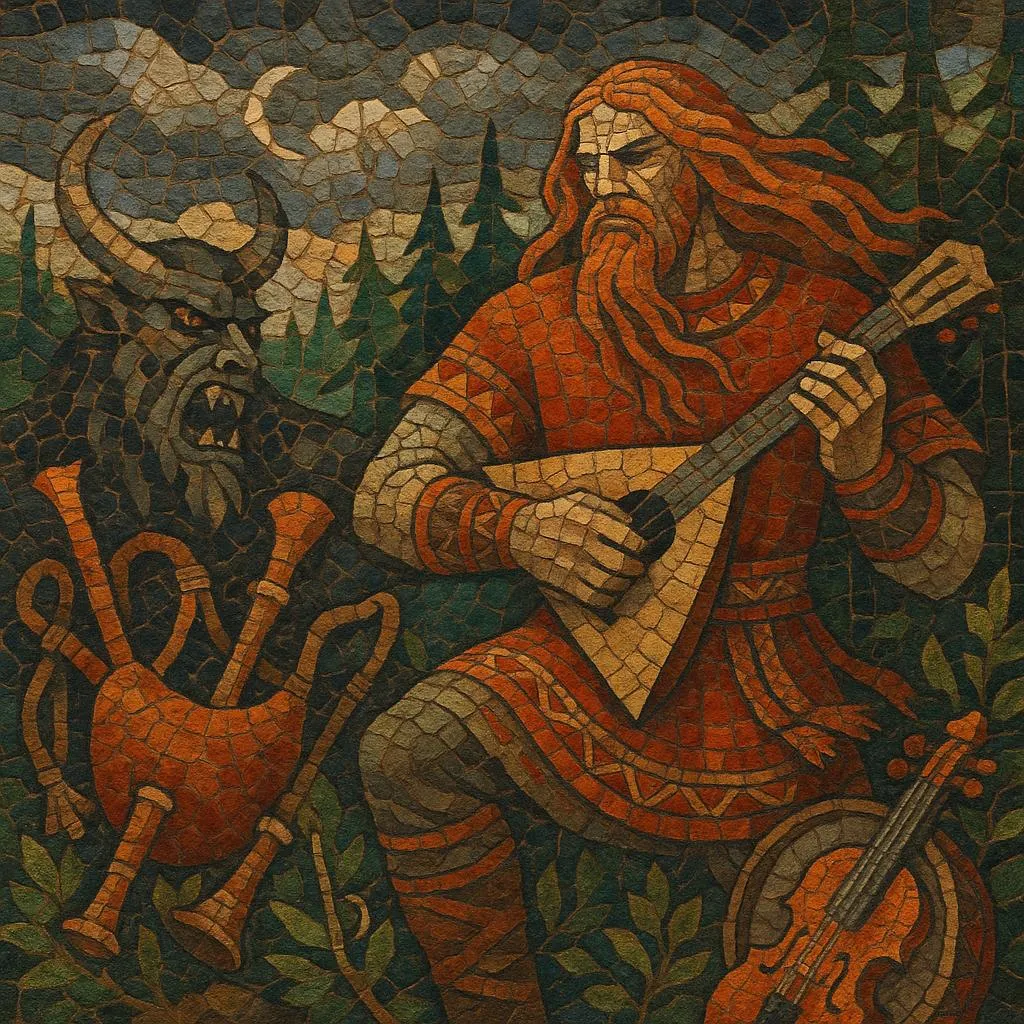
Slavic folk metal is a regional branch of folk metal that fuses heavy metal (often black- or death-leaning) with musical idioms, instruments, languages, and mytho-historical themes from Slavic cultures. Bands typically juxtapose distorted guitars and double-kick or blast‑beat drumming with traditional timbres such as gusli, balalaika, sopilka/whistle, duda (bagpipes), cimbalom, violin, accordion, and frame drums.
Lyrically, the style draws on pre-Christian folklore, seasonal rites (e.g., Kupala Night), epic poetry and chronicles, heroic warfare, and animist reverence for rivers, forests, and storms. Vocals can alternate between harsh growls/screams and clean choral refrains, with frequent use of Russian, Polish, Ukrainian, Belarusian, and other Slavic languages to preserve prosody and oral-storytelling cadence. Rhythmically, dance forms (polka, kolo/horо, kolomyika) and modal folk melodies are interwoven with metal riffing, creating music that is at once epic, earthy, and martial.


History
Folk metal took shape in Northern and Western Europe in the early–mid 1990s. In the Slavic world, early adopters drew on local folk repertoires and pagan/epic narratives, blending them with the extremity and atmosphere of black and death metal. Russia and Ukraine produced some of the first notable acts to foreground Slavic instruments and languages in a metal context, while Poland, Belarus, and the Czech lands soon contributed their own regional inflections.
The 2000s saw a rapid expansion: more bands, better access to traditional instruments, and the rise of festivals where folk ensembles and metal groups shared stages. Labels specializing in pagan/folk metal helped codify aesthetics—runic and mythic visual language, choral hooks, and dance‑derived rhythms alongside tremolo‑picked minor‑mode riffs. Production moved from raw demos to professional recordings that balanced acoustic clarity with metallic power.
By the 2010s, Slavic folk metal encompassed multiple sub‑approaches—from blackened pagan epics to folk‑rock‑leaning, melody-forward styles. Bands increasingly collaborated with ethnographic choirs, reconstructed historical instruments, and field-recorded singers to deepen authenticity. Digital platforms and international touring brought the sound to audiences beyond Eastern Europe, while newer groups continued to regionalize the idiom (e.g., emphasizing Moravian, Carpathian, or Polesian song forms).
Core to the genre is the preservation and dramatization of local heritage. Lyrics frequently reference deities such as Perun or Morana, calendar rites, and chronicles of medieval conflict. Musically, modal folk lines (Aeolian, Dorian, Mixolydian; occasional augmented seconds) sit atop martial grooves or blast beats, with choirs and group shouts enhancing the ritual, communal feel.

Top albums