Your digging level
Description
Skånsk musik (Skåne/Scanian music) is a regional scene within Swedish popular and folk music centered on the southern province of Skåne. Rather than a single narrow style, it is defined by the use of the Scanian dialect (skånska), local subject matter, and a cross‑pollination of blues, rock, progg-era protest song, reggae/ska, country/dansband, and regional folk traditions.
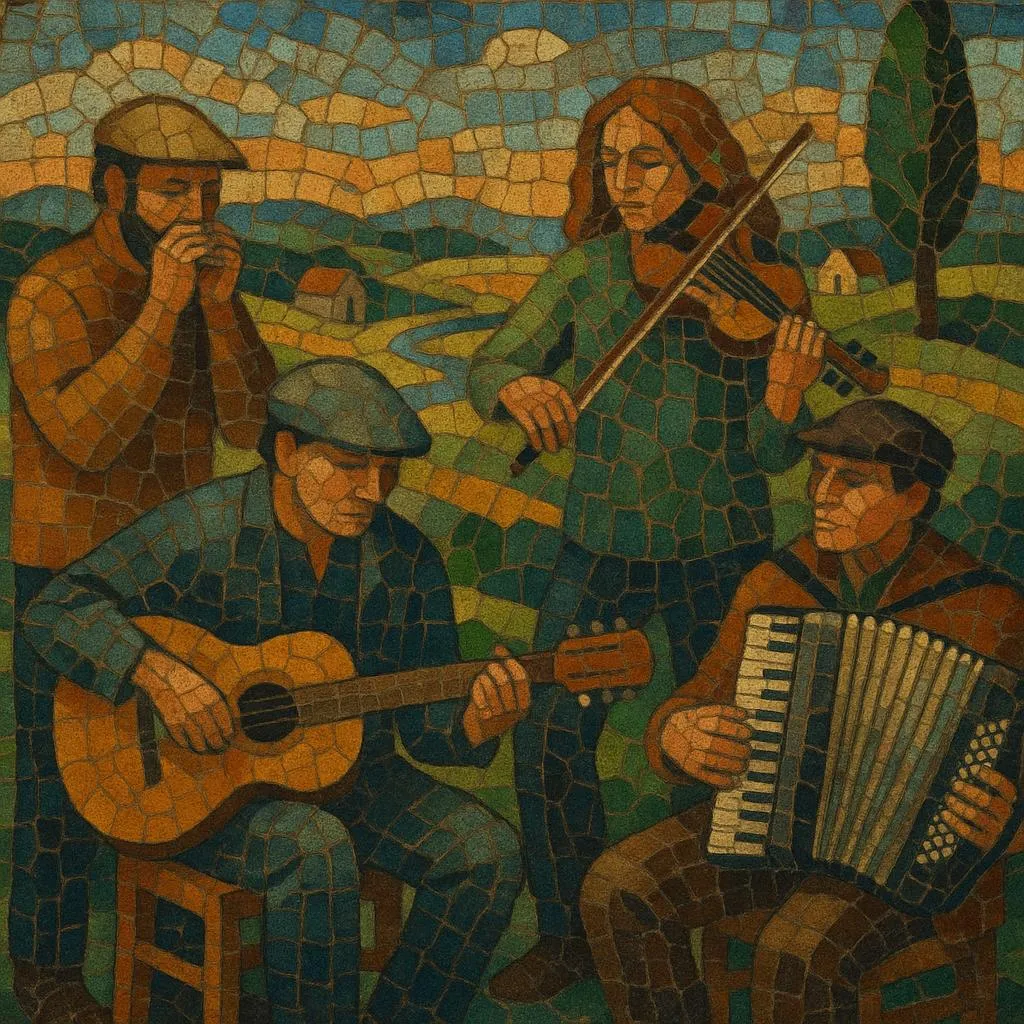
Typical songs balance earthy humor and everyday narratives with social commentary and regional pride, referencing rural landscapes (Österlen), coastal towns, and Malmö’s working‑class neighborhoods. Sonically it ranges from bluesy, harmonica‑driven roots rock and dance‑friendly dansband to reggae‑inflected grooves and fiddle/accordion folk, all colored by a distinct Scanian cadence and phrasing.

History
Skånsk musik crystallized as a recognizable current during Sweden’s 1970s progg movement, when artists from Skåne began foregrounding the Scanian dialect and local stories in blues‑ and rock‑based frameworks. The period’s do‑it‑yourself ethos, political lyrics, and openness to roots idioms (blues, folk) and imported grooves (reggae/ska) set the template for a broad, regionally proud sound.
Through the 1980s, dance‑centric dansband and roots‑rock acts from the region helped normalize Scanian on national radio, while local rock bands from Malmö and Lund mixed power‑pop, punk energy, and melodic blues. In the 1990s, the scene diversified further: alternative/indie groups leaned into wry, dialect‑rich storytelling, and reggae/hip‑hop fusions emerging from coastal towns injected off‑beat rhythms and sound‑system culture into the regional palette.
In the 2000s and 2010s, Skåne’s artists spanned chart‑friendly pop, indie, hip hop, and Americana, yet continued to signal place through accent, imagery, and references to Scanian settings. Digital production and grassroots venues around Malmö sustained a pipeline of singer‑songwriters and genre‑blenders. Today, "Skånsk musik" functions as a living umbrella for Scanian‑voiced creativity, linking contemporary pop and rap to the area’s blues, folk, progg, and dance traditions.