Your digging level

For this genre
0/8
🏆
Sign in, then listen to this genre to level up

Description

Samri is a traditional Najdi (central Saudi) folk music and dance form built around sung Nabati poetry, frame-drum rhythms, and antiphonal choral responses.

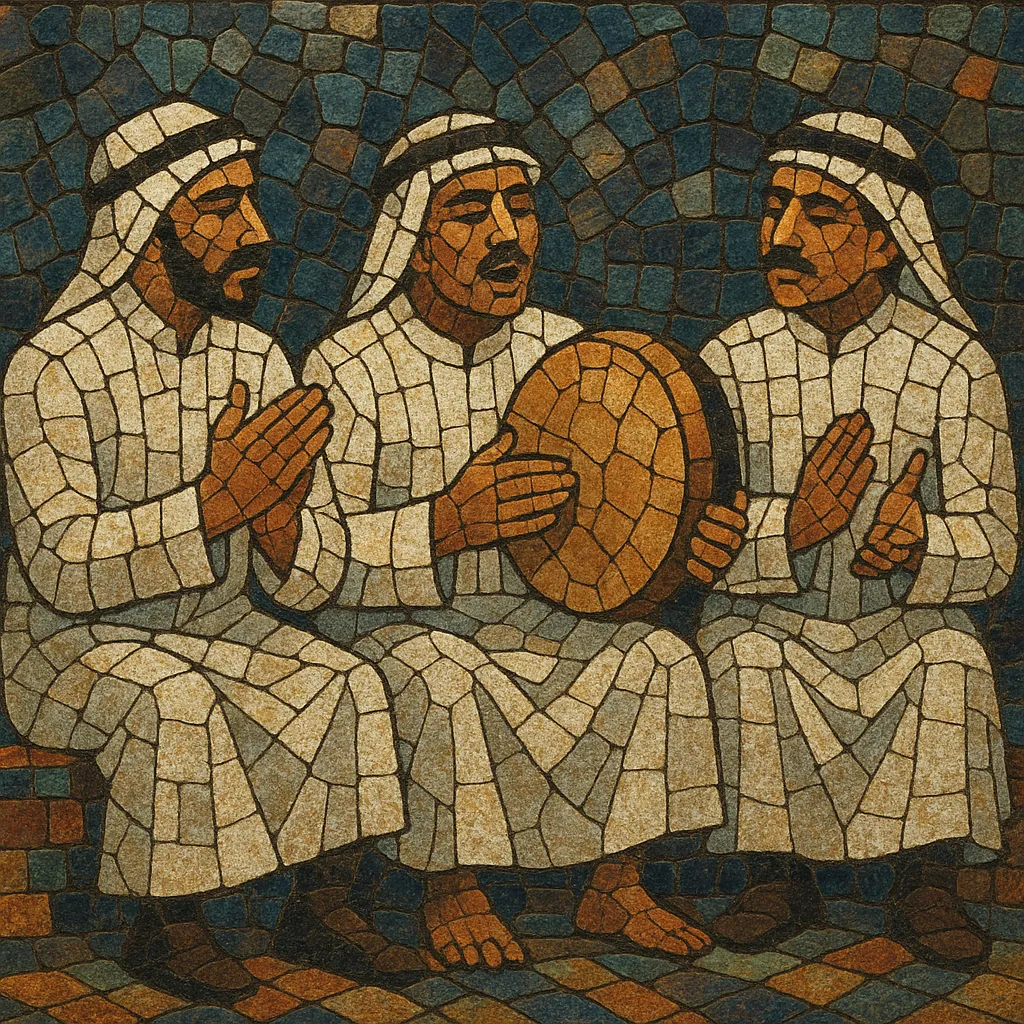
It is typically performed by men seated or standing in two facing rows who clap in intricate patterns while a daff/duff (frame drum) sets a steady groove; the voices carry melodic lines in Arabic maqamat such as Bayat, Hijaz, or Kurd.

Samri is common at weddings, community celebrations, and poetry gatherings across central and eastern Saudi Arabia and parts of the wider Gulf, where its catchy two-beat swing and poetic refrains invite participatory singing and movement.


Sources: Spotify, Wikipedia, Discogs, Rate Your Music, MusicBrainz, and other online sources

History

Origins

Samri crystallized in the Najd region of central Arabia, where Bedouin and town-dwelling communities cultivated Nabati (vernacular) poetry accompanied by handclaps and a frame drum. By the 1800s, gatherings in majlis settings and at weddings popularized a compact performance format: two facing rows of singers, a solo lead (qaṣīd) or caller, and a duff keeping time.

Form and Function

The genre centers on responsorial singing—short poetic lines are intoned by a lead voice and answered by a chorus—over a steady 2/4 pulse. The poetry ranges from love and nostalgia to praise and social commentary, reflecting Najdi aesthetics of eloquence and directness. Maqāmic melodic contours (often Bayat or Hijaz) fit naturally with the limited but expressive range of unison male chorus.

Spread and Modernization

During the 20th century, urbanization and radio broadened Samri’s audience from Najd to the Eastern Province and other Gulf states. Professional ensembles standardized arrangements (multiple frame drums, organized clapping figures), while studio recordings introduced oud and light keyboards without obscuring the core chant-and-duff identity.

Contemporary Presence

Today, Samri remains a hallmark of Saudi folklore showcases and weddings, and its rhythms and call-and-response templates inform modern Khaleeji pop. Cultural festivals and regional troupes preserve the seated two-row performance, while popular singers occasionally adapt Samri beats in orchestrated settings.

How to make a track in this genre

Core Rhythm and Tempo
•   Use a steady 2/4 groove at a moderate tempo (roughly 90–110 BPM). The frame drum (daff/duff) articulates simple Dum–Tak patterns with occasional syncopated claps. •   Integrate group clapping in interlocking figures; the claps function as both timekeeping and call-and-response punctuation.
Melody and Maqamat
•   Compose vocal lines in accessible Arabic maqamat such as Bayat, Hijaz, or Kurd. Keep melodies syllabic and chant-like to accommodate a unison male chorus. •   Write antiphonal phrases: a lead singer (caller) delivers a short line, answered by the chorus with a refrain or repeated tail phrase.
Text and Structure
•   Set Nabati-style poetry (vernacular Arabic couplets) exploring themes of love, longing, praise, and communal pride. •   Structure pieces in strophic form: multiple verses over the same groove, with a memorable refrain to encourage participation.
Instrumentation and Arrangement
•   Essentials: one or more frame drums (daff/duff) and handclaps. Optional: light oud drones or ostinati and subtle keyboard pads that do not overpower the vocals. •   Keep textures lean; prioritize the collective vocal sound and rhythmic cohesion of claps and drum.
Performance Practice
•   Arrange performers in two facing rows for visual and rhythmic unity. Emphasize tight entrances on refrains and dynamic swells driven by the chorus and clapping intensity. •   Encourage audience participation by repeating refrains and maintaining a clear, danceable pulse.

Top tracks

Locked
Share your favorite track to unlock other users’ top tracks
Influenced by
Has influenced
Challenges
Digger Battle
Let's see who can find the best track in this genre
© 2026 Melodigging
Melodding was created as a tribute to Every Noise at Once, which inspired us to help curious minds keep digging into music's ever-evolving genres.
Buy me a coffee for Melodigging