Your digging level
Description
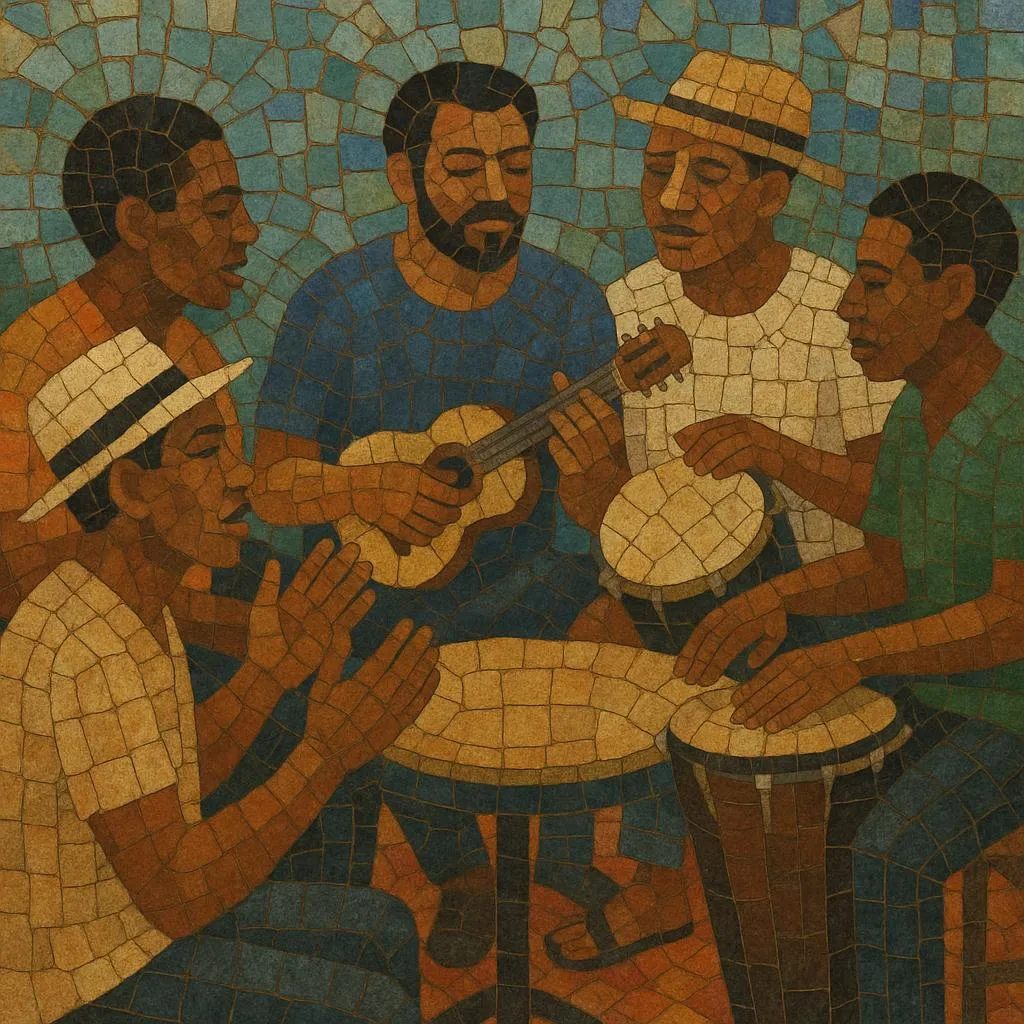
Roda de samba is a communal, circle-style way of playing samba in which singers, percussionists, and string players sit or stand around a shared table or within a tight ring and perform together. Voices join in call-and-response refrains, clapping and light percussion fill the spaces, and the groove is driven by pandeiro, tantã, repique de mão, and the cavaquinho and guitars.
More than a formal subgenre, a roda is a performance practice and social ritual that foregrounds acoustic timbres, participatory choruses, and repertoire drawn from classic samba de raiz, partido-alto, and sambas made for collective singing. Originating in Rio de Janeiro’s Afro-Brazilian gatherings, it remains a living tradition in bars, backyards, and samba schools, and has also informed the sound and stagecraft of modern pagode.
History
Roda de samba emerged in Rio de Janeiro in the 1910s–1920s from Afro‑Brazilian social gatherings hosted by the "tias baianas" (notably Tia Ciata) in the city’s Pequena África. These informal circles brought together percussion (pandeiro, reco‑reco, surdo) with cavaquinho and violões (6‑ and 7‑string guitars), fostering a participatory style of singing, clapping, and improvisation. The roda format crystallized alongside the birth of recorded samba and drew on rhythms and ritual drumming practices connected to Candomblé and other Afro‑Brazilian traditions.
Through the 1930s–1960s, rodas de samba became a regular feature of neighborhood parties, samba schools, and backyard get‑togethers. Repertoire emphasized samba de raiz, partido‑alto (improvised verses over a fixed refrain), and the songbooks of composers like Cartola and Candeia. The format remained largely acoustic and communal, favoring unison choruses and call‑and‑response over soloistic display.
In the late 1970s–1980s, rodas at venues such as the Cacique de Ramos were catalytic for the development of pagode. Innovations like the tantã and repique de mão hand drums and the banjo‑cavaquinho (cavaquinho with banjo body) brought a punchier, yet still acoustic, percussive drive suited to crowded circles. Groups and composers from these rodas carried the roda ethos onto stages and records, popularizing the circle’s sound nationally.
Today, roda de samba thrives in bars, community spaces, and Sunday afternoon gatherings across Brazil and the diaspora. Many rodas preserve classic repertoire and participatory etiquette, while others mix in contemporary pagode and MPB influences. The core remains constant: an acoustic groove, shared singing, and a social space where audience and performers blur.